What Is The Ph Of Water

Ever stopped to think about what’s actually in a glass of water? I mean, besides the obvious stuff like, you know, H₂O. There’s a hidden little number that tells you a lot abo...

Ever stopped to think about what’s actually in a glass of water? I mean, besides the obvious stuff like, you know, H₂O. There’s a hidden little number that tells you a lot about what that water can do, and it’s called its pH. Sounds like science class, right? But trust me, this is way cooler than memorizing the periodic table.
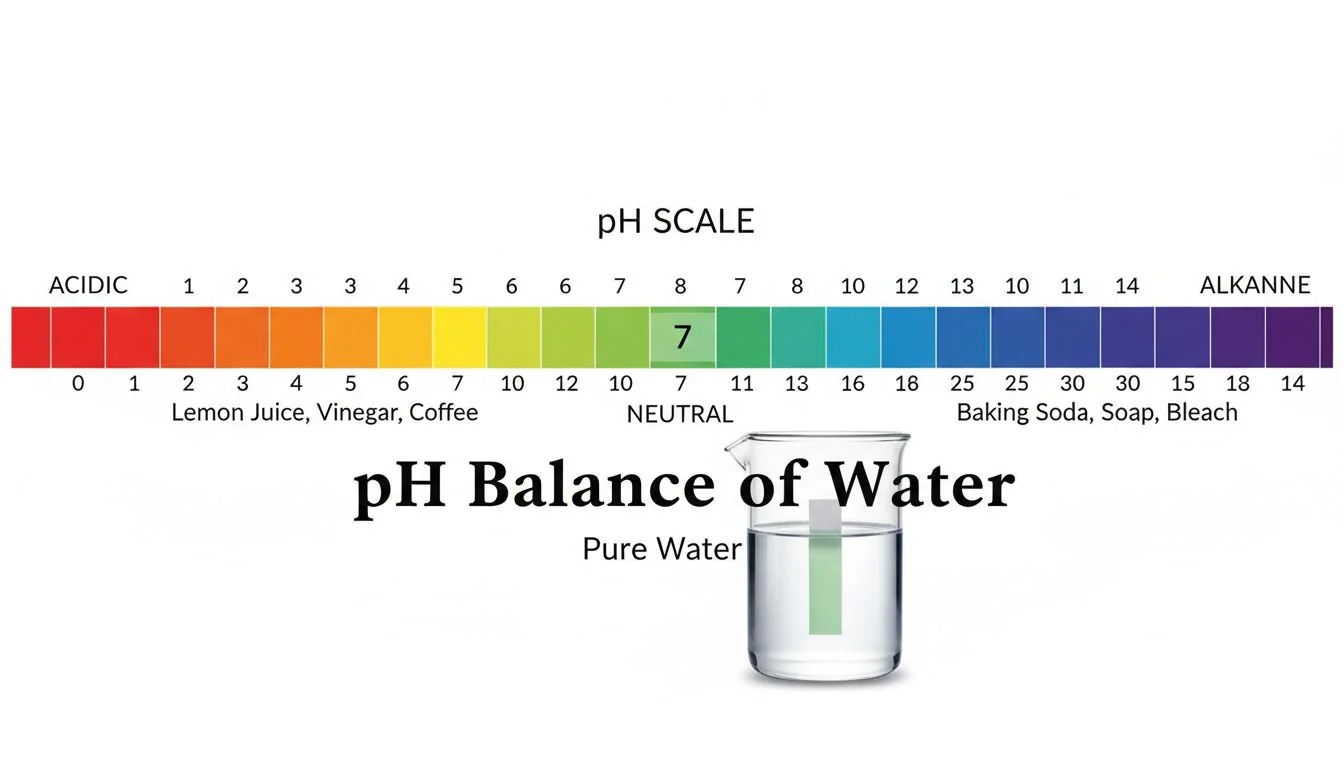
So, what is pH, really? It’s just a fancy way of measuring how acidic or basic (alkaline) something is. Think of it like a heat scale, but instead of temperature, you’re measuring the concentration of tiny hydrogen ions. The scale runs from 0 to 14, with 7 being perfectly neutral—that’s your pure, unbothered H₂O.
Why Should You Care About Water’s pH?
Here’s where it gets fun. Pure water at 25°C (room temperature) has a pH of exactly 7.0. It’s the Goldilocks of liquids—not too acidic, not too basic, just right. But here’s the twist: most of the water you actually drink isn’t perfectly pure, and that changes everything. Tap water usually sits between a pH of 6.5 and 8.5, depending on where you live. Crazy, right?
Must Read
That’s because water is a sneaky little solvent. It picks up minerals, gases, and other stuff as it flows through pipes, soil, and rocks. Rainwater, for example, is naturally slightly acidic (around pH 5.6) because it grabs carbon dioxide from the air, forming weak carbonic acid. It’s like nature’s own fizzy drink, but without the sugar.
The Lemonade vs. Baking Soda Showdown
To wrap your head around the scale, picture a battle between lemon juice and baking soda. Lemon juice is super acidic—around a pH of 2—which is why it makes you pucker. Baking soda, on the other hand, is basic, with a pH around 9. Drop a scoop in water, and it feels totally different, almost slippery. Pure water sits quietly in the middle, not trying to fight anyone.
 What to Do About Acidic Well Water – Tap Score
Now, here’s the mind-bender: that pH scale is logarithmic. That means a drop from 7 to 6 makes the water ten times more acidic. A drop to 5? That’s a hundred times more acidic. So when you hear about “alkaline water” with a pH of 8 or 9, it’s not a tiny shift—it’s a huge jump in chemistry. Pretty wild for something you just pour from a faucet.
Is Your Body Freaking Out About pH?
You might be wondering, “Does the pH of the water I drink even matter to my body?” Well, your body is a master regulator. Your blood stays locked in a tight range around pH 7.35 to 7.45, no matter what you drink. If it goes outside that zone by a tiny bit, you’re in serious trouble. So don’t stress—your dinner won’t turn your insides into a science experiment.
But that doesn’t mean water pH isn’t interesting. It affects how your tea tastes (acidic water makes it bitter), how your soap lathers (hard, basic water makes it dull), and even how your goldfish feels. Fish are super sensitive to pH changes—a swing can literally stress them out. Next time you clean your tank, you’ll be a fish whisperer.
 Mineral-Rich vs Ultra-Pure Water: What's Best for You?
The Coolest Part? Water Changes Its Own pH
Here’s a fun party trick: leave a glass of distilled water (pH 7) sitting out overnight. By morning, its pH might drop to 5.5 or 6. Why? Because it’s drinking in carbon dioxide from the air, again forming carbonic acid. Water breathes, in a way. It’s always reacting with its surroundings. Makes you look at that glass on your nightstand a little differently, doesn’t it?
And the oceans? They have a pH around 8.1, which is slightly basic. But because of climate change, they’re absorbing more CO₂ and becoming more acidic. It’s a huge deal for coral reefs and shellfish. So that simple number—pH—isn’t just for chemistry nerds; it’s a red flag for the planet.
So next time you turn on the tap or grab a bottle of water, give a little nod to the invisible pH that’s hiding inside. It’s a tiny, silent storyteller, telling you where that water has been, what it’s picked up, and how it might change. Pretty cool for something you usually just guzzle down, right?
