Does Water Has A Taste

So, you’re standing at the kitchen sink, parched after a particularly aggressive afternoon nap. You fill a glass with what appears to be perfectly clear, innocent tap water. Y...

So, you’re standing at the kitchen sink, parched after a particularly aggressive afternoon nap. You fill a glass with what appears to be perfectly clear, innocent tap water. You take a sip, and your brain asks a question that has haunted philosophers and confused toddlers for centuries: Does water have a taste?
If you answered “no,” congratulations—you have successfully failed basic common sense. Of course water has a taste! If it didn’t, why would you ever pay $5 for a bottle of the fancy stuff from a glacier that a bear once winked at?
The Great Water Conspiracy
Let’s get one thing straight: pure water, the theoretical H₂O molecule, probably doesn’t taste like anything. But you have never, ever drunk pure water. Not once. The water from your tap, your filter, or that suspicious puddle in the park is a chemical soup wearing a clear trench coat.
Must Read
That “nothing” you taste is actually a symphony of dissolved minerals, gases, and the ghost of yesterday’s plumbing. It’s like saying silence has no sound—except silence is just the absence of noise, while water is the absence of a loud flavor.
The Tongue vs. The Glass: A Scientific Smackdown
Your tongue is a traitor. It’s entirely possible that water’s “taste” is a lie your mouth tells you. Scientists now believe we have specific taste receptors for water, hiding in the back of our throats. That’s right—your throat tastes things your tongue hasn’t even met yet.
When you’re dehydrated, those receptors shout, “Finally! Wet stuff! Delicious!” But when you’re full of soda, that same water tastes like “whatever, it’s boring.” So, thirsty people taste a different water than full people. Water is basically a mood ring for your esophagus.
Why Your Tap Water Tastes Like a Chemistry Lab
Let’s talk about the stuff coming out of your faucet. It’s not just H₂O—it’s a resume. Calcium tastes chalky. Magnesium tastes bitter. Chlorine, which your city adds to kill monsters, tastes like a swimming pool got mad at you.
Then there’s the pipes. Old copper pipes? You’re sipping a metallic lollipop. Plastic pipes? Enjoy a faint whisper of a Tupperware party from 1987. And don’t even get me started on well water, which can taste like dirt’s opinion.
 Why Marietta’s Tap Water Tastes Different Right Now | Marietta.com
Here’s a fact to ruin your next glass: the human tongue can detect concentrations of calcium as low as 10 parts per million. That’s like tasting one grain of salt in an Olympic swimming pool. Your mouth is a supercomputer that only cares about ruining your hydration.
The Brand-Name Water Illusion
Go buy a bottle of “Glacial Spring Mist” from a store. It costs more per gallon than gasoline. Now, fill a dirty mug from a garden hose. Drink both. They taste different. Why? Because you paid for the illusion.
Bottled water companies know you’re desperate for a taste story. They add just enough minerals to make you think, “Ah, yes, this is what a mountain waterfall feels like.” Meanwhile, the mountain waterfall tastes like cold rock and squirrel poo. It’s a placebo for your taste buds.
In blind taste tests, most people can’t tell the difference between tap water and fancy brands. Unless the tap water is from Flint, Michigan, in which case you definitely can taste the betrayal.
Temperature: The Silent Hero
Ever notice that lukewarm water tastes like a punishment? That’s because temperature changes how your tongue registers minerals. Cold water numbs your bitter receptors, making it taste crisp and pleasant. Warm water wakes up all the angry taste cells, and suddenly you’re drinking a soup of “ew.”
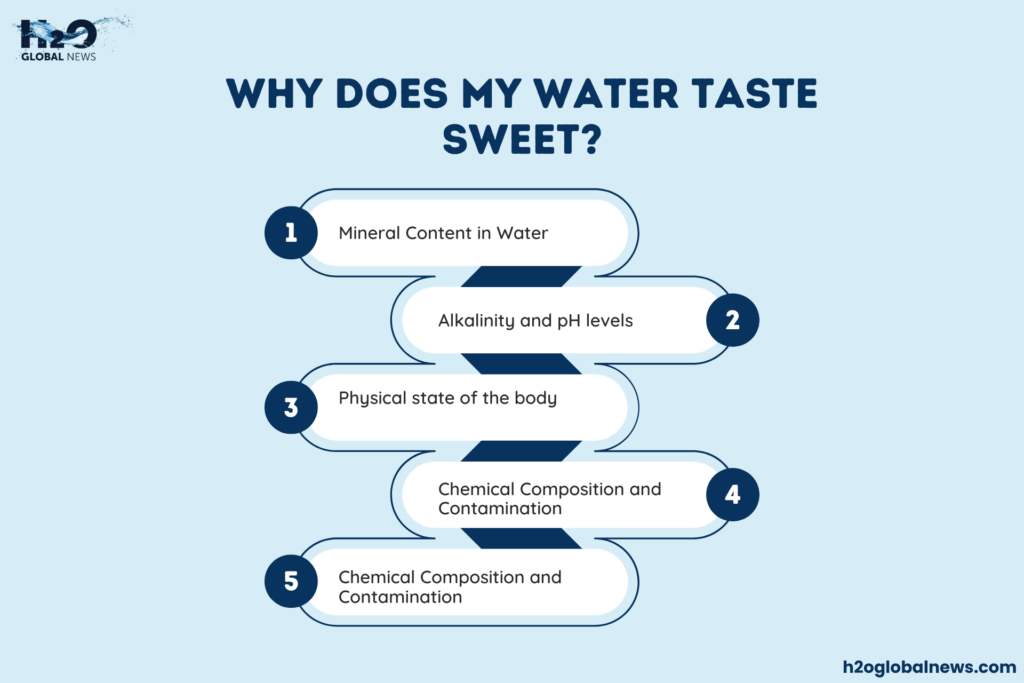 Why Does Water Taste Sweet? The Science Explained | H2O Global News
Ice is just water’s way of covering up its flavor mistakes. It’s like putting sunglasses on a questionable outfit.
What About the “Wet” Sensation?
Here’s where it gets weird. Scientists argue that “taste” and “mouthfeel” are best friends. Water doesn’t just activate taste buds—it triggers a sensation called oral somatosensation. That “clean” feeling is actually your mouth’s pH receptors doing a little dance.
Pure water has a neutral pH of 7. But your mouth is slightly acidic, so water briefly changes the pH inside your cheek. That subtle “zing” is your mouth saying, “Hey, I’m not as acidic anymore! This is fine.”
The Final Sip
So, does water have a taste? Yes. No. Maybe. It depends on your pipes, your thirst, your temperature preference, and whether you just ate a bag of sour gummy worms. Water is a blank canvas that your brain paints with context.
Next time someone says, “Water tastes like nothing,” hand them a glass of distilled water—the actual closest thing to nothing—and watch them grimace. Distilled water tastes flat, sharp, and weirdly aggressive. It’s the flavor of pure disappointment.
So drink your tap water. Drink your mountain dew-tasting luxury brands. But know this: you are not tasting water. You are tasting the story of where it’s been, who touched it, and how thirsty you are. And that’s the most deliciously confusing thing about the planet’s most boring drink.
