How To Test Home Water

You know that moment when you fill a glass from the tap, take a sip, and think, “Huh, this tastes like my grandpa’s basement after a rainstorm”? Yeah, we’ve all been there. Te...
You know that moment when you fill a glass from the tap, take a sip, and think, “Huh, this tastes like my grandpa’s basement after a rainstorm”? Yeah, we’ve all been there. Testing your home water doesn’t require a lab coat or a degree in chemistry—it’s more like being a detective for your own kitchen sink. Let’s walk through it without the jargon, just the good stuff.
The “Sniff and Sip” Test (Your Nose Knows)
First, trust your instincts. If your water smells like a swimming pool, you’ve got chlorine doing the limbo in your pipes. If it smells like a wet dog who just ran through a swamp, you might be dealing with bacteria or sulfur. I once poured a glass that smelled so much like a hard-boiled egg, I checked the fridge to see if my lunch had escaped.
Take a small sip. Does it taste metallic, like you’re licking a penny you found in a parking lot? That’s often iron or copper. If it’s salty, you might have hard water that’s been hanging out with too many minerals. Write down what you smell and taste—it’s your first clue, like finding a muddy footprint at a crime scene.
Must Read
The Clear Glass Test (It’s Not Just for Wine)
Grab a clean, clear glass—the one you usually save for fancy juice. Fill it with water and hold it up to the light. If it looks like a snow globe that’s been shaken, you’ve got sediment—little bits of sand, rust, or grit. That’s your pipes saying, “Hey, we’re old and tired.”
Let it sit for an hour. If you see a white, chalky film settling at the bottom, that’s calcium carbonate, the signature of hard water. It’s the same stuff that makes your shower glass look like it has a permanent case of dandruff. No judgment—my coffee maker has a crust that could double as a science project.
The Soap Suds Surprise (Science with Bubbles)
Fill a jar halfway with your tap water, add a few drops of dish soap, and shake it like a bartender making a martini. If you get a fluffy, rich head of foam—congratulations, you have soft water. If you get a flat, sad layer that looks like dishwater, you’ve got hard water. Hard water makes soap grumpy; it refuses to lather because the minerals are busy stealing all the suds.
 How to Test Water Quality at Home: Your Complete Guide – World Water
My friend once tested his water this way and ended up with a jar that looked like he’d shaken a bottle of old milk. He spent the next weekend installing a water softener. Now his soap bubbles like a toddler in a bubble bath—and his hair actually feels clean.
The Store-Bought Test Kits (No PhD Required)
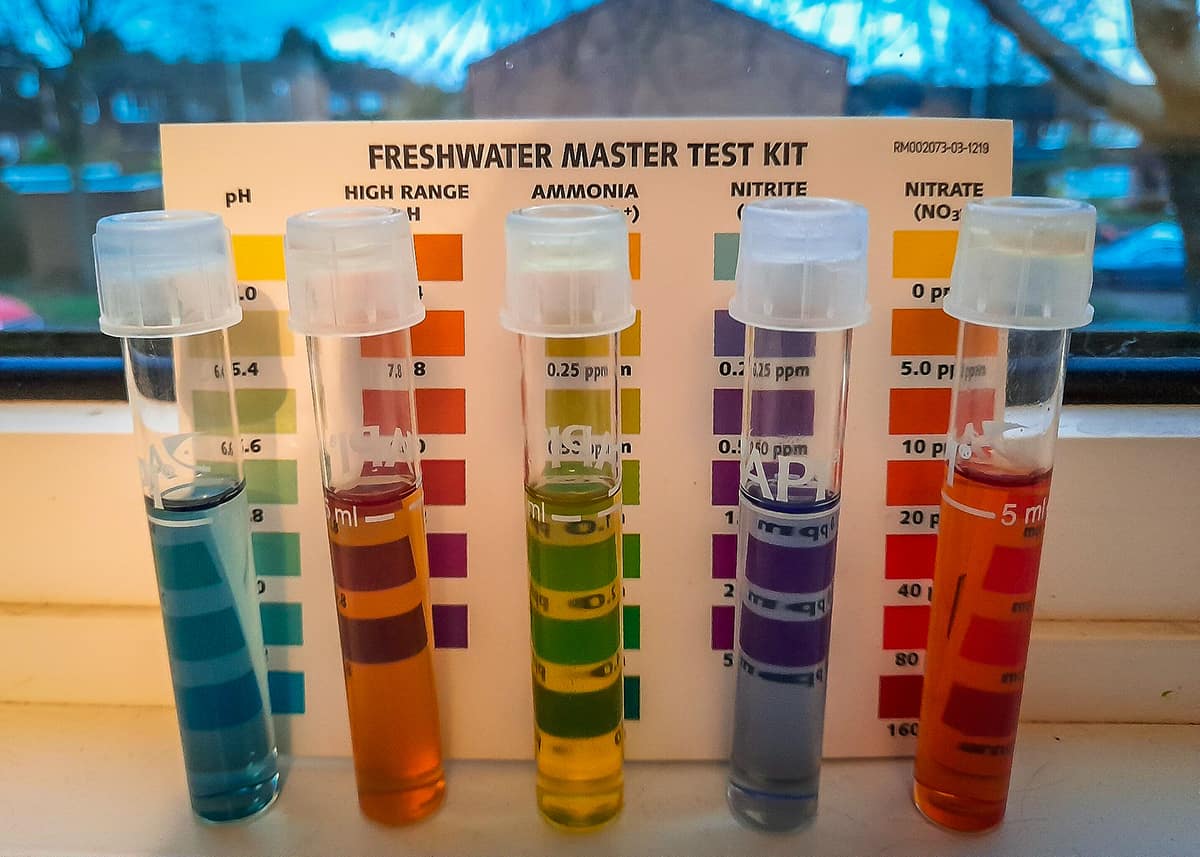
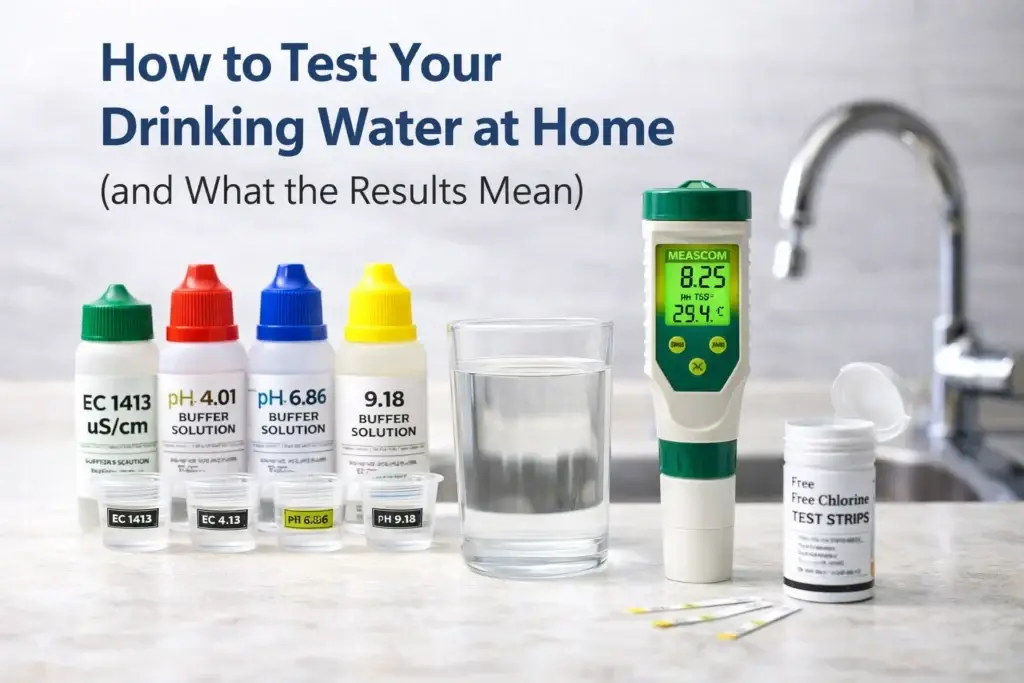
If your senses have you worried, grab a home water test kit from the hardware store. These are like pregnancy tests for your pipes—dip a strip, wait a minute, and compare the colors. They check for things like pH levels, nitrates, and lead. The chart looks like a paint swatch from a very confused department store.
I once did this and discovered my water had a pH of 8.5—basically, it was as alkaline as my aunt’s anxiety about unreturned Tupperware. It wasn’t dangerous, but it explained why my tea always tasted weird. A simple filter fixed it, and now my Earl Grey is back to its smug self.
 How to Test Drinking Water at Home (and What the Results Mean) - MEASCOM
The Boil Test (For the Sceptics)
Boil a pot of tap water and let it cool. If you see a white, powdery residue floating on top or stuck to the sides, that’s total dissolved solids (TDS). It’s like the ghost of minerals past, haunting your kettle. My grandmother used to call it “the water’s bones,” and she’d scrape it off to use in her garden. Smart lady.
If your water leaves a rainbow sheen on the surface after boiling, you might have iron or manganese. It’s not a chemistry problem—it’s your water showing off. Don’t drink it without testing further, but do take a photo to show your friends.
When to Call the Pros (And When to Laugh It Off)
Most water issues are just annoying—like a slightly odd taste or a film on your glasses. That’s the “drink from a filter” zone. But if your water turns brown or green, or if it smells like a gas leak, call a professional. That’s the “stop drinking immediately and buy bottled water” zone.
For the rest, remember: testing your water is like checking your own pulse—it’s simple, a little weird, but oddly satisfying. You’ll learn if your water is just grumpy or genuinely needs a water softener intervention. And hey, even if you find out your tap water tastes like a wet sock, at least you know. Then you can laugh, buy a filter, and pour yourself a glass that doesn’t bring back memories of a damp basement.
