How To Deionized Water

So, you want to know how to deionize water. Maybe you’re a mad scientist, a plant parent who’s tired of tap water spots, or just someone who really, really hates the idea of m...

So, you want to know how to deionize water. Maybe you’re a mad scientist, a plant parent who’s tired of tap water spots, or just someone who really, really hates the idea of minerals. Whatever your reason, you’ve come to the right place.
Let’s be real: deionized water sounds super fancy and complicated. But it’s actually just water that’s been stripped of all its charged particles—the ions that make it “hard” or conductive. Think of it as giving your water a very thorough detox.
What Exactly Are We Removing?
Imagine your tap water is a crowded party. You’ve got sodium, calcium, magnesium, and chloride ions all mingling and being annoying. Deionization is like hiring a very efficient bouncer to kick them all out.
Must Read
These charged minerals are what cause limescale in your kettle and weird tastes in your coffee. By removing them, you get water so pure it’s almost too clean for most humans to drink regularly.
Method #1: The Old-School Resin Bed (A.K.A. The Chemical Super Sponge)
This is the most common method, and it works like a charm. You use a container filled with tiny, special beads called ion-exchange resins.
These beads are like magnetized sponges. One type grabs onto positive ions (like calcium), while another grabs onto negative ions (like chloride). In exchange, they release hydrogen and hydroxide ions, which simply combine to form—you guessed it—water.
Here’s the fun part: You can buy a simple “DI resin cartridge” that screws onto your garden hose or a faucet. It’s basically a filter for the fancy crowd. Just run water through it, and voilà—deionized water!
Pro Tip: Watch Out for the “Bleed”
Resin beads can only hold so many ions before they get full. When they’re exhausted, you’ll start seeing water with a low resistivity—a fancy way of saying “it’s not pure anymore.”
If you’re a lab geek, you test this with a conductivity meter. If you’re a normal person, you’ll probably just notice your plants looking sad again. Time to swap that resin!
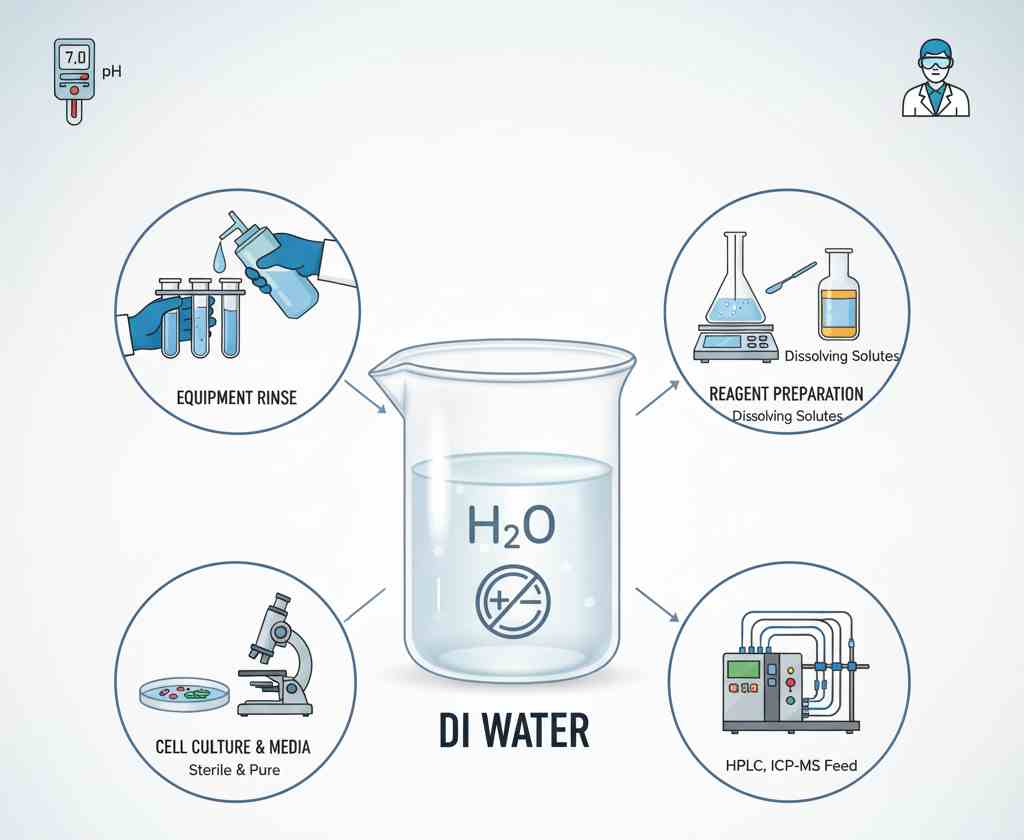 A Guide to Deionized Water: Production, Applications, and Lab Systems
Method #2: The DIY “Mixed Bed” Bucket (For the Brave Home Chemist)
Feeling adventurous? You can build your own deionization system using a 5-gallon bucket and two types of resin: cation resin and anion resin. Mix them together, and you get a “mixed bed.”
Just pour water in the top, let it trickle through the resin mix, and collect the pure water from a spigot at the bottom. It’s like making really boring lemonade, except the lemons are minerals and the sugar is science.
Warning: This is messy. You might end up with little resin beads all over your kitchen floor. Your cat will definitely try to eat one. Do not let your cat eat the resin beads.
Method #3: The Reverse Osmosis + DI Combo (The Ultimate Party Trick)
Why settle for just deionization when you can have ultra-pure water? Start with a reverse osmosis (RO) system that filters out most of the gunk first. Then, run that RO water through a DI resin cartridge as a final polish.
This is what aquarists use to keep rare saltwater fish alive and what car detailers use to get a spot-free rinse. It’s the gold standard of water purity—like putting a tuxedo on already-clean water.
The only downside? You’ll feel superior to everyone who drinks regular water. Enjoy that feeling, but try not to be insufferable about it.
A Few Honest Truths Before You Dive In
Do not drink deionized water exclusively. It’s too aggressive—it can leach minerals from your body and even corrode metal pipes. It’s not poison, but your stomach will probably stage a protest.
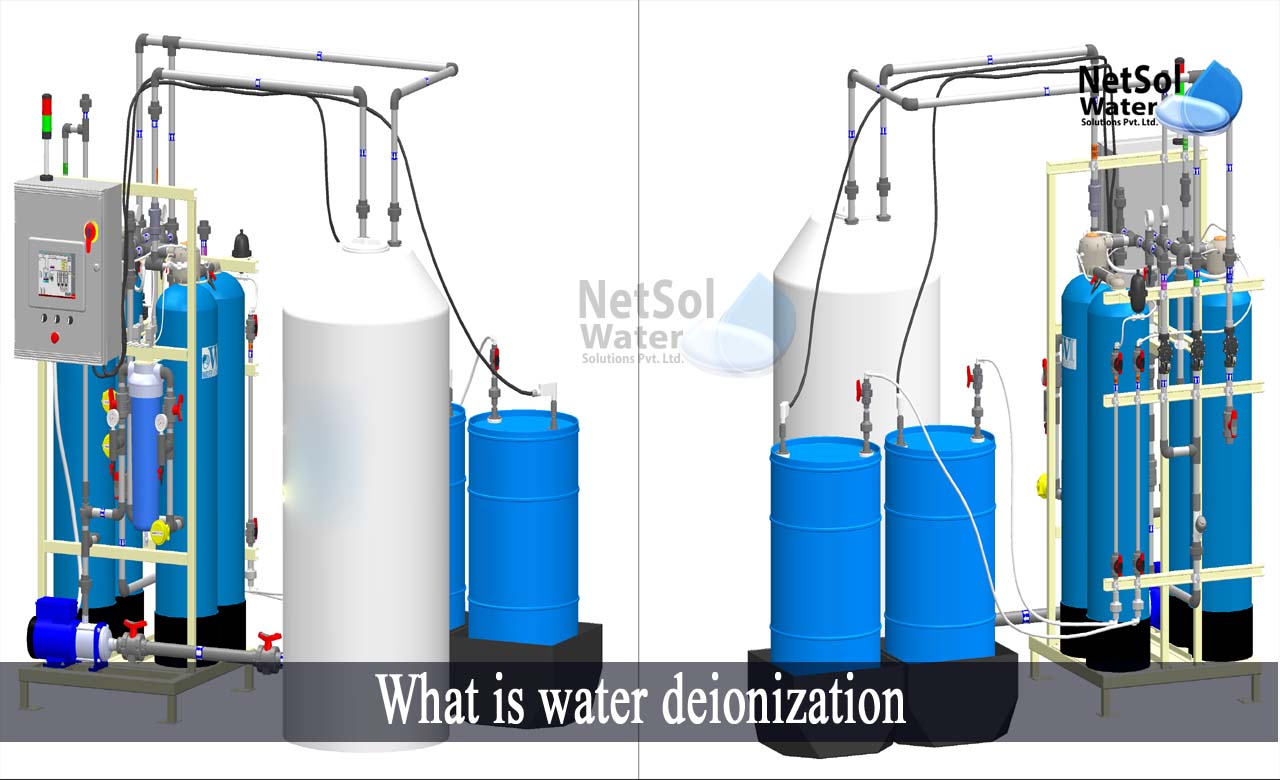 deionized water とは | sterilized deionized water – EUGU
Also, deionized water tastes… flat. It’s like the sound of one hand clapping. It’s the water equivalent of a blank wall. Not bad, just nothing.
And finally, remember: this process doesn’t remove bacteria or viruses. It only pulls out the charged ions. So don’t use it to rinse a wound or clean a baby bottle unless you’ve boiled it first. Safety first, science second.
Why Bother? The Joy of Pure H₂O
Because it’s satisfying, that’s why. There’s a weird joy in watching a conductivity meter drop to zero, or seeing your car’s paint dry without a single water spot. It’s a tiny victory over the chaos of chemistry.
You’ll use it for filling batteries, topping off irons, cooling electronics, or just impressing your friends at parties. (“Actually, this water has no ions. You’re welcome.”)
And when you’re done, you can look at that bucket of pure, demineralized water and think: I did that. I kicked those ions out, and they’re not coming back.
So go ahead. Dive into the world of deionized water. It’s clean, it’s quiet, and it’s surprisingly fun. You’ll feel like a wizard, a chemist, and a control freak all at once—and honestly, isn’t that what life is all about?
Now go make some pure, proud water. It’ll be the most boring, most perfect stuff you’ve ever seen. And you’ll love every single ion-free drop of it.
