What Is In Hard Water

So, you’ve heard the term hard water thrown around, and you’re probably imagining water doing push-ups or lifting tiny barbells. Relax—it’s not about water having a six-pack....
:max_bytes(150000):strip_icc()/TheSpruce_WhatisHardWater_colorv1-71c4c7ba876646638980256db096a84e.png)
So, you’ve heard the term hard water thrown around, and you’re probably imagining water doing push-ups or lifting tiny barbells. Relax—it’s not about water having a six-pack. It’s actually about what’s dissolved inside your H2O, and trust me, it’s a wild little chemistry party.
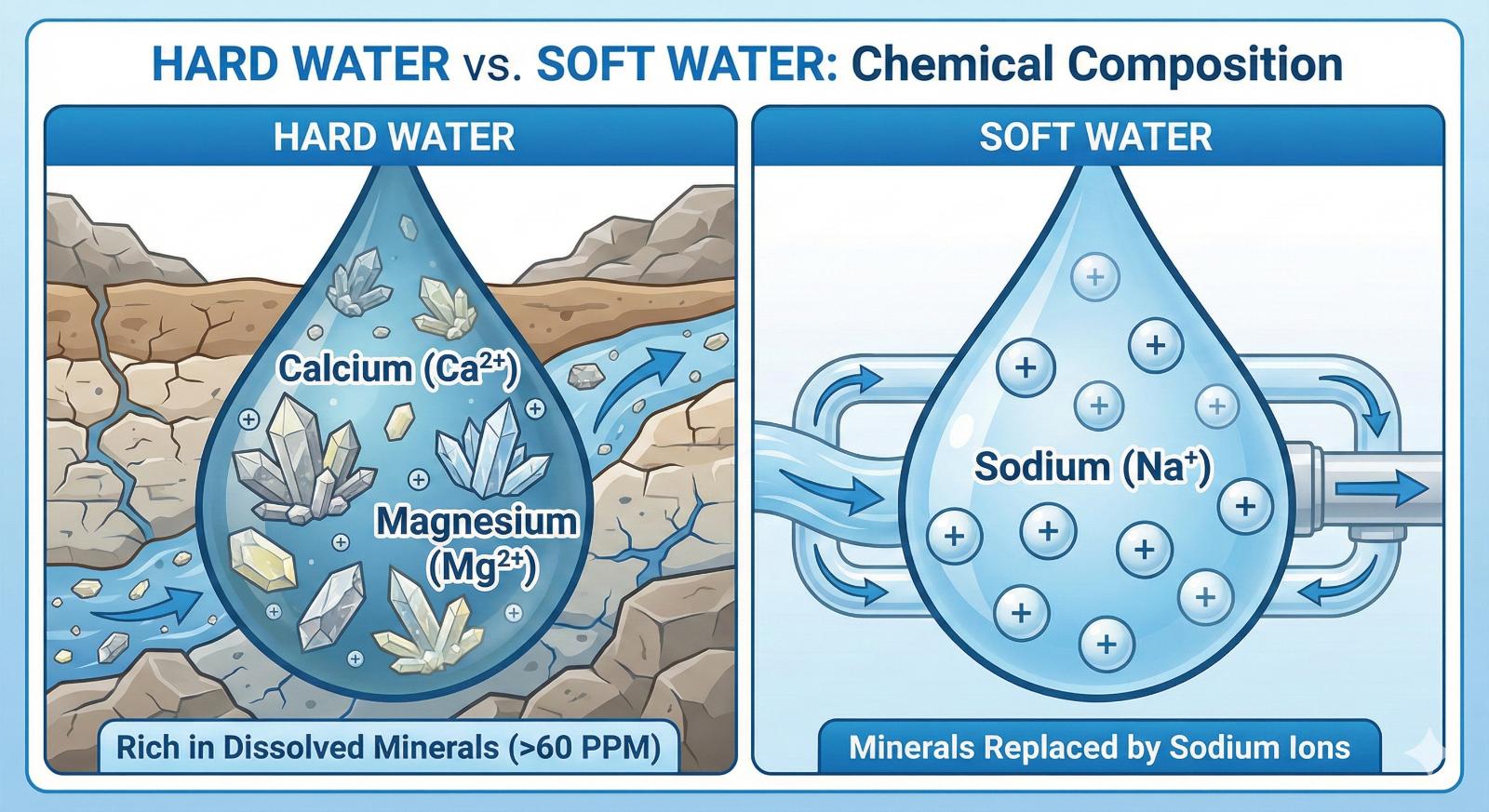
Hard water is simply water that has a high mineral content, specifically calcium and magnesium. Think of it as water that went on a road trip through limestone, chalk, or gypsum deposits and picked up some hitchhikers. These minerals hitch a ride right into your home, and they’re not shy about making themselves known.
The Main Characters: Calcium and Magnesium
Your water’s "hardness" comes almost entirely from two friendly minerals: calcium (Ca²⁺) and magnesium (Mg²⁺). Calcium is the same stuff that makes your bones strong and your cheese stretchy—just floating around in a liquid form. Magnesium is what helps your muscles relax and gives green veggies their color, but in water, it’s just a chill mineral guest.
Must Read
When your water passes through underground rocks like limestone and dolomite, it literally dissolves tiny bits of them. Over thousands of years, rainwater (which is slightly acidic) slowly eats away at the rocks, and those minerals become part of the water supply. So your tap water is basically a slow-motion rock smoothie—gross, but totally natural.
How much of these minerals you get depends on where you live. If your region has lots of limestone or chalk (hello, England, Texas, and parts of the Midwest), you’re likely drinking from a mineral-rich stream. If you live near granite or volcanic rock, your water is probably soft—like a fluffy water cloud.
The Uninvited Guests: A Few Others
While calcium and magnesium are the stars, hard water sometimes brings along a tiny bit of iron, manganese, or even strontium. Iron can give your water a rusty taste and leave nasty orange stains in your sink. Manganese? That’s the party crasher that makes water look like weak tea and leaves black specks on your dishes. Fun, right?
These extra minerals are usually in such small amounts that you won’t notice them unless you’re a chemistry nerd—or you have a white T-shirt you’re very protective of. But together, they create the classic hard water squad: calcium, magnesium, and a few awkward friends.
What Hard Water Does to Your Home (And Your Patience)
You’ve probably seen the white, chalky scale on your showerhead or kettle. That’s calcium carbonate, the solid form of dissolved calcium. When you heat hard water, the minerals come out of solution and stick to surfaces like a clingy ex. That buildup can ruin your appliances, clog pipes, and make your water heater work way harder than it should.
 Is Soft Water Better for Your Hair? Hard vs Soft Water Compared (2026)
And soap? Hard water and soap are frenemies. The minerals react with soap to form a sticky scum—that weird film on your skin after a shower. It’s not dirt; it’s a mineral-soap mosh pit. Plus, your hair might feel straw-like, and your dishes can look spotty even after a wash. It’s not you, it’s the water.
You might also notice that laundry feels rough or fades faster. The minerals lock onto fabric fibers like tiny, invisible claws. And if you have pets? Fluffy the cat might get dry, itchy skin from hard water baths. So yes, hard water is a bit of a bully to your whole household.
But Is Hard Water Bad for Your Health?
Here’s the good news: Hard water is not dangerous to drink. In fact, those calcium and magnesium are essential nutrients! You’re basically getting a free supplement every time you fill a glass. Some studies even suggest hard water might lower your risk of heart disease, though the evidence is a bit fuzzy, like the film on your shower door.
The only real health downside is for people with eczema or very sensitive skin. The mineral residue can dry out skin and aggravate conditions. But for the average healthy person, drinking hard water is totally fine—and it tastes pretty neutral once you get used to it. Your kidneys don’t care if the water is hard or soft; they just filter whatever you throw at them.
So don’t rush out to buy a water softener unless you’re tired of scrubbing white spots off your glasses. And if you do decide to soften your water, you’ll trade calcium for sodium, which could be a problem if you’re watching your salt intake. It’s all a trade-off, like choosing between a pizza with extra cheese or without.
 What is Hard Water & How to Get Rid of It
The Fun Side: Hard Water Hacks
If you’re stuck with hard water, you can outsmart it. A splash of white vinegar in your dishwasher or kettle removes scale like magic—it’s an acid that dissolves the calcium carbonate. For your laundry, a half-cup of baking soda in the wash can help soften the water and make your clothes feel fluffier. Science is your friend!
You can also use a water pitcher filter (like Brita or Pur) for drinking. These filters use ion exchange to swap calcium and magnesium for sodium or potassium, giving you softer, better-tasting water. Just remember to change the filter—otherwise, you’re just drinking old rock juice.
And here’s a fun party fact: Hard water is actually responsible for the texture of your favorite bagels in New York City. The specific mineral balance in NYC tap water gives bagels that perfect chewy crust. So next time you eat a bagel, thank hard water for its contribution to breakfast.
The Uplifting Conclusion: Water Is Still Wonderful
Look, hard water is a quirky mineral mishmash. It leaves soap scum, ruins kettles, and drives homeowners crazy—but it’s also a natural, mineral-rich gift from the earth. It’s not a sign that your water is dirty; it’s a sign that your water has character. And honestly, a little white scale is a small price to pay for the free calcium boost.
Plus, no matter how hard or soft your water is, it’s still the stuff that makes life possible. It grows your gardens, brews your coffee, and keeps you hydrated through long, silly days. So raise a glass of your glittering, rock-infused tap water and toast to nature’s little chaos. It’s not perfect, but neither are we—and that’s what makes everything work.
Cheers to hard water. It may be a bit stubborn, a bit clingy, and full of invisible rocks, but it’s still the H₂O that keeps you going. And if you ever need a laugh, just remember: somewhere out there, someone is arguing that soft water is better. Poor souls.
:max_bytes(150000):strip_icc()/TheSpruce_WhatisHardWater_colorv1-71c4c7ba876646638980256db096a84e.png&description=What+Is+In+Hard+Water)