How To Deionize Water

So, the other day I’m filling up my iron, right? Plain tap water. And my grandmother—who still thinks Wi-Fi is a type of fish—goes, “That’ll ruin it, you know. All that minera...
:max_bytes(150000):strip_icc()/Flowing_Capacitive_Water_Deionization-5c4d02fa46e0fb00014a2baa.png)
So, the other day I’m filling up my iron, right? Plain tap water. And my grandmother—who still thinks Wi-Fi is a type of fish—goes, “That’ll ruin it, you know. All that mineral gunk.” She was right. I ignored her, and three weeks later, my iron started spitting white dust like a tiny, angry volcano. That’s how I fell down the rabbit hole of deionized water.
Here’s the brutal truth: regular water is a chemical soup. It’s full of dissolved salts, calcium, magnesium, and other little hitchhikers. When you boil that water, those minerals don’t vanish—they harden into scale. It clogs your coffee maker, fogs your car windows, and makes your lab experiments look like a middle-school science fair disaster.
What Deionization Actually Does (The “Magic” Part)
Deionization removes those dissolved minerals by swapping them for hydrogen and hydroxide ions. Think of it like a prison break for charged particles. You pass water through special resin beads that grab the bad guys (calcium, chloride) and let the good guys (H⁺ and OH⁻) take their place.
Must Read
The result? Water so pure it won’t conduct electricity anymore. Seriously. It’s the closest you’ll get to drinking a chemistry textbook. But please, don’t drink it. (We’ll get to why in a second. I know you’re curious—you’re the type who licks a battery just to check, aren’t you?)
Method 1: The “Do-It-Yourself” (DIY) Route
You can buy a small mixed-bed resin cartridge online for about twenty bucks. It looks like a glorified water filter. You hook it up to a faucet or a jug, pour your tap water in, and wait. The resin turns from blue to brown as it gets saturated. When it’s all brown, it’s dead.
Pro tip: don’t try to “recharge” the resin at home. You’ll need strong acids and bases, and that’s how you end up with a hole in your countertop and a story for the ER. Just throw the cartridge away. Your wallet can handle it, I promise.
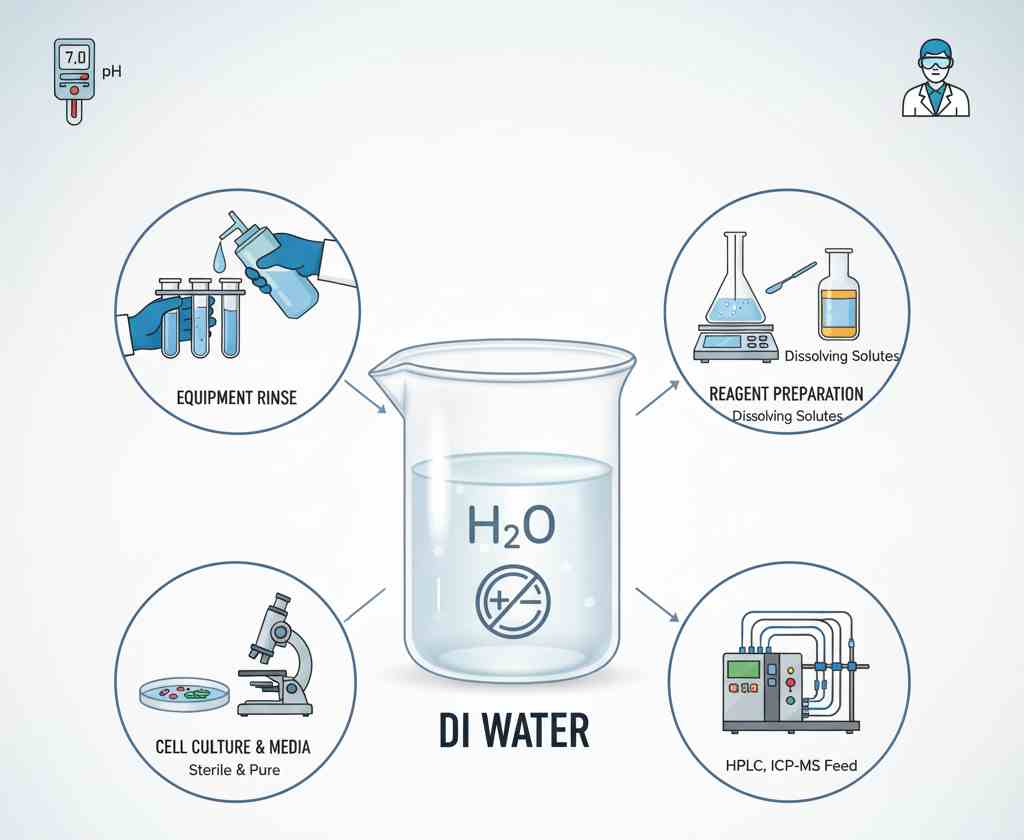 A Guide to Deionized Water: Production, Applications, and Lab Systems
Method 2: The “Two-Stage Tank” System (For Overachievers)
If you’re the type who builds your own furniture or grows hydroponic weed—hey, no judgment—you might want a two-tank deionizer. One tank has cation resin (grabs positive ions like calcium), and the other has anion resin (grabs negative ions like chloride). Water flows through both, and comes out squeaky clean.
This setup is louder, bigger, and requires a pressure gauge. But it produces water with a resistivity of 18.2 megohms. That’s scientist-level purity. You could wash a semiconductor in it. Or, you know, fill your steam mop without crying about white residue.
The Dangerous Side of Purity (Yes, Really)
Deionized water is aggressive. It’s like that friend who’s too honest and starts picking fights with your plumbing. Because it has no minerals, it will leach metal ions right out of your pipes. So if you leave it in a copper pipe for a week, you’ll get blue-green water that tastes like a battery.
Also, do not drink it on the regular. It’ll pull minerals out of your body, dehydrating you faster than tap water. I know it looks pristine, but it’s actually a little bit gremlin-like. Use it for your car battery, your iron, or your lab—not your coffee.
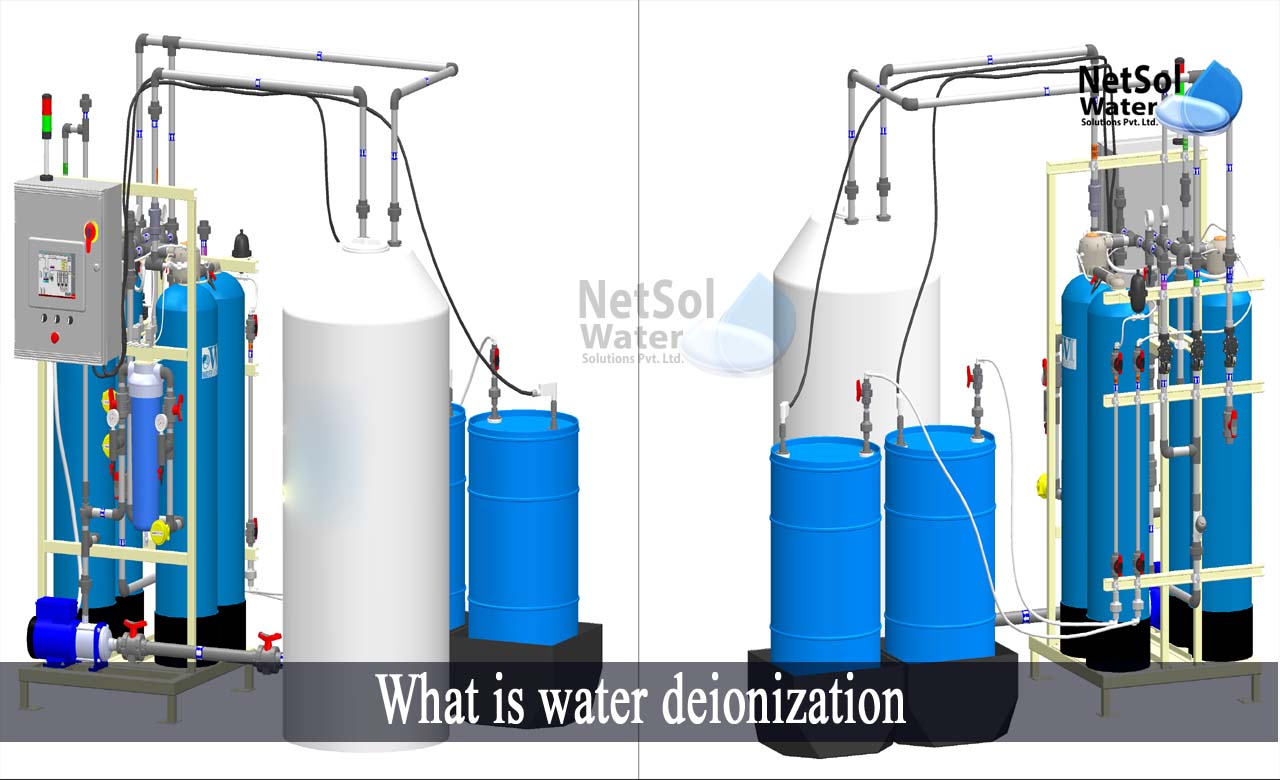 deionized water とは | sterilized deionized water – EUGU
When to Call It Quits
You’ll know your deionization resin is dead when the water starts tasting “normal” again, or when your TDS meter (total dissolved solids) reads above 1 ppm. A TDS meter costs like fifteen bucks online. Get one. It’s the lie detector for your water.
Pro tip: if you live in an area with hard water (like the American Southwest), your resin will die in a month. If you live in Seattle, bless your heart, your resin might last a year. Check local water reports—yes, they exist, and they’re weirdly fascinating.
The Final Verdict
Is deionizing water worth the hassle? For most people, no. A simple $15 tap filter will stop scale on your kettle and keep your hair from feeling like straw. But if you’re into aquariums, car detailing, or chemistry, deionized water is a game-changer. It’s the ghost of water—pure, invisible, and slightly unsettling.
So go ahead. Buy a resin cartridge. Watch the color change. Feel like a mad scientist for twenty minutes. Just don’t drink it, don’t leave it in metal pipes, and for the love of all that is holy, test your grandmother’s iron before she finds out you ignored her again. She was right about the scale. She’s always right about these things.
:max_bytes(150000):strip_icc()/Flowing_Capacitive_Water_Deionization-5c4d02fa46e0fb00014a2baa.png&description=How+To+Deionize+Water)