How Does A Well Work

Let’s be honest—most of us don’t think about our water until the tap sputters or the bill arrives. But if you live in the countryside or a leafy suburb, there’s a good chance...
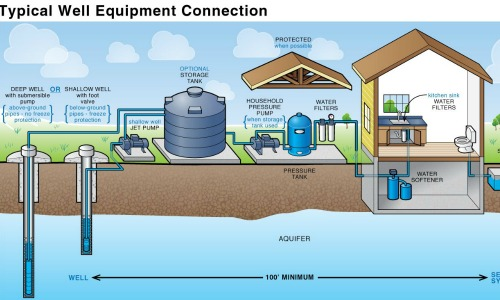
Let’s be honest—most of us don’t think about our water until the tap sputters or the bill arrives. But if you live in the countryside or a leafy suburb, there’s a good chance your water comes from a well. That’s right: a secret, underground world powered by ancient rain and clever engineering.
We’re talking about a well, and it’s way cooler than a fancy filter pitcher. This humble hole in the ground has been quenching civilizations for millennia. From the biblical well in Beersheba to your neighbor’s backyard rig, the principle is simple: hack into the groundwater.
The Basics: It’s All About Aquifers
Imagine a giant, underground sponge made of sand, gravel, or cracked rock. Geologists call this an aquifer, and it holds the water that fell as rain hundreds or even thousands of years ago. A well is essentially a straw poked into that sponge.
Must Read
Your modern well isn’t just a bucket on a rope—thank goodness. Today, a drilling rig bores down until it hits a saturated layer, often 100 to 500 feet deep. The goal? Reach an aquifer that’s clean, abundant, and shielded from surface pollution.
Fun fact: the world’s deepest well, the Kola Superdeep Borehole in Russia, goes 7.5 miles down. That’s far deeper than any water well—they were chasing rock, not rain. Your well is a lot more practical, promise.
The Pump: The Heart of the Operation
Once the hole is drilled, a submersible pump is lowered down inside a pipe. This electric workhorse pushes water up from the depths to your home. No manual cranking, no well-worn rope—just a quiet hum in the basement.
Think of it as a reverse vacuum cleaner, but instead of sucking dust, it lifts liquid. The pump sits below the water level in the well, which is key. If the pump runs dry, it can burn out faster than your phone battery at 1%.
Practical tip: know your static water level—that’s the resting height of water in your well. A drop of 10 feet during summer? Totally normal. A sudden 50-foot drop might mean your aquifer is stressed or your pump needs service.
The Casing and Screen: Keeping It Clean
Raw well water can look murky if you don’t protect it. That’s why a steel or PVC casing lines the borehole from top to bottom. This casing keeps dirt, rocks, and surface runoff from crashing the party.
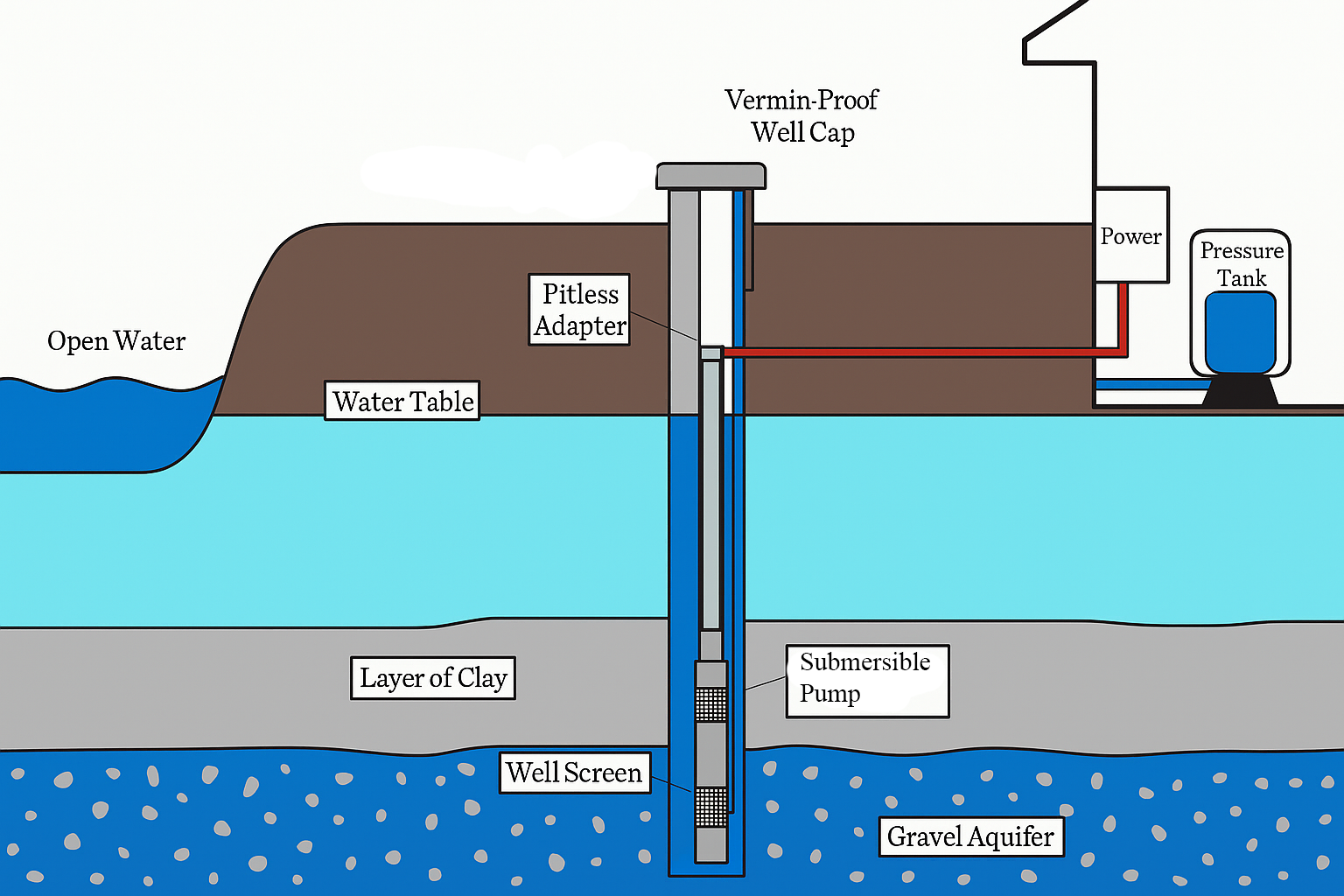 Drinking Water Well Diagram Information Water System Applications
Near the bottom, the casing has a well screen—a perforated section that lets water in but keeps sand and silt out. Think of it as a fine sieve that would make your coffee filter jealous. Without it, your faucet would spew grit instead of crystal clarity.
Cultural reference: ancient Roman wells used ceramic rings and gravel for the same purpose. They called it a "cistern," but the technology isn’t that different. Hats off to the engineers who figured this out before electricity existed.
Pressure Tanks: The Unsung Heroes
So the pump brings water up—now what? It flows into a pressure tank in your basement or garage, often blue or green. This tank stores water under pressure so you get a steady stream from your shower, not a pathetic dribble.
Inside, a rubber bladder separates air from water. As water fills the tank, it compresses the air. When you turn on a tap, that compressed air pushes water out—without the pump running. Magic? No, just basic physics.
Practical hack: check your tank’s air pressure every six months with a tire gauge. It should be about 2 psi lower than the pump’s cut-in pressure. Too low, and your pump cycles on and off like a nervous bee.
Water Quality: What’s Really Down There?
Well water isn’t treated by a municipal plant. That means you are the lab tech. Hard water, iron, sulfur (hello, rotten-egg smell), or even bacteria can sneak in. Testing annually is non-negotiable.
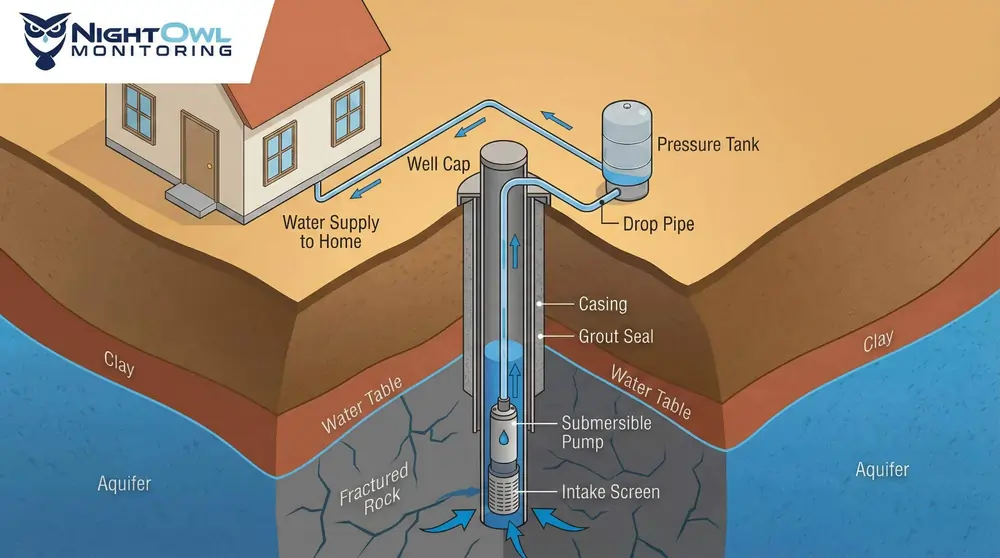 How Does a Water Well Work | Residential Well System Explained
A simple do-it-yourself test kit can check for pH, nitrates, and coliform bacteria. For deeper peace of mind, hire a pro to run a full panel. The cost? About a pizza dinner—worth it for water that won’t turn your whites orange.
Fun fact: in rural Iceland, well water is naturally heated by geothermal activity. Locals bathe in warm, mineral-rich water straight from the ground. Your well might not be that glamorous, but it’s still ancient liquid treasure.
Maintenance: Little Love, Big Results
Wells are low-maintenance, but they’re not immortal. Protect the wellhead from lawnmowers, pesticides, and livestock. A cracked cap can let in spring runoff and turn your water into a science experiment.
Listen to your pump: odd noises, surging pressure, or a sand-like texture in your glass are red flags. Most wells last 30 to 50 years, but a sleepless pump can croak at 15. A quick check-up every few years is cheap insurance.
Practical tip: avoid using chemical drain cleaners or pouring motor oil near your well. The ground is a slow-filtering sponge, and that junk ends up in your aquifer. Treat the earth like you’d treat your own lungs.
Reflection: The Well and Your Daily Life
Every time you pour a glass of water from your tap, you’re sipping from a system that’s Alice-down-the-rabbit-hole deep. The well is a quiet partner in your morning coffee, your dog’s bowl, and the steam rising from your shower. It’s a reminder that comfort comes from cooperation with nature.
Next time you hear the pump hum, think of it as a gentle whisper from the earth. That water has traveled through rock, sand, and time—just to fill your glass. So, go ahead, raise it high. To the well.
