Best Water Systems For Well Water

So, you’ve joined the Well Water Club. Congratulations! You now own a private, underground lake that may or may not be haunted by a rusty ghost named Sediment Steve. Unlike ci...

So, you’ve joined the Well Water Club. Congratulations! You now own a private, underground lake that may or may not be haunted by a rusty ghost named Sediment Steve. Unlike city water, which is basically science soup, your well water comes straight from Mother Nature’s own tap—often tasting like a wet rock and a dead field mouse had a fight in your glass. But don’t panic! With the right water system, you can turn that “wilderness smoothie” into something you’d actually serve to guests.
Step One: Know Your Enemy (It’s Probably Iron)
The first thing you need to do is get your water tested. Not by licking a pipe, but by a lab. You’re looking for iron, manganese, sulfur (the “rotten egg” gremlin), and hardness. A shocking fact: one-third of all well water in the U.S. has too much iron, which turns your pristine white toilet bowl into a Rusty Jackson Pollock painting.
If you have “red water” or weird stains, you’ve got a mineral party—and you’re not invited. The solution isn’t to buy a bigger plunger. It’s to buy the right water system before you start looking like a Victorian coal miner after every shower.
Must Read
The Heavy Hitter: The Water Softener
For most wells, a whole-house water softener is your MVP. It’s like a bouncer at a club, kicking out calcium and magnesium so your soap doesn’t throw a tantrum. Without it, your hair will feel like you washed it with sandpaper, and your dishes will look like they fought a losing battle against a chalkboard.
But here’s the twist: softeners don’t remove iron. They help, but if you’ve got serious iron, you need a specialty iron filter first. Think of it as sending Sediment Steve to a spa, then letting the softener handle the regular riff-raff.
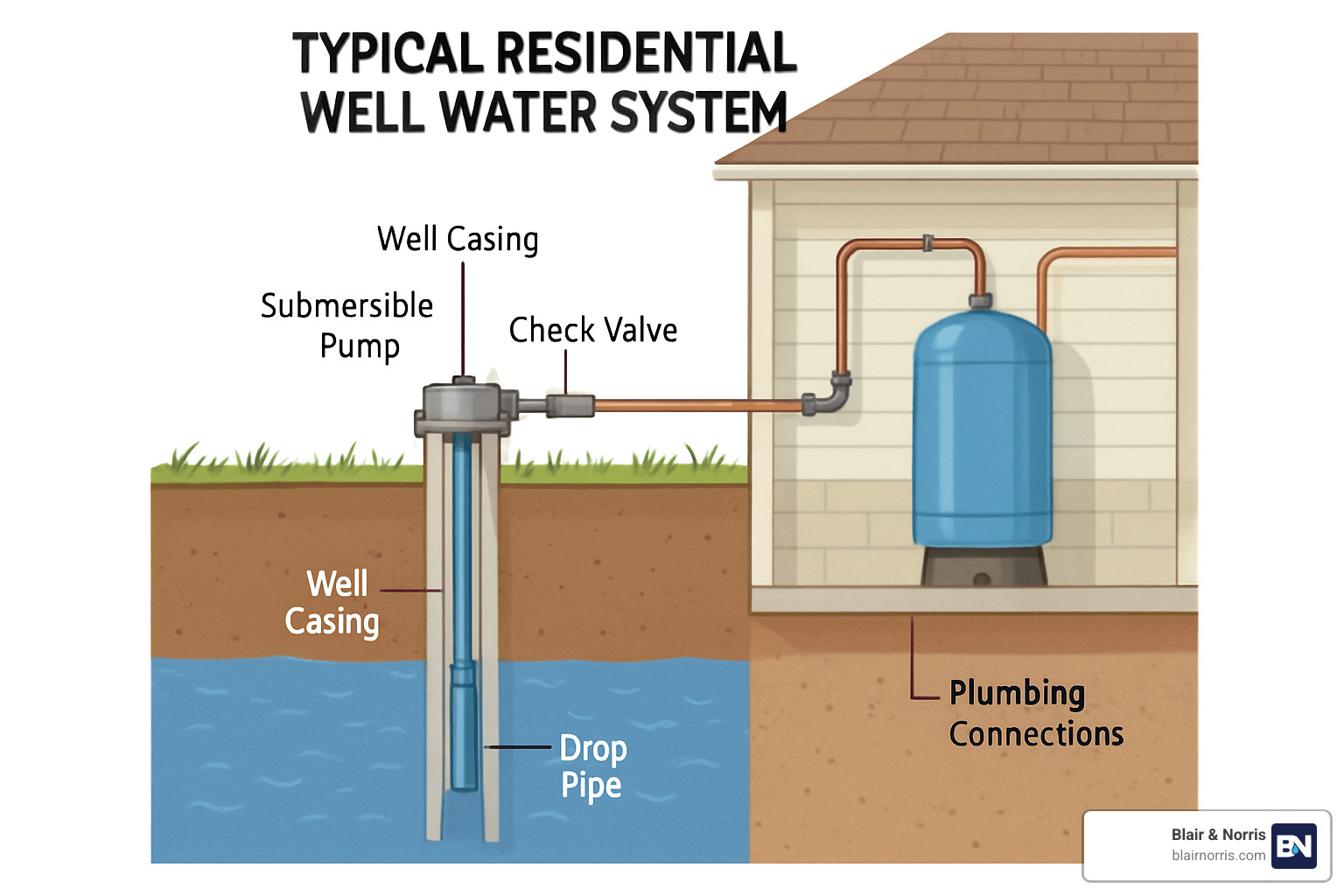 well pump setup: 10 Essential Steps for a Powerful 2025 Success
Banish the Sulfur Stench with an Oxidation Filter
If your water smells like a thousand-year-old egg salad, you’ve got hydrogen sulfide gas. It’s not harmful, but it will make your morning coffee taste like regret. The hero here is an oxidation filter, which forces the smelly gas to turn into harmless particles you can filter out.
Fun fact: some systems use a little chlorine or ozone to do the job. It’s so effective that even your dog will stop giving you side-eye when you fill his bowl. And yes, your water will smell like… nothing. Which is a gigantic win when the alternative was “chemical warfare.”
The Nitrate Nightmare (and the Reverse Osmosis Savior)
If your well is near farmland, you might have nitrates from fertilizer runoff. Nitrates are invisible, tasteless, and can make you seriously ill. This is not a joke—you cannot boil them away; you’ll just make concentrated nitrate soup. The only fix is a reverse osmosis system under your kitchen sink.
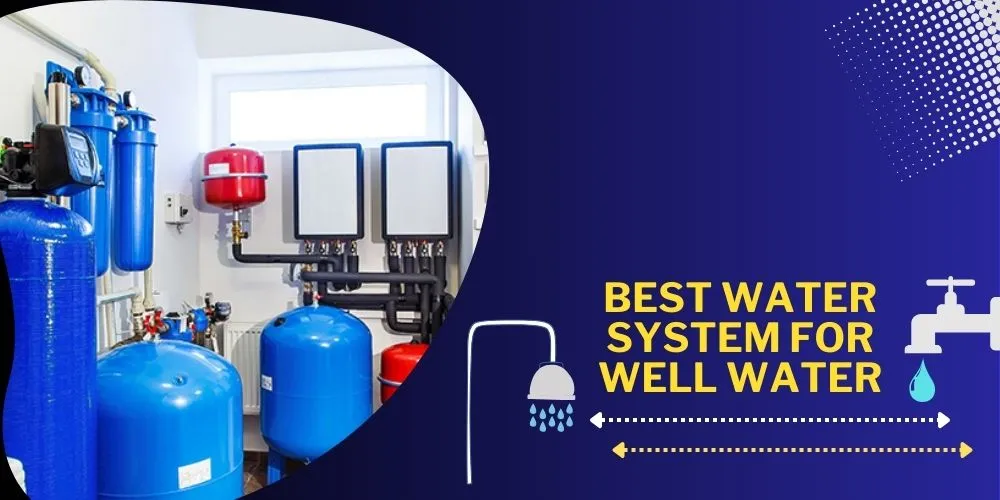 Best Water System For Well Water 2025: Top Products Reviewed
RO systems are like the VIP section of water filters: they reject everything bigger than a water molecule. It’s overkill for most wells, but if nitrates are high, it’s your only choice. And let’s be honest, drinking water that’s been through a membrane more expensive than your car’s oil filter makes you feel like a billionaire.
The Ultraviolet (UV) Light Surprise
Here’s a wild fact: well water is not sterile. It can harbor bacteria like E. coli and coliforms, which are basically microscopic party crashers. Boiling works, but who has time to boil every glass of water for the rest of their life? Enter the UV light system—a tube that zaps microbes with lethal radiation (don’t worry, it’s contained).
UV is like a Star Trek weapon for your plumbing. It kills 99.99% of germs instantly, no chemicals needed. Pair it with a sediment filter first, because germs love hiding on dirt. Your water then enters a clean, sanitized, germ-free palace. You’ll feel like a god every time you turn on the tap.
 The Clean Well Water Report
The “Do Nothing” System (Spoiler: It’s Expensive)
Some companies sell a magical “whole-house filter” that claims to fix everything. Don’t fall for it. That’s like buying a single Swiss Army knife to build a skyscraper. You need a system, not a gadget: typically a sediment filter, then a softener or iron filter, then a UV light, and maybe an RO tap for drinking.
Pro tip: buy the biggest tank you can afford. A larger tank means less salt refills and fewer angry calls to the plumber at 2 a.m. Your future self will thank you when you’re not wrestling with a 50-pound bag of salt in the rain.
Maintenance: The Part Nobody Tells You
Owning a well system is like owning a pet that you can’t pet. You have to check the salt levels, replace filters every 6 months, and sanitize the well yearly. Ignore this, and your water will slowly turn into yesterday’s dishwater.
 5 Best Well Water Systems: For Iron, Sulfur & Hardness
But here’s the upside: well water is often more delicious than city water once you treat it. It’s pure, fresh, and free from the pool-chlorine flavor that makes tap water taste like a municipal swimming pool. Plus, you’ll save money on bottled water, which you can then spend on buying a coffee machine that doesn’t get clogged with mineral scale.
The Final Rinse
Choosing the best water system for your well is a journey of discovery, a bit like dating—you have to test the water, commit to the right partner, and occasionally clean up a mess. Start with a professional test, then build your system step by step. Don’t forget: if you see orange stains, you need an iron filter. If you smell sulfur, you need oxidation. If you’re scared of germs, get UV.
And remember: your well is a unique, cranky individual. Treat it with respect, give it the right tools, and it will reward you with the best water you’ve ever tasted—clean, clear, and free of critters. Now go forth, brave well owner, and make your plumbing awesome.
