Best Water Softener Resin Cleaner

Let’s be honest: nobody wakes up thinking, “Gee, I sure hope my water softener resin is squeaky clean today.” It’s one of those things you ignore until your suddenly squeaky-c...

Let’s be honest: nobody wakes up thinking, “Gee, I sure hope my water softener resin is squeaky clean today.” It’s one of those things you ignore until your suddenly squeaky-clean hair feels like straw, or your dishes come out looking like they’ve been in a foggy night. You run a load of laundry, and your favorite black shirt looks like it has a permanent case of dandruff. That’s the moment you realize your trusty water softener might be throwing a little tantrum.
That tantrum is usually because the resin beads inside your softener are gunked up. Think of them like a bunch of tiny, overworked sponges. They’ve been sucking up calcium and magnesium for years, but over time, they get coated with iron, manganese, and the leftover gunk from city water. It’s like trying to clean a greasy pan with a sponge that’s already full of spaghetti sauce.
So, what’s the fix? You need a resin cleaner. Not a fancy gadget, not a magic wand—just a bottle of liquid that says, “I’m here to flush out the crud.” It’s the detox juice for your water softener.
Must Read
Why Your Resin Needs a Vacation
Imagine you worked 24/7 for five years without a single shower. That’s your resin beads. They’re tough little soldiers, but even a soldier needs to scrub off the grime. Without a deep clean, the resin beads lose their ability to swap hard minerals for soft ones. Your water becomes “hard” again, which is about as useful as a chocolate teapot.
You might notice your salt usage goes up, or your water pressure drops to a sad trickle. That’s your system crying for help. A good resin cleaner is like sending those beads to a five-star spa, minus the tiny towels.
And the best part? You don’t need a chemistry degree. Most resin cleaners are as simple as pouring a bottle into your brine tank or directly into the resin tank during a regeneration cycle. It’s so easy, you could do it while half-watching a cat video.
 Amazon.com: Evo Dyne Water Softener Cleaner (32oz), Made in USA
The Usual Suspects: Which Cleaner to Choose?
There are two main types of resin cleaners: rust removers and biofilm busters. Rust removers handle the iron and manganese that make your water taste like a penny. Biofilm busters tackle the slimy bacteria that can build up inside your system. Think of it as choosing between a stain remover and an antibacterial spray.
If you have well water, you’re probably dealing with iron. Look for a cleaner with citric acid or sodium hydrosulfite. These chemicals are like a gentle scrub brush for your resin. For city water with chloramines, go for a cleaner that breaks down organic gunk—it’s like sending in a tiny platoon of scrubbers.
Don’t just grab the first bottle you see. Check the label to see if it’s safe for your specific resin type. Using the wrong cleaner is like putting dish soap in a car’s oil tank. It’s messy and expensive.
The Anecdote: The Time I Ignored the Signs
I once let my resin go a full four years without any cleaning. My water started tasting like a metallic ghost had died in the pipes. I blamed the water heater, the city, even the moon. Finally, I admitted defeat and bought a bottle of resin cleaner.
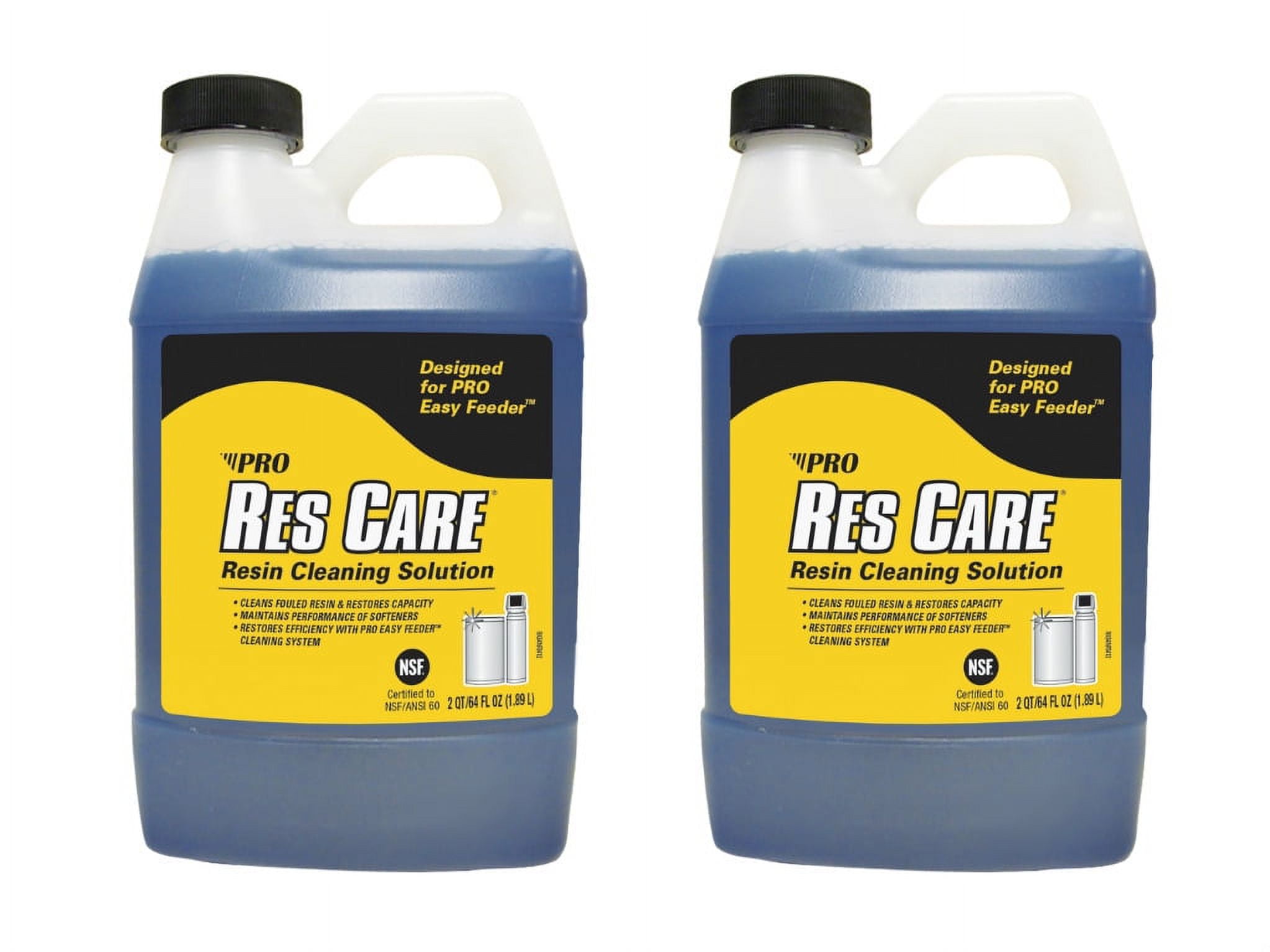 ResCare All-Purpose Water Softener Resin Cleaner Treatment, 64 oz
After a two-hour regeneration cycle, I ran the faucet. It smelled like a fresh mountain stream—no joke. My skin stopped feeling like sandpaper, and my coffee went from “bitter disappointment” to “breakfast highlight.” I felt like a genius, but I was just a guy who finally read the instructions.
Moral of the story: don’t be like me. Clean your resin every six to twelve months. It’s cheaper than replacing the whole unit, and your dishes won’t look like they have a permanent watermark.
How to Apply the Magic Potion
Process is dead simple. Turn off your softener for a bit, add the cleaner to the brine well or directly to the resin tank (check your manual, it’s not a guessing game). Then, force a manual regeneration. The cleaner will bubble and foam like a volcano science project.
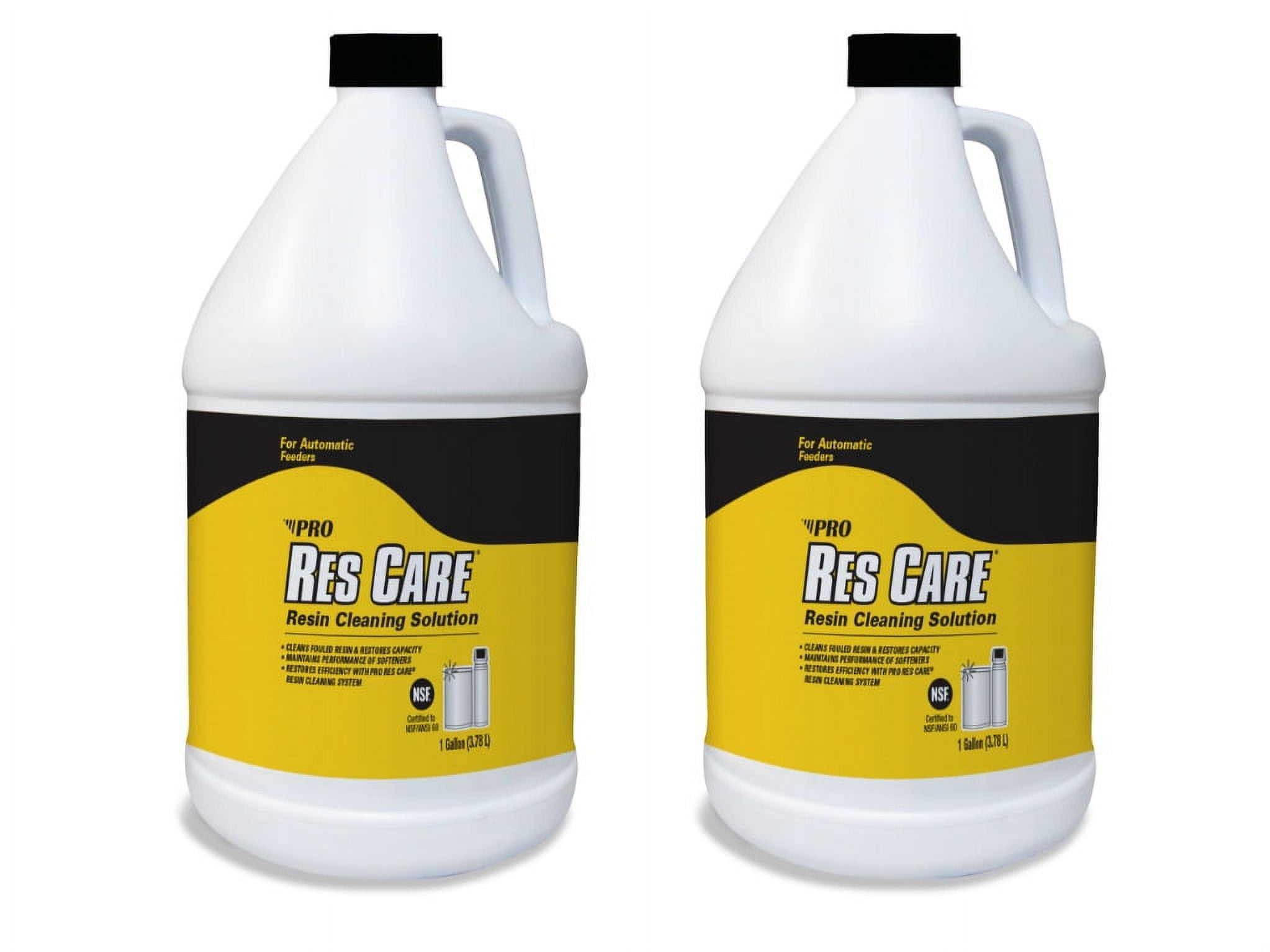 ResCare All-Purpose Water Softener System Resin Cleaner, 1 Gallon, 2
Let it sit overnight if the instructions say so. Patience is key. Think of it as marinating a steak—you can rush it, but it won’t be tender.
Then, flush the system thoroughly. You don’t want that cleaner getting into your drinking water. It’s safe when used correctly, but nobody wants a morning coffee with a chemical aftertaste.
The Bottom Line on the Best Cleaners
Brands like ResCare or Iron Out are the rock stars of the resin cleaning world. They work, they’re affordable, and they don’t require you to wear a hazmat suit. You can find them at most hardware stores or online with free shipping.
If you’re feeling extra lazy, some cleaners come in pre-measured packets. Just rip, pour, and go. It’s the instant ramen of water softener maintenance.
 Best Water Softener Resin Cleaners to Maintain Softener Performance
Don’t fall for expensive “all-in-one” magic potions that promise to fix everything. Stick to cleaners designed specifically for resin. Your softener isn’t a car—you don’t need fancy additives.
A Final Nod to Your Sanity
Your water softener works hard for you, usually in a dark, damp corner of your basement. It deserves a little TLC. A good resin cleaner is cheap insurance against a costly replacement.
Next time you take a silky shower or drink a glass of water that doesn’t taste like a coin, give a little nod to the tiny beads. And maybe buy them some cleaner. They’ve earned it.
Now go pour that bottle, kick back, and enjoy water that doesn’t hate you. You’ve got this.
