Best Well Water Filtration Systems

Let’s be real for a second. You take a nice, long sip of water from your tap, expecting that crisp, refreshing taste. Instead, you get a mouthful of something that tastes like...
:max_bytes(150000):strip_icc()/aquasana-whole-house-well-water-filter-system-68651cbaa66a4921b287057afec93edf.jpg)
Let’s be real for a second. You take a nice, long sip of water from your tap, expecting that crisp, refreshing taste. Instead, you get a mouthful of something that tastes like dirt and smells vaguely of a public swimming pool.
Welcome to the wonderful world of well water. It’s like having a private lake in your basement, but one that sometimes comes with uninvited guests like iron, sulfur, or sediment.
You aren’t alone if you’ve Googled “how to make my water not taste like a rusty spoon” at 2 a.m. We’ve all been there, staring at a glass of cloudy liquid and wondering if it’s safe to even brush your teeth with it.
Must Read
The good news is that a good well water filtration system isn’t some science lab contraption. It’s more like a personal bodyguard for your kitchen sink, ready to knock out the weird stuff so you can enjoy a glass of water without wincing.
First, Know Your Enemy (and Your Water)
Before you buy the biggest, shiniest filter you can find, take a deep breath. Your neighbor three houses down might have perfect water, while yours tastes like a mineral spring that went through a haunted house.
You’ve got to test your well water. Think of it like a detective show: you need to know if you’re chasing hard water, iron bacteria, or that rotten-egg smell (sulfur is a real party pooper).
Get a simple test kit from the hardware store. It’s cheaper than crying into a pitcher of store-bought water every week, trust me.
 Well Water Filtration Systems
The Classic Sediment Filter: Your First Line of Defense
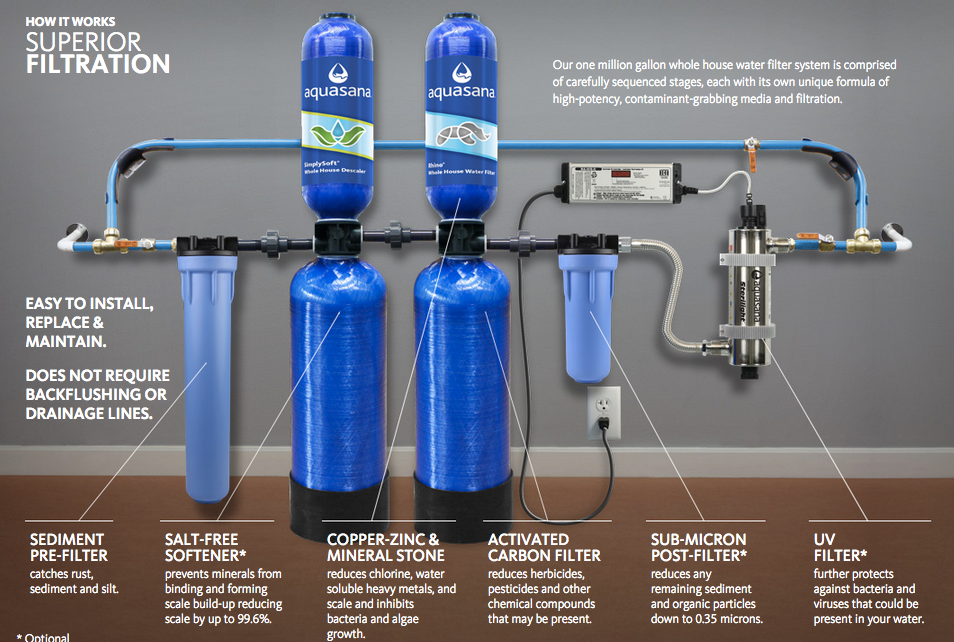
This is the gatekeeper of your whole system. It’s not glamorous, but it’s essential. Imagine your water is a muddy river; a sediment filter is the bouncer at the club who says, “No sand, no rust flakes, no grit allowed.”
It’s usually a big blue or clear plastic canister that catches the big, chunky stuff. If your water comes out looking like weak tea, this is your new best friend.
You’ll change the filter every few months, and when you do, you’ll be shocked at the brown sludge you kept out of your pipes. It’s grossly satisfying, like popping a giant pimple, but for your plumbing.
The Whole-House System: The VIP Treatment
If you want to stop fighting with your showerhead that gets clogged every month, you need a whole-house system. This is the all-inclusive resort for your home’s water.
It treats every tap, from the kitchen to the toilet. No more surprise rusty water ruining a load of white laundry. Your dishwasher will thank you, and your soap will actually lather instead of making a slimy mess.
 Most Popular Water Filter System at Clifford Eisenberg blog
Most whole-house systems combine a water softener for calcium and magnesium (that’s the hard water that leaves white spots on your glasses) with a carbon filter for taste and odor. It’s like giving your entire house a spa day, every day.
The Salt-Based Water Softener: The Heavy Lifter
This is the hero for anyone whose water feels rough on their skin or leaves a crusty ring in the toilet bowl. It works by swapping magnesium and calcium for sodium, making your water “soft.”
You know how your hair feels squeaky clean after a shower? That’s soft water. Without it, your hair feels like straw wrapped in sandpaper because the minerals cling to everything.
You’ll need to lug home heavy bags of salt from the store, which is a bit of a workout. But the trade-off is worth it: your skin won’t feel like you just bathed in chalk.
 Top 5 Best Whole House Well Water Filtration System Reviews
The Under-Sink Reverse Osmosis: The Perfectionist
For the water you actually drink, most people go with a reverse osmosis (RO) system under the kitchen sink. This is the overachiever of the water world, removing almost everything: lead, arsenic, fluoride, even the taste of your neighbor’s burnt casserole.
It’s a bit slow (like a wise old turtle), and it wastes a little water in the process. But the result is water that tastes like nothing—which, in the water world, is the highest compliment.
You’ll have a little faucet on your counter, separate from your main sink. It feels very fancy, like you’re in a five-star hotel, but you’re just trying to make coffee without that metallic aftertaste.
The Ultraviolet (UV) System: The Germ Zapper
If your well water is prone to bacteria or viruses (yikes), you need a UV system. It’s like a tanning bed for your water, but instead of giving you a glow, it destroys the DNA of bacteria.
No chemicals, no weird taste. Just a bright light that says, “Not today, E. coli, not today.” It’s usually installed after other filters, as a final safety net.
 Water Filtration System for Well Water: How to Choose the Best Well
Honestly, it looks like a sci-fi prop from an 80s movie. You’ll feel like a mad scientist every time you glance under the sink, but a mad scientist with safe, clean water.
The “Just Do It” Recommendation
Don’t overthink this. If your water tastes bad, start with a simple sediment and carbon filter. It costs under a hundred bucks and can fix 80% of your problems.
If you still have issues, add a softener or an RO system. Think of it like fixing a car: you don’t need a jet engine to drive to the grocery store, but you do need a working windshield wiper.
Your water should be a joy, not a chore. No more holding your breath before a sip. No more apologizing to houseguests. Just good, clean, easy-going water that makes you smile.
And honestly, when you finally get that perfect glass of filtered well water, you’ll feel like you’ve won a small victory against the universe. You’ve tamed the wild, one filter at a time.
:max_bytes(150000):strip_icc()/aquasana-whole-house-well-water-filter-system-68651cbaa66a4921b287057afec93edf.jpg&description=Best+Well+Water+Filtration+Systems)