What Is The Best Tds For Drinking Water

Let’s be honest: most of us don’t think about water until it tastes weird, or until we’re standing in the supermarket aisle, hypnotized by a wall of plastic bottles. You just...
Let’s be honest: most of us don’t think about water until it tastes weird, or until we’re standing in the supermarket aisle, hypnotized by a wall of plastic bottles. You just want something that doesn’t taste like a swimming pool, right? That’s where TDS—Total Dissolved Solids—waltzes into the conversation, sounding like a science term you should’ve paid attention to in high school. But don’t worry; it’s simpler than figuring out why your phone autocorrects “water” to “Walter.”
TDS is just the fancy name for the stuff floating in your water that you can’t see. Think of it as the mineral-loaded seasoning of your hydration: a little calcium, some magnesium, maybe a dash of potassium. If water were a cocktail, TDS would be the bitters—too little and it’s boring, too much and you’re grimacing.
The Goldilocks Zone of Water
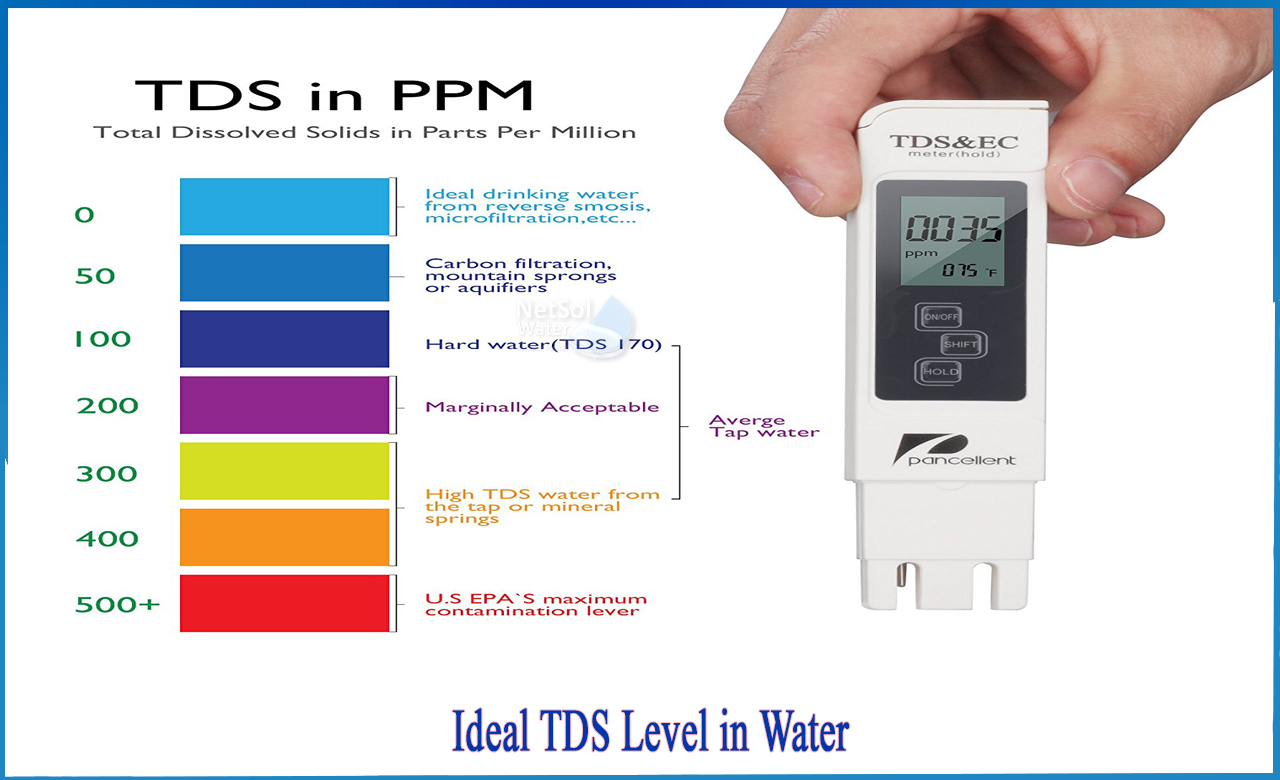
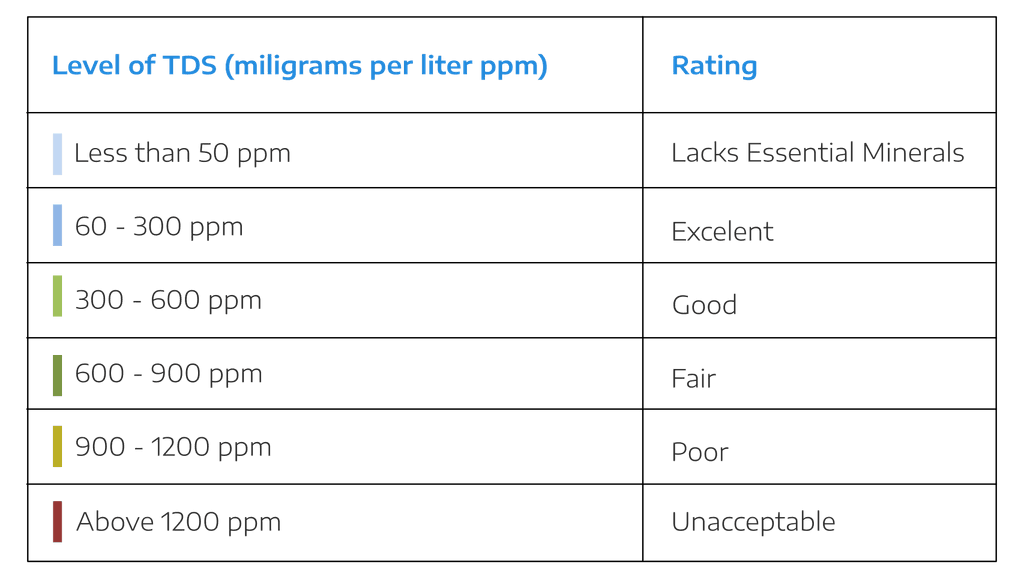
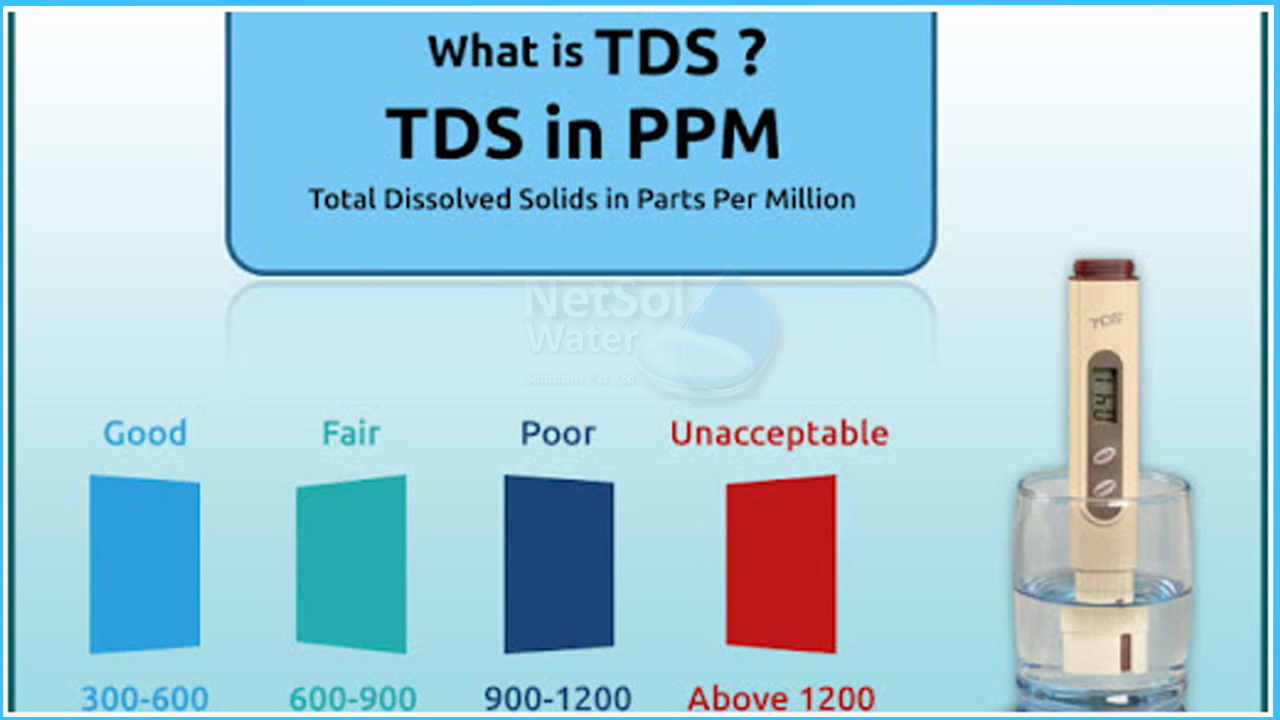
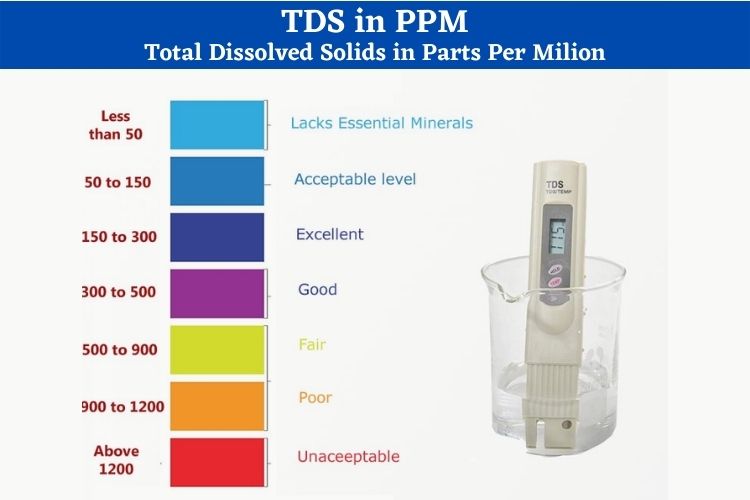
Here’s the thing: perfect TDS doesn’t exist, because perfect is a myth—like finding matching socks or a parking spot right in front. But water experts generally agree that a TDS range between 150 and 250 mg/L is where most people go, “Mmm, yep, that’s water.” It’s the sweet spot where the water tastes crisp, but not like a rock licking session.
Must Read
Below 50 mg/L? That’s aggressively empty water. It’s like a handshake from a wet fish—no character, no grip. Distilled or RO water often sits here, and while it’s safe, it tastes like you’re drinking the ghost of water. Your tongue just shrugs.
Above 500 mg/L? You’re entering “mineral bath” territory. It can get salty, metallic, or just plain chalky—like licking a driveway after a rainstorm. Your tap might smell like a gym locker if the TDS is too high, and your water heater will eventually hold a grudge.
 What Is TDS and How Monitoring Improves Your Water - Waltr
Everyday Water Fails (We’ve All Had Them)
Remember that time you visited your aunt in Arizona and the tap water tasted like a handful of aspirin? That’s high TDS, baby. Or when you bought expensive “spring water” from a fancy bottle and it made your mouth feel like you’d gargled with baking soda? Also TDS.
I once chugged a glass of water at a diner that tasted exactly like a wet band-aid. I looked at the waitress. She just shrugged. That’s the TDS of your local pipes, mixed with a little disbelief. You don’t need a chemistry degree to know what’s gross—you just need a nose and a sense of betrayal.
 Drinkable Water Tds Range
What’s “Best” for You?
The best TDS for drinking water is the one that makes you want to drink more water. If you’re constantly reaching for soda or juice because your tap water tastes like dirt, your TDS might be too high. If you’re guzzling water but still feel thirsty, your TDS might be too low—because minerals help your body actually absorb the H2O.
Water with a TDS around 100–300 mg/L is what most municipal systems aim for. It’s the “Goldilocks” zone: not too flat, not too funky. Brands like Dasani and Aquafina hover around 10–50 mg/L, which is why some people call them “industrial water.” Meanwhile, mineral spring water companies brag about 300+ mg/L, selling you the “terroir” of a French mountain—totally fine if you like paying five bucks for rocky-tasting rain.
 Drinkable Water Tds Range
The Toothpaste Test
Here’s a easy, no-lab-test way to guess your TDS: taste your water after brushing your teeth. If it tastes amazing—like a fresh, clean palette—you probably have low TDS. If it tastes like you’re rinsing with a penny, you’ve got heavy minerals. If it tastes like you’re drinking a cloud, congratulations, you’re probably drinking rain.
Seriously, the toothpaste test never lies. It’s the same reason hotel water tastes weird: different geology, different TDS. You’re not crazy—your inner lizard brain just knows the local rock recipe.
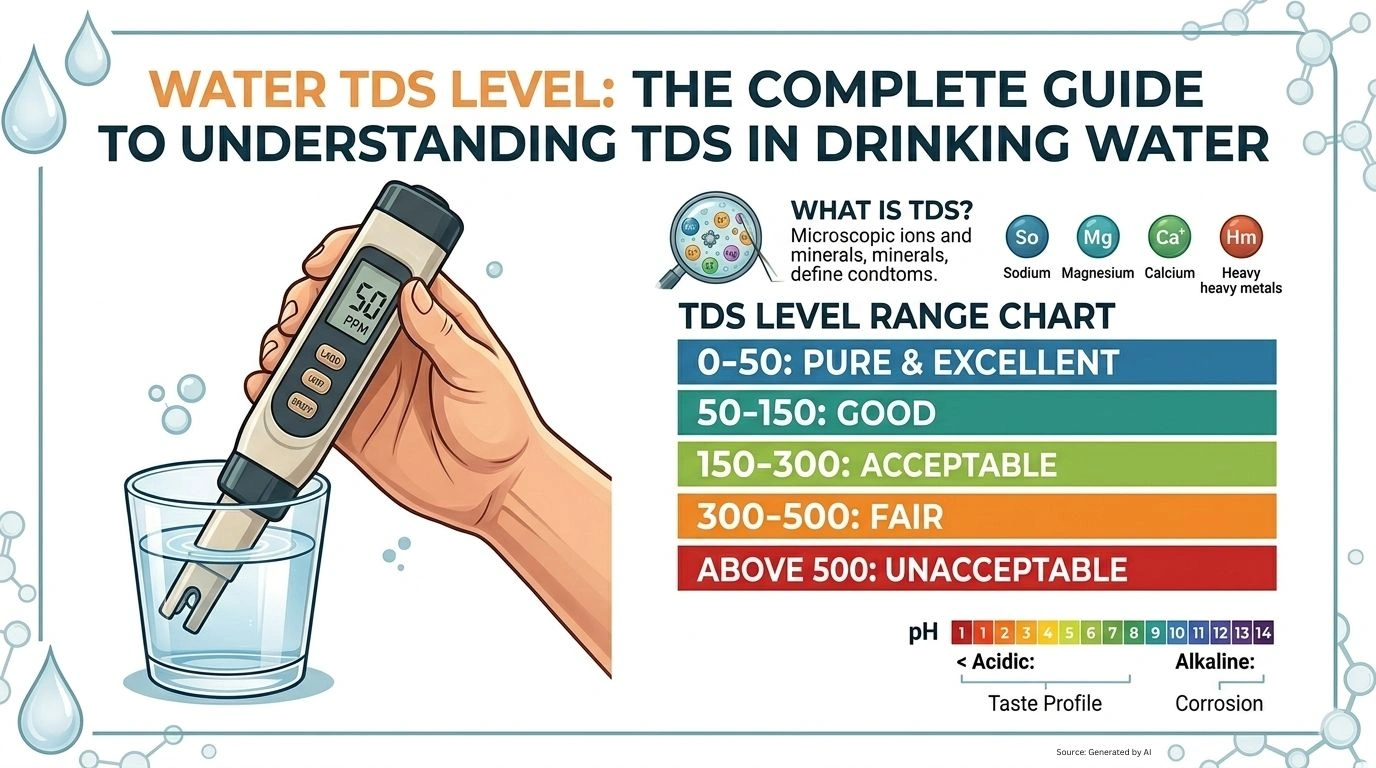 Water TDS Level: The Detailed Guide For Drinking Water TDS | ZeroB
Don’t Overthink the Numbers
Stop obsessing over a perfect number. Unless you’re a coffee snob or a home-brewing wizard, the scale doesn’t matter that much. Your body is smarter than a meter. If water tastes good, you’ll drink more. If it tastes like a melted cough drop, something’s off—get a filter, or move to a different city.
The real best TDS is the number you never think about. It’s the water that comes out cold, clear, and clean—without making you wonder if you just licked a mountain. If you’re still stressing, buy a cheap TDS meter for ten bucks. Test your tap, then your friend’s tap, then the weird bottled water your cousin hoards. You’ll realize most water is fine, and some is just… a mineral experience.
So drink up. Stop worrying. Your kidneys don’t care about the exact number. They just want you to stop drinking Mountain Dew at 2 p.m. Water—the kind that makes you go “ahhh”—is the only goal. And if it tastes like a meadow after rain? Well, you’ve hit the jackpot.
