Best Water Softener For Tankless Water Heater

So, picture this: It’s a freezing Tuesday morning, and I’m standing in my bathroom, shivering, ready for a hot shower. I turn on the tap, waiting for that instant blast of hea...

So, picture this: It’s a freezing Tuesday morning, and I’m standing in my bathroom, shivering, ready for a hot shower. I turn on the tap, waiting for that instant blast of heat my fancy tankless water heater promised. Nothing. Then a trickle. Then a faint, rattling groan from the wall. After five minutes of teeth-chattering prayer, I get lukewarm water and a suspicion my wallet is about to cry. The culprit? Hard water scale—that silent, sneaky saboteur that turns a tankless heater into a very expensive paperweight.
Yeah, that was my wake-up call. And trust me, you don’t want to get that call. A tankless water heater is amazing—endless hot water, energy savings, the works—but it’s also a high-maintenance diva when it comes to water quality. Without a water softener, that mineral buildup doesn’t just annoy you; it destroys the internal heat exchanger, and replacing that is like buying a new heater. So, let’s talk about finding the best water softener to keep your tankless system singing—not dying.
Why Your Tankless Heater Is a Bit of a Princess
Here’s the thing: tankless heaters have tiny, narrow pipes that heat water on demand. Hard water minerals (calcium and magnesium) love to cling to those pipes like barnacles on a ship. Over time, that scale acts like insulation, trapping heat and making your unit work twice as hard to warm water.
Must Read
Before you know it, your heater’s efficiency drops, water flow slows to a sad drizzle, and the warranty—which usually demands soft water—becomes useless. Pro tip: Most manufacturers void the warranty if you skip a water softener. So, you’re not just buying a softener; you’re buying peace of mind.
The Two Heavyweights: Salt-Based vs. Salt-Free Softeners
Okay, let’s get real about your options. Salt-based ion exchange is the gold standard. It literally pulls minerals out of the water and replaces them with sodium (or potassium). It’s powerful, affordable, and the only true way to prevent scale buildup in your heater.
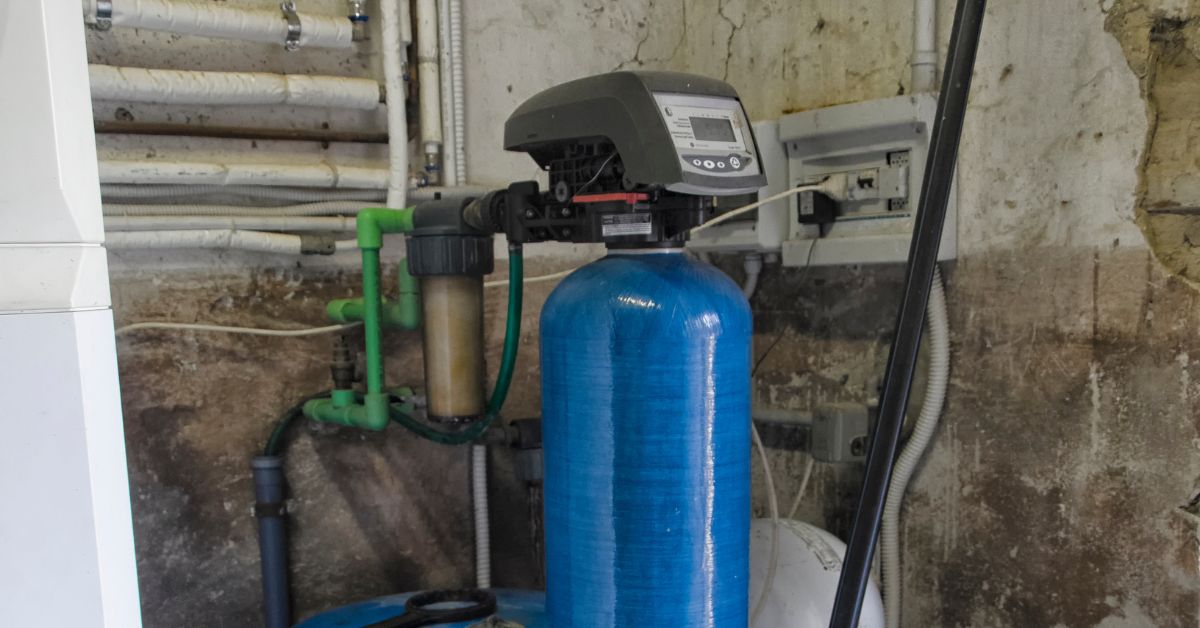 9 Best Water Softeners for Tankless Water Heaters in 2023
Then there’s the salt-free “conditioner”, which doesn’t remove minerals but crystallizes them so they can’t stick to pipes. It’s lower maintenance, no slimy brine tanks, and you don’t drink extra sodium. But here’s the irony: it won’t protect your tankless heater as effectively as salt-based systems, especially with very hard water. For a tankless unit, I’d only recommend salt-free if your water is already under 7 grains of hardness. Otherwise, stick with salt-based. (Yes, I see you rolling your eyes at the brine tank. Deal with it.)
What to Look For—The Shortlist for Tankless Lovers
First, you need a system with a high flow rate. A typical tankless heater needs 6 to 12 gallons per minute (GPM). Your softener must handle that without choking the flow. Look for a unit rated at least 12 GPM—don’t skimp here.
Second, grains capacity matters. If your water is super hard (over 15 grains per gallon), you’ll want a 40,000- to 48,000-grain system. Too small, and it regenerates every other day—wasting salt and water. Too big? It’s a waste of money and space. Get a water test kit from Amazon first.
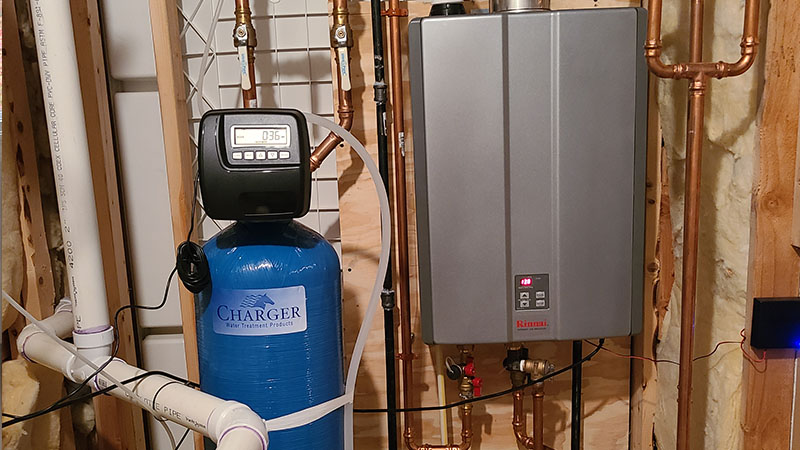 Water Softener And Tankless Water Heater | Gas Furnace
Third, smart regeneration is your friend. Modern softeners have “demand-initiated” controls—they only regenerate when needed, saving up to 50% on salt and water. Your wallet will thank you, and your heater will get consistent protection.
My Top Picks (With Side Commentary)
After my own plumbing disaster, I tested a few. The Fleck 5600SXT 48,000-Grain is the workhorse of the industry. It’s not fancy, but it’s reliable, easy to fix (YouTube has a million videos), and handles tankless flow rates without a sweat. The only downside? It’s a bit noisy during regeneration—like a friendly robot gargling.
 How To Add Water Softener To Tankless Water Heater at Sherry Stamps blog
If you want something sleek and techy, the Springwell WS-SC is a salt-free option that actually works for moderate hardness. It’s compact, no electricity needed, and comes with a lifetime warranty. But again, if your water is harder than 10 grains, skip it. You’ll end up like me: whispering apologies to your heater.
For the “set it and forget it” crowd, the iSpring ED2000 is a salt-based system with a digital display and meter control. It regenerates only when needed, plus it filters sediment and chlorine. It’s a bit pricier, but it’s like having a pit crew for your water.
The Installation Reality Check
Don’t panic—you don’t need a plumber for most softeners if you’re handy. But with a tankless heater, you must install the softener before the heater. And please, add a sediment pre-filter before the softener. If your water has sand or rust, it’ll wreck the resin in the softener, and then your tankless suffers.
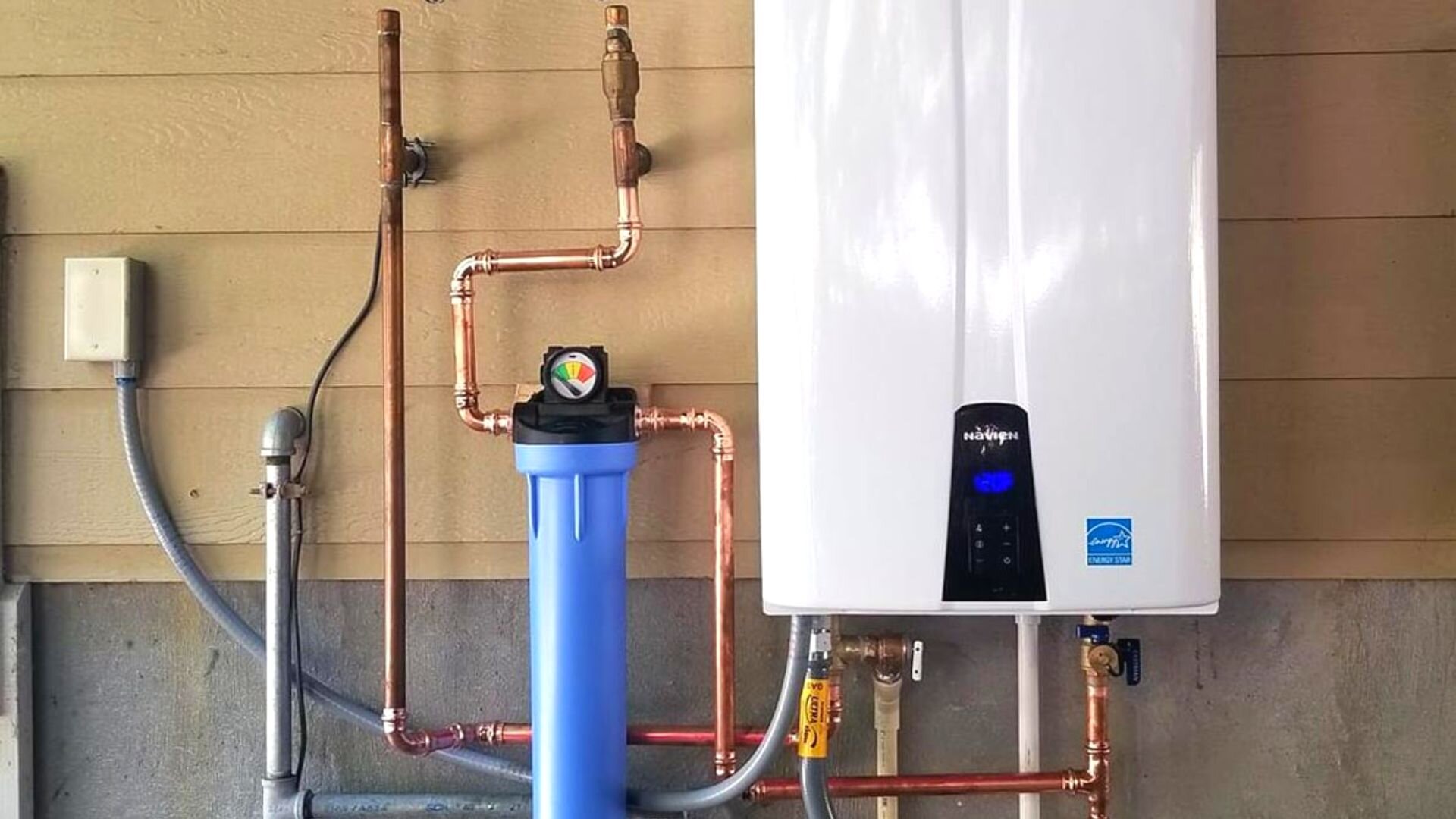 Tankless Water Heater And Water Softener | Gas Furnace
Also, remember that salt-based softeners add tiny amounts of sodium to your water. If you’re on a low-sodium diet, use potassium chloride instead of salt. It costs more, but your heart—and your heater—will love you for it.
Here’s a final ironic truth: the best water softener for your tankless heater is the one you actually maintain. I learned that the hard way after ignoring mine for six months. Don’t be like me. Check salt levels monthly, clean the brine tank yearly, and run a vinegar flush through your heater annually. Do that, and your tankless will outlive your grudge against hard water.
Now go ahead, buy that softener. Your future warm showers are rooting for you.
