Best In Home Water Filters

Okay, grab your mug. Let’s talk about the secret life of your tap water. You know that faint bleach smell? Or that weird, metallic ting? Yeah, your water has stories to tell,...
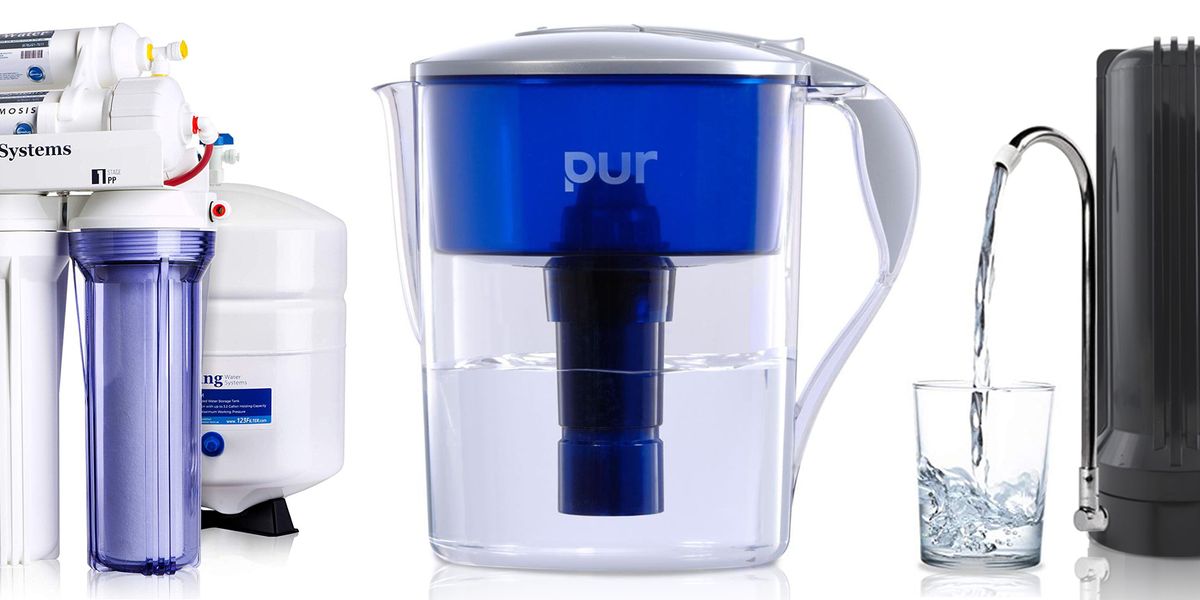
Okay, grab your mug. Let’s talk about the secret life of your tap water.
You know that faint bleach smell? Or that weird, metallic ting? Yeah, your water has stories to tell, and honestly? They aren’t all good.
So, you want the best in-home water filter. Great choice. But where do you even start?
Must Read
There are so many options it’s like a dystopian choose-your-own-adventure. Pitcher? Faucet mount? Under sink? Whole house? It’s overwhelming, I know.
Let’s break it down like we’re shopping for snacks. First up: the pitcher filter.
This is the trusty sidekick. The Brita, the Pur. Cheap, cheerful, and lives in your fridge.
It’s great for basic stuff—making tap water taste less like a swimming pool. But don’t expect it to zap heavy metals or serious contaminants. It’s a t-shirt, not a hazmat suit.
Next, the faucet-mounted filter. This little gadget screws right onto your spout.
It’s a happy medium. You flip a switch and get filtered water on demand. No pouring, no waiting.
The downside? It bulks up your faucet. Plus, you have to remember to switch it back for hot water. I forget constantly. Don’t be me.
Now we’re talking serious business
Under-sink filters. This is where the magic happens. These systems sit hidden in your cabinet.
 Best Home Water Filtration Systems | How to Choose
They hook directly into your cold water line. Instant, clean water from a dedicated faucet. Fancy, right?
Many use carbon filters, which are great for chlorine, bad tastes, and some chemicals. Some add reverse osmosis—the overachiever of filtration.
Reverse osmosis (RO) basically pushes water through a membrane so tiny, even microbes get denied entry. Like a bouncer for a very exclusive club.
RO systems can remove lead, arsenic, fluoride, and nitrates. If your water comes from a well or an old rusty pipe? This is your knight in shining armor.
But—there’s always a but—RO wastes water. It throws away a few gallons for every clean gallon. Also, it strips out good minerals.
Some models add minerals back in. Yes, they literally put the calcium and magnesium back. Madness? Brilliant madness.
What about the whole house?
Let’s talk about whole-house filters. These systems treat every single drop that enters your home.
Shower, washing machine, every toilet flush—all filtered. Your skin will thank you. Your pipes will throw a party.
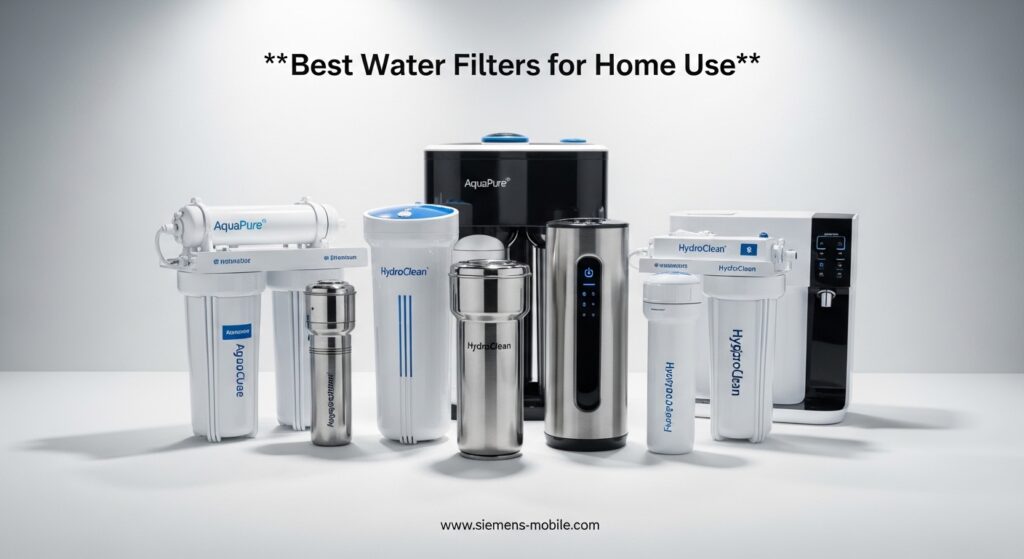 10 Best Water Filters for Home Use (March 2026) Expert Reviews
They’re brilliant for hard water (that chalky scale on your kettle). They stop your hair from feeling like straw.
But they’re big and pricey. You’ll need a professional to install one. And you’ll also need to remember to change the filters or your house turns into a swamp. No pressure.
So, what’s the best one? Honestly? It depends on what you want to remove.
Get your water tested first. You wouldn’t buy shoes without knowing your size, right? Same logic applies.
You can order a cheap test kit online. Or call your local water utility. They’ll tell you exactly what’s swimming in your glass.
If you just want better-tasting water for drinking, a pitcher or faucet mount is fine. You’ll be happy. You’ll drink more water. You’ll feel superior at parties.
If you want pure water for cooking and drinking? Go under-sink with RO. No regrets.
If your water stains everything orange or smells like rotten eggs? You need a whole-house system. Your skin and washing machine will kiss you.
/SPR-HOME-8-best-home-water-filters-4159152-b0324b8bd84749adadc5834d727532fe.jpg) The 8 Best Whole-house Water Filters of 2022
The 8 Best Whole-house Water Filters of 2022
Oh, and filter maintenance. Let’s not forget that. Filters are like loyal pets—they need feeding (replacing).
Forget to change your filter? Bacteria can grow on the old carbon. Suddenly you’re drinking the opposite of filtered water. Ew.
Set a reminder on your phone. “Hey dummy, change the filter.” You’re welcome.
Also, some filters have lab certifications (like NSF). Look for those. That sticker means they actually do what they promise.
A filter that’s not certified? It might be fancier than a cardboard box. Don’t get tricked.
Here’s a hot take: countertop filters are making a comeback. They sit next to your sink, connect with a hose, and look sleek.
They’re easier to install than under-sink models. And they don’t waste cabinet space. But they take up counter space. Pick your poison.
Some even boil water for you. Instant tea. Instant noodles. Instant everything.
:max_bytes(150000):strip_icc()/spr-best-water-filters-tout-2ff89aaad5d045f292d3b062ff2930b5.jpg) The 8 Best Whole-House Water Filters to Improve Your Drinking Water
The 8 Best Whole-House Water Filters to Improve Your Drinking Water
So, what’s my final verdict? For most people? An under-sink carbon block filter is the sweet spot.
It’s affordable, effective, and out of sight. Pair it with a refillable glass bottle, and you’re a hydration superhero.
If your budget allows? Go for a two-stage under-sink system. One stage for sediment, one stage for taste. Boom.
Your water will taste like it came from a mountain spring. Or at least a very fancy hotel lobby.
Remember, you are what you drink. And your body is mostly water. So treat that water with some respect.
Don’t be shy. Ask your friends what they use. Compare notes. Argue about which filter is the best.
It’s a healthy obsession, I swear. And your kidneys will thank you for it.
Now go forth and filter. Your future self—the one with glowing skin and stainless steel tea kettles—is already clapping.
Or at least they will be once the chlorine is gone. Promise.
