The Best Water Softener System

So there I was, last Tuesday morning, staring at my coffee mug like it had personally offended me. You know that cloudy film on top? The one that makes your perfectly brewed $...
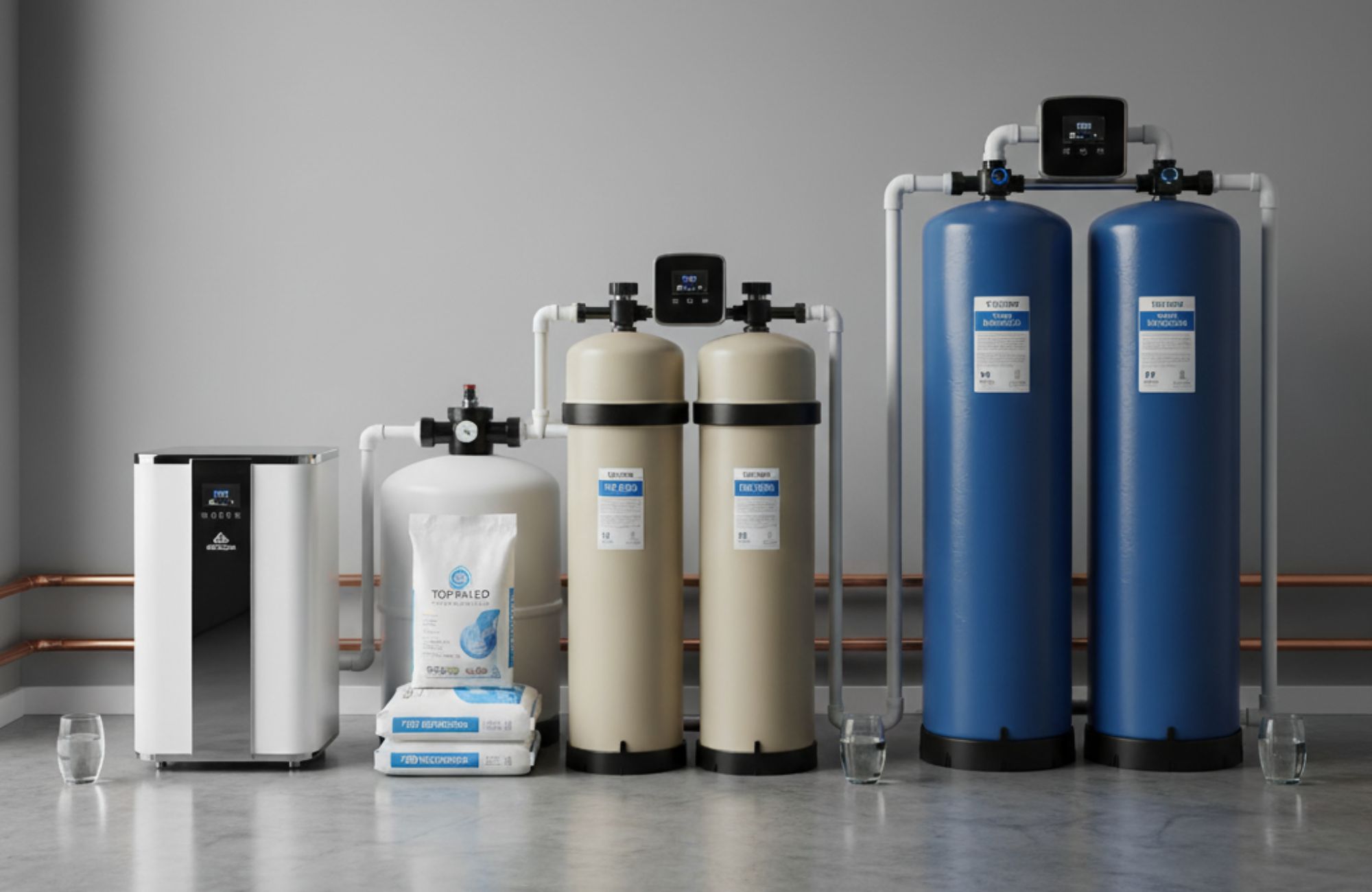
So there I was, last Tuesday morning, staring at my coffee mug like it had personally offended me. You know that cloudy film on top? The one that makes your perfectly brewed $40-a-pound beans taste like dishwater? Yeah, that was my life. My wife kept buying expensive spa shampoos, but our hair felt like straw no matter what. That, my friend, is the quiet misery of hard water—and it’s why I started obsessing over the best water softener system.
Let’s be honest: nobody wakes up dreaming about salt tanks and ion exchange resins. But after one week with a decent softener, you’ll wonder how you ever lived without it. Your dishes will sparkle without those weird white spots. Your skin? Suddenly, it won’t feel like you just ran through a sandstorm. So, buckle up—we’re diving into the good, the bad, and the surprisingly simple world of softening your home’s water.
The Big Question: Salt-Based vs. Salt-Free
Here’s where most people get stuck—including me, for about three months of research. A salt-based water softener is the classic workhorse: it uses resin beads to swap calcium and magnesium for sodium. It works like a charm, but it does require you to buy bags of salt every month. (Pro tip: set a reminder on your phone, or your wife will give you that look when the water turns hard again.)
Must Read
Then there’s the salt-free system, which is technically a water conditioner, not a softener. It uses a process like template-assisted crystallization to neutralize minerals so they don’t stick to your pipes. No salt, no slimy feeling in the shower, and no wastewater. But—and this is a big but—it won’t remove the minerals from your water, so it’s less effective on very hard water (over 10 grains per gallon).
My take? If your water is above 7 gpg, go salt-based. If you’re on a low-sodium diet or hate hauling salt, go salt-free and be okay with softer-but-not-silky water. Ignore the marketing hype that promises “water the way nature intended”—nature also gave us mud puddles.
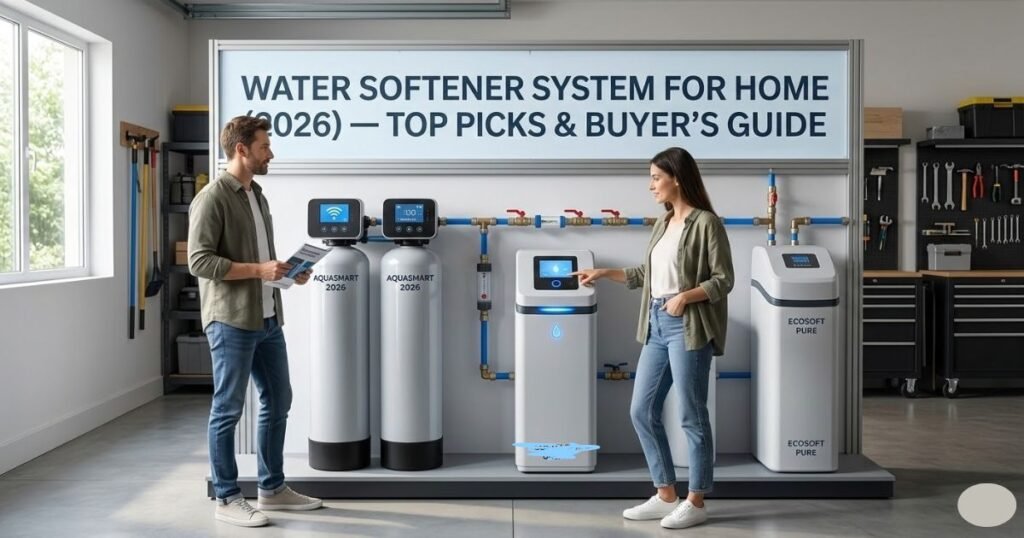 Best Whole House Water Softener System for Home (2026) — Top Picks
What to Look For (Besides Pretty Packaging)
First, check the grain capacity. This number tells you how much hardness the system can remove before it needs to regenerate. A family of four with moderate hardness (say, 10 gpg) should look for 32,000 to 40,000 grains. Overbuying is better than underbuying—trust me, you don’t want the system regenerating every night because you skimped.
Second, consider the flow rate. If you’re running two showers and a dishwasher at the same time, you need a system that can keep up, measured in gallons per minute (GPM). A small unit might choke and leave you grumpy mid-shampoo. Aim for at least 10–12 GPM for a typical household.
 5 Best Water Softener Systems: Expert-Tested In 2026
Third—and this is where I got burned—look at the warranty. Some brands offer a lifetime warranty on the tank, but only a year on the valve. The valve is the brain of the system; if it fails, you’re stuck with a giant plastic bucket. Spend the extra $50 for a solid valve warranty, and do not buy a no-name brand from Amazon just because it has flashy emoji reviews.
The Top Contenders (Based on Real-Life Grumbling)
If you want the gold standard of salt-based systems, the Fleck 5600SXT is practically legendary. It’s built like a tank, the valve is repairable by anyone with a YouTube account, and it’s what plumbers install in their own homes. The downside? It looks like a white refrigerator from 1995, but hey—function over fashion.
For salt-free, the Springwell Futuresoft gets rave reviews for handling up to 13 gpg without salt. It’s sleek, compact, and won’t flood your basement if the power goes out (no drain needed). Just know that it doesn’t soften—it conditions. Your soap will still lather, but your hair might not feel like silk.
 5 Best Water Softener Systems: Reviewed For Value In 2026
Budget pick? The iSpring ED2000. It’s affordable, has a decent digital display, and sits in the corner quietly doing its job. It’s not flashy, but neither is your water heater—and you don’t complain about that, right?
Installation: Call a Pro or Get Your Hands Dirty?
I’ll be straight with you: installing a water softener is a weekend DIY project only if you’re comfortable with basic plumbing—cutting copper pipe, soldering, and dealing with a tight space under a sink. If that sounds like a nightmare, call a plumber. It’ll cost you $200–$400, but it’s worth it to avoid a leak that ruins your kitchen floor. (Ask me how I know. Actually, don’t.)
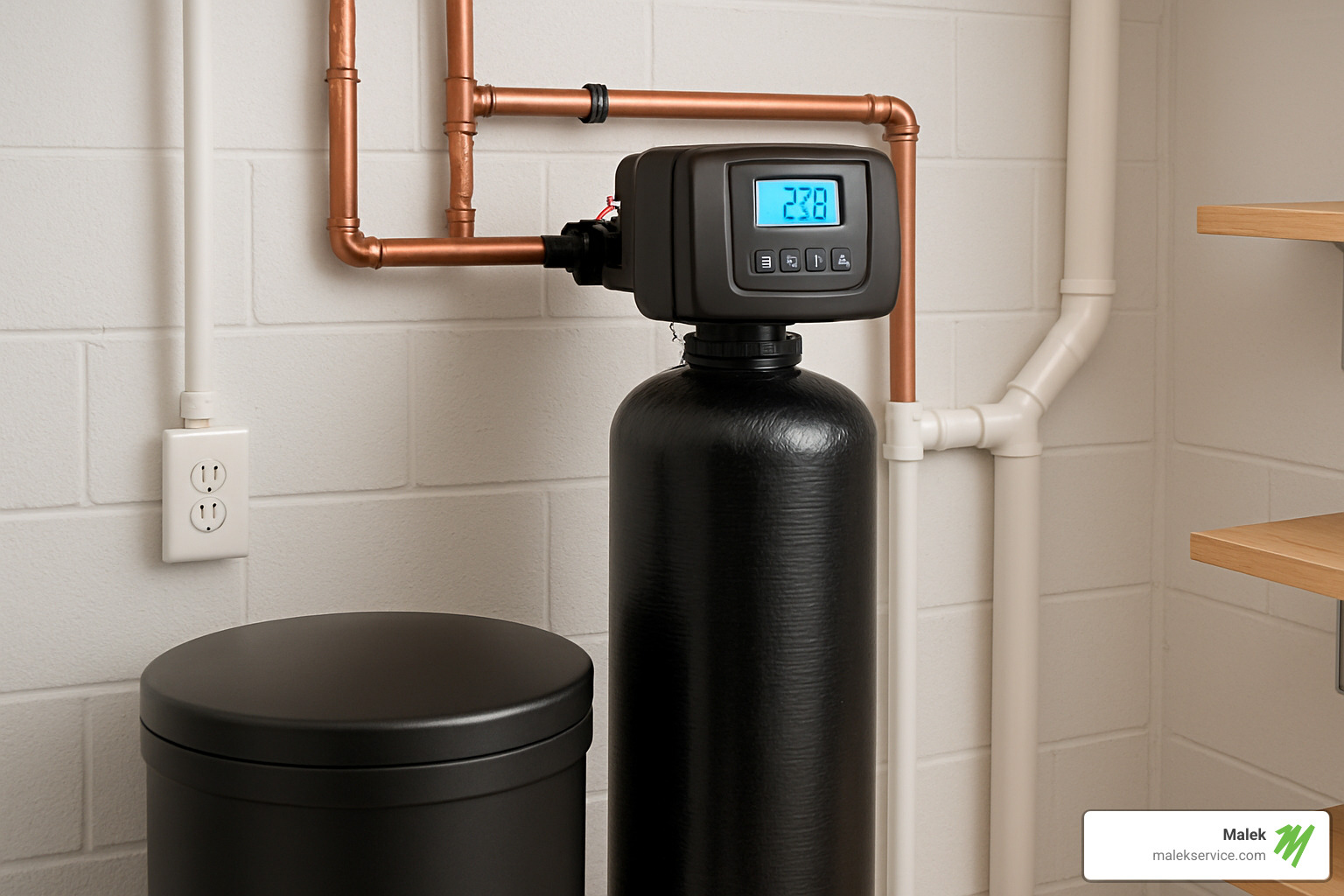 Water softener system benefits: 7 Powerful Positive Reasons 2025 - One
If you go DIY, most systems come with a bypass valve and a drain hose. You’ll need a shock-proof drain line and a little room for a brine tank. Oh, and read the manual twice before cutting anything. I learned that the hard way after a 2 AM trip to Home Depot for a missing compression fitting.
The Final Drop of Wisdom
Here’s the ugly truth: there is no “best” water softener system for everyone. The perfect one for you depends on your water hardness, your budget, and how much you hate dragging salt bags from your car. But I can promise you this: the moment you step out of the shower and your skin doesn’t itch, or you pour a glass of water that actually tastes clean—that is when you’ll know you made the right call.
So go ahead, test your water with a cheap kit from the hardware store. Check your grain capacity. Read a few reviews (not just the five-star ones). And if you’re still confused, drop me a comment—I’ll help you pick one, and I promise not to judge your shower curtains. You’ve got this.
