What Should The Tds Of Drinking Water Be

You know that moment when you’re parched after mowing the lawn, and you grab a glass of tap water, only to find it tastes vaguely like a swimming pool? Or worse, like the insi...
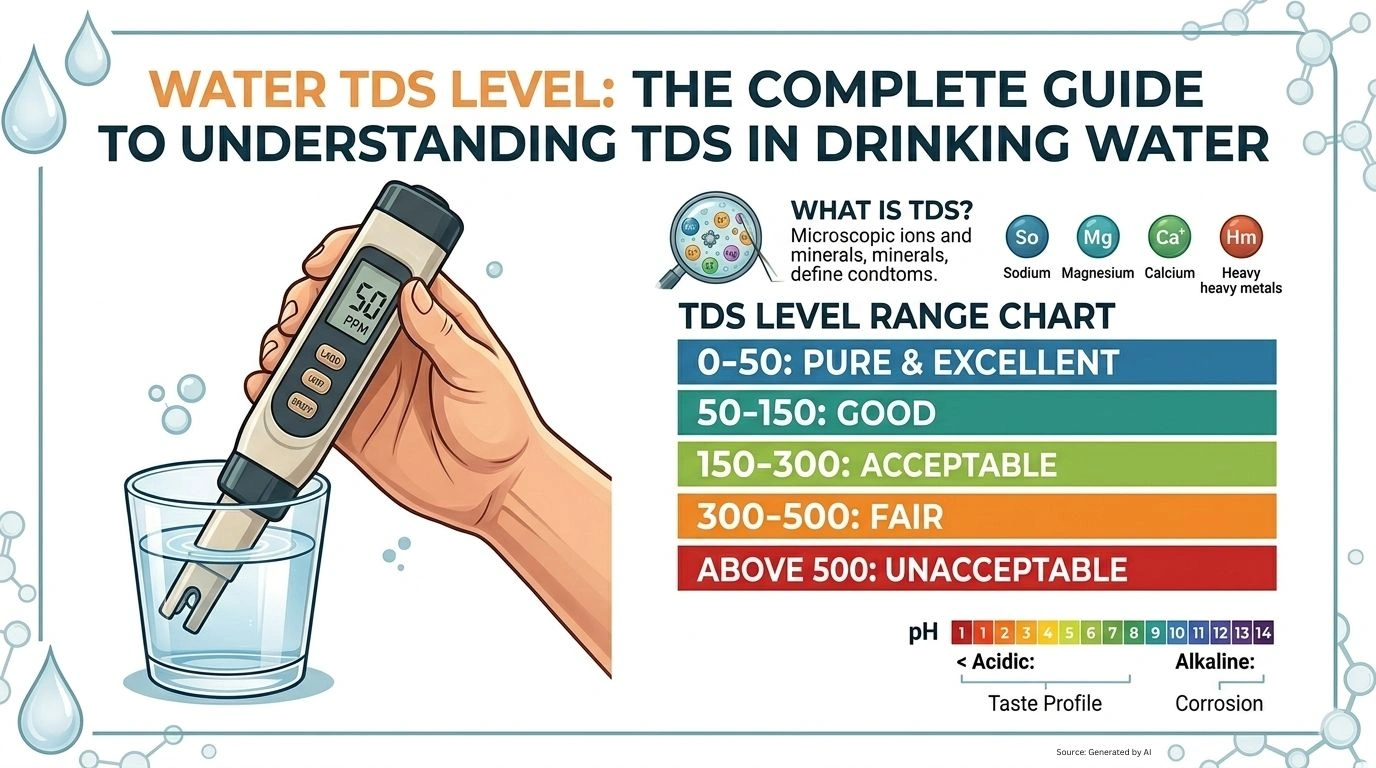
You know that moment when you’re parched after mowing the lawn, and you grab a glass of tap water, only to find it tastes vaguely like a swimming pool? Or worse, like the inside of a dusty garden hose that’s been left in the sun. Yeah, we’ve all been there, and it usually makes you wonder: what the heck is in this stuff? That, my friend, is where TDS comes in—Total Dissolved Solids. It’s basically the metric for all the tiny, invisible stuff floating in your glass, from calcium to copper to that weird minerally tang.
So, what exactly are we talking about?
Imagine your water is a party, and the solids are the guests. TDS is just the headcount of all the minerals, salts, and metals that decided to crash the event. The lower the number, the more boring the party—think plain soda water. The higher the number, and you’ve got a rager with calcium, magnesium, and maybe a little iron gatecrasher.
But here’s the kicker: you don’t want a mosh pit in your mouth, but you also don’t want an empty room. The sweet spot for drinking water is usually between 50 and 300 parts per million (ppm). That’s like a cozy dinner party with good conversation—flavorful, but not overwhelming.
Must Read
When your water tastes like a rock concert
I once visited a friend’s cabin where the well water clocked in at nearly 800 ppm. Drinking it felt like licking a chalkboard after a miner’s sneeze. My tongue went, “Nope, I’m out.” High TDS water (over 500 ppm) often tastes salty, bitter, or metallic—like sipping a Gatorade that’s gone rogue. It’s not dangerous, but it’s about as pleasant as chewing on a penny.
On the flip side, super-low TDS water (under 50 ppm) can taste flat or empty. It’s like drinking the ghost of water—totally pure, but missing that little zing that makes it satisfying. You know that bottled water that costs a fortune and tastes like nothing? Yeah, it’s probably around 10 ppm. It’s clean, but it’s the vanilla wafer of hydration. Boring.
The Goldilocks zone: 150–250 ppm
That’s where the magic happens. In this range, your water has just enough minerals—like calcium for your bones and magnesium for your mood—to taste crisp and refreshing. It’s the water you guzzle after a run and think, “Now that’s what I’m talking about.” Most municipal tap water in the U.S. falls here, unless you live in a place where the pipes are older than your grandpa’s jokes.
I once tested my tap water out of sheer boredom (and a little paranoia) with a cheap TDS meter from Amazon. It read 220 ppm, and I felt like a hero. My water was “just right,” like Goldilocks if she were a hydration enthusiast. Meanwhile, my buddy in Arizona complains his water tastes like a dusty highway—usually because the TDS can soar past 600 ppm from natural mineral deposits. You can’t fix it, but you can buy a filter or just accept you’re drinking the local geology.
But does it really matter for health?
Here’s the funny thing: TDS is more about taste than danger. The World Health Organization (WHO) says water up to 900 ppm is generally safe to drink, but your taste buds will file a complaint long before that. If your water is above 500 ppm, you might notice a slight laxative effect—which is nature’s way of saying, “You should probably buy a filter.”
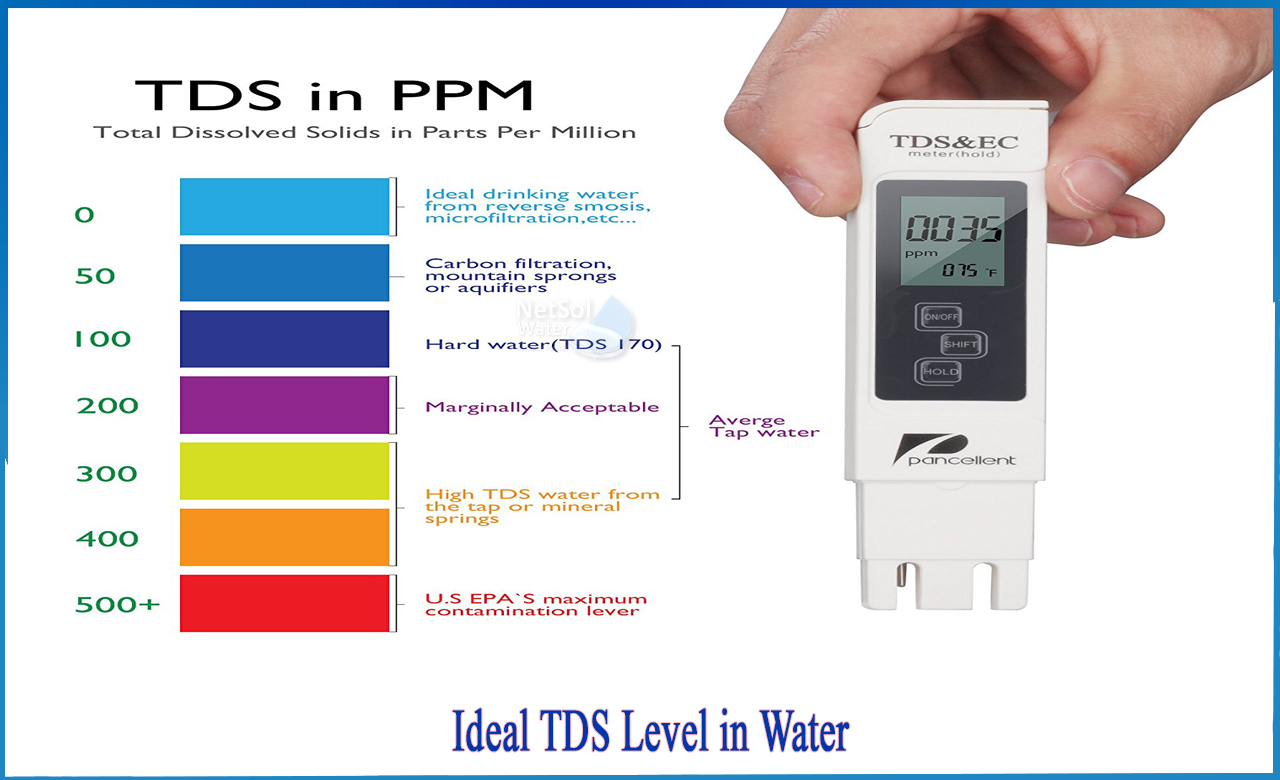 Drinkable Water Tds Range
Below 50 ppm? You’re drinking what’s essentially distilled water. It’s safe, but it might leach minerals from your body if you drink nothing else for years. But honestly, unless you’re a marathon runner chugging gallons, you’re fine. The real enemy is contaminants like lead or bacteria, which TDS meters don’t detect. So don’t get cocky if your number looks pretty—get a proper test if you’re worried.
How to find your TDS without a lab coat
Grab a TDS meter (they’re dirt cheap online—like the price of two fancy coffees). Dip it in your glass, wait a second, and read the number. It’s like taking your water’s temperature, but for its soul. If it’s between 50 and 300 ppm, give yourself a high-five. If it’s above 500, consider a pitcher filter or a reverse osmosis system. If it’s below 50, you might be drinking water that’s too pure to be fun—but hey, some people like it that way.
I keep a meter by my sink and test every new bottle or tap source. My wife thinks I’m insane. “Are you measuring our water’s vibes?” she asks. And I say, “Yes, and they’re 180 ppm—very chill vibes today.” Honestly, it’s become a party trick. People come over, I hand them a glass and a meter, and suddenly we’re all comparing numbers like we’re reading horoscopes. “Your TDS is 230? You’re a Gemini, right?”
The bottom line, no pressure
Don’t overthink it. Your body is a brilliant machine that’s been handling all kinds of water since you were a drooling toddler. The ideal TDS is what makes you drink more water—whether that’s 50 ppm or 250 ppm. If it tastes good and keeps you hydrated, you’re winning.
So next time you take a sip and it hits right, just nod and thank your local minerals. Or, if it tastes like a coin purse, go buy a filter. Either way, you’re now the smartest person at the dinner table when someone asks, “What’s the perfect TDS for drinking water?” And you can say, “Somewhere between a boring white party and a dusty road trip—about 200 ppm, buddy.” Cheers to that.
