Can I Use Bottled Water For Baby Formula

So, you’re standing in the baby aisle, sleep-deprived and staring at a mountain of water bottles. You’re wondering, “Can I just use this fancy spring water for my baby’s formu...
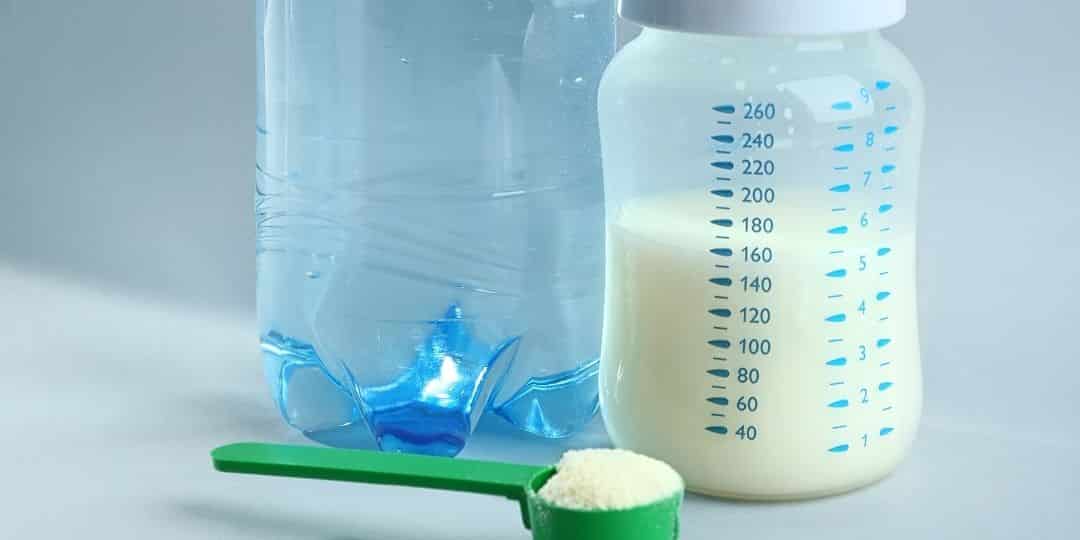
So, you’re standing in the baby aisle, sleep-deprived and staring at a mountain of water bottles. You’re wondering, “Can I just use this fancy spring water for my baby’s formula?” It’s a solid question, and the answer is a little more complicated than a simple yes or no. Let’s break it down together, like we’re chatting over a cup of coffee—decaf for you, of course, because you’re a parent.
First, the short answer: Yes, you can use bottled water for baby formula. But—and there’s always a “but,” right?—you need to be smart about it. Not all bottled water is created equal, and your baby’s tiny tummy is a delicate ecosystem. Think of it as a VIP club with a strict bouncer.
The Big Rule: Boil It (For Newborns)
Here’s the thing your pediatrician probably forgot to mention: Bottled water isn’t automatically sterile. Even the fancy, designer-looking ones. For babies under three months, or those with a weak immune system, the CDC says you should boil the water first. Sorry, but no shortcuts for the newborn phase!
Must Read
Don’t panic—boiling is easy. Just bring the water to a rolling boil for one minute, then let it cool to room temperature. It’s like making pasta, but without the delicious carbs. Pro tip: Boil a big batch and store it in a clean container, so you’re not doing a science experiment at 3 AM.
The “No Boil” Exception
Once your baby is older (around four to six months, check with your doc), you can skip the boiling step—if the bottled water is labeled as “sterile” or “for infant use.” Look for those magic words on the label. But even then, tap water in most developed countries is actually fine if you run it cold for a minute first (to flush out lead from old pipes).
So why use bottled water at all? Maybe your tap tastes like a swimming pool, or your well water is sketchy. Bottled water is a convenient plan B. Just don’t think of it as a glamorous upgrade for your baby; water is water, and your kid won’t know the difference.
What’s in That Bottle? (The Label Detective Work)
Okay, grab your magnifying glass—or your reading glasses—because you need to check the label. Avoid waters with added sodium (salt) or minerals. Some “spring waters” have high levels of sodium or fluoride, which can mess with your baby’s kidneys or cause white spots on their teeth. You want low-fluoride and low-sodium options.
Look for bottles that say “purified,” “distilled,” or “deionized.” These are basically the plain bagels of the water world—boring, but safe. Also, never use sparkling or flavored water. Your baby does not need a fizzy, lime-scented formula. That’s a one-way ticket to a gas explosion in their diaper.
And hey, if you’re using tap water, you can always boil and cool it for free. It’s the budget-friendly hero that’s been waiting in your kitchen this whole time. Bottled water is just tap water with a better PR team.
The Temperature Check (Not Just for Casseroles)
Here’s a fun plot twist: powdered formula isn’t sterile either. The World Health Organization says you should mix it with water that’s at least 70°C (158°F) to kill any bacteria in the powder. Yes, even if you’re using bottled water. So you can’t just dump cold Evian into the formula and call it a day.
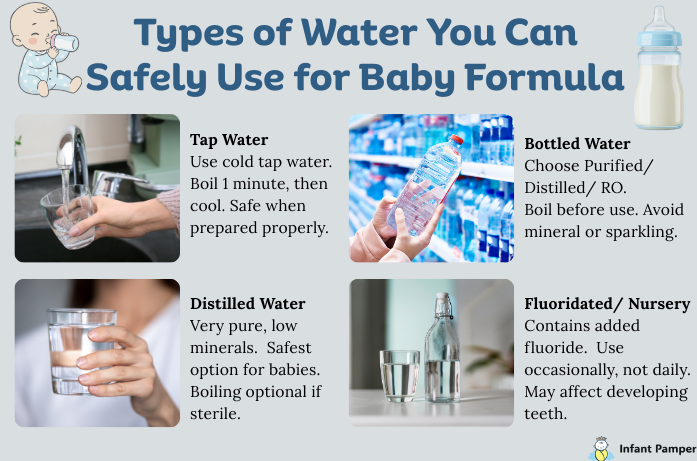 What Water to Use for Baby Formula: Safe & Doctor-Approved Choices
But don’t panic! Just boil your bottled water, let it sit for 30 minutes to cool to that perfect temp, then mix. Test it on your wrist—it should feel warm, not hot. If it feels like a nice bath, you’re golden. If it feels like a lobster pot, wait a few more minutes.
And whatever you do, don’t use the microwave to heat bottled formula. Microwaves create “hot pockets” that can burn your baby’s mouth. That’s a lesson you only want to learn once—preferably never.
The Real Tea (Or Water, in This Case)
Here’s the honest truth: In most countries, clean tap water is perfectly fine for baby formula once it’s boiled and cooled. Bottled water is just a fancy backup dancer. Save your money for diapers and emergency chocolate stashes instead.
If you’re traveling or your tap water is questionable, bottled water is a lifesaver. Just go for the low-mineral, low-sodium kind, and always boil it for very young babies. Oh, and never reuse a plastic water bottle—those things harbor bacteria faster than a toddler hides candy. Use a clean glass container or a dedicated formula pitcher.
One Last Peeve (Get It?)
Some parents swear by distilled water because it’s “pure.” But babies need trace minerals like sodium for their brain development. Distilled water is too pure—it’s like giving them a blank sheet of paper when they need a coloring book. Stick to purified or low-mineral spring water, and your baby will be fine.
And whatever you do, don’t stress over this. Babies are tougher than they look. They’ve survived being born in a chaotic exit from a warm cave. A little bottled water isn’t going to faze them—as long as you follow the basics.
The Uplifting (and Slightly Cheeky) Conclusion
So, can you use bottled water for baby formula? Yes, you absolutely can—but treat it like a guest at a fancy party: check its credentials (the label), heat it up properly, and never let it get too bubbly. You’re already doing an amazing job, and your baby is lucky to have a parent who cares this much about H2O.
One day, your kid will be old enough to pour their own water—and they’ll probably complain about it being “too wet.” Until then, keep that smile, laugh at the chaos, and remember: a happy parent makes the best formula. Now go enjoy a sip of your own beverage (maybe with a splash of something stronger, because you’ve earned it). You’ve got this. Cheers to you, water wizard.
