Sedimentation Process In Water Treatment

Let’s be honest: water straight from a river is basically nature’s chaotic smoothie—full of mud, fish poop, and the occasional lost flip-flop. That’s why water treatment plant...
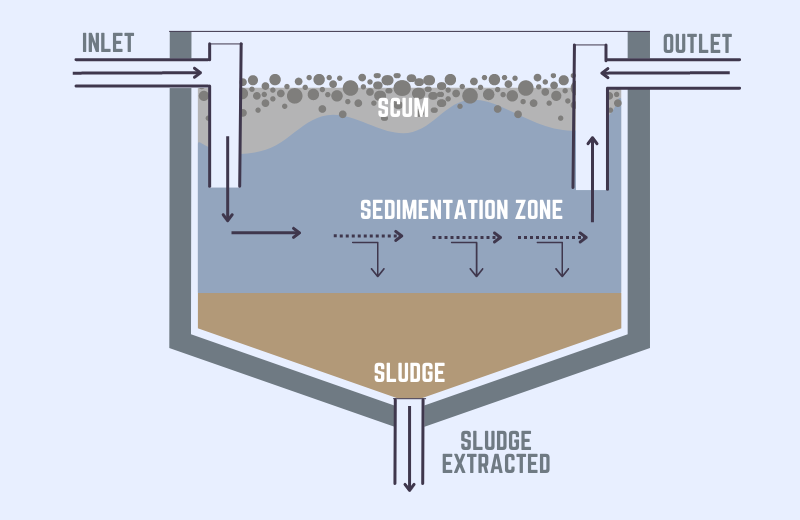
Let’s be honest: water straight from a river is basically nature’s chaotic smoothie—full of mud, fish poop, and the occasional lost flip-flop. That’s why water treatment plants have a secret weapon that’s older than your grandma’s meatloaf recipe: sedimentation. It’s the process of making tiny particles throw in the towel and sink to the bottom, like teenagers on a Monday morning.
Think of sedimentation as the laziest superhero in the treatment plant. It doesn’t use chemicals, electricity, or lasers—it simply relies on gravity, the same force that makes your couch feel impossibly magnetic after a big meal. In fact, some treatment tanks are so massive that you could park a small whale inside them. But instead of whales, they’re full of floc, which is just a fancy word for “globs of dirt that decided to cuddle together.”
The Party Before the Sink
Before sedimentation can do its thing, water goes through coagulation and flocculation, which are basically the dating apps of the water world. Chemicals like alum are added to make tiny particles stick together like nervous prom-goers. Then, the water is gently stirred, encouraging these particles to form flocs—think of them as dirt snowballs that grow bigger and bigger.
Must Read
Here’s the surprising fact: these flocs can be as big as popcorn kernels. That’s right—a microscopic speck of clay can become a visible, sinking chunk of grossness in just minutes. It’s like watching a speed-run of “Lord of the Rings” but with mud instead of hobbits. And trust me, you want those hobbits to sink.
What Actually Happens in the Sedimentation Tank
Picture this: a giant rectangular pool that’s as exciting as a beige wall, but filled with murky water. The water enters slowly—so slowly that a sloth on tranquilizers would call it “leisurely.” This low-speed zone is where gravity takes over, pulling the heavy flocs downward while cleaner water stays on top.
It’s not just dirt that sinks. Surprising fact: sedimentation also removes up to 90% of bacteria and lots of other nasty stuff, including some viruses. Gravity doesn’t discriminate—it’ll sink a piece of sand or a stubborn germ equally. Basically, the tank is the world’s least dramatic reality TV show: “The Real World: Settle Down or Get Out.”
Engineers design these tanks with a slight slope at the bottom, like a really gentle water slide for sludge. This “sludge” (glamorous name, right?) gets scraped into a collection trough, and then it’s sent to a digester where microbes eat it to make biogas. Yes, your poop could one day power a bus—but that’s an article for another caffeine-fueled rant.
Why Size Actually Matters
The bigger the floc, the faster it sinks. This is the Stokes’ Law of physics—a fancy rule that says heavy things drop faster than light ones, which you already know from dropping a watermelon vs. a grape. Water treatment plants love Stokes’ Law because it means they don’t need to wait forever for the water to clear.
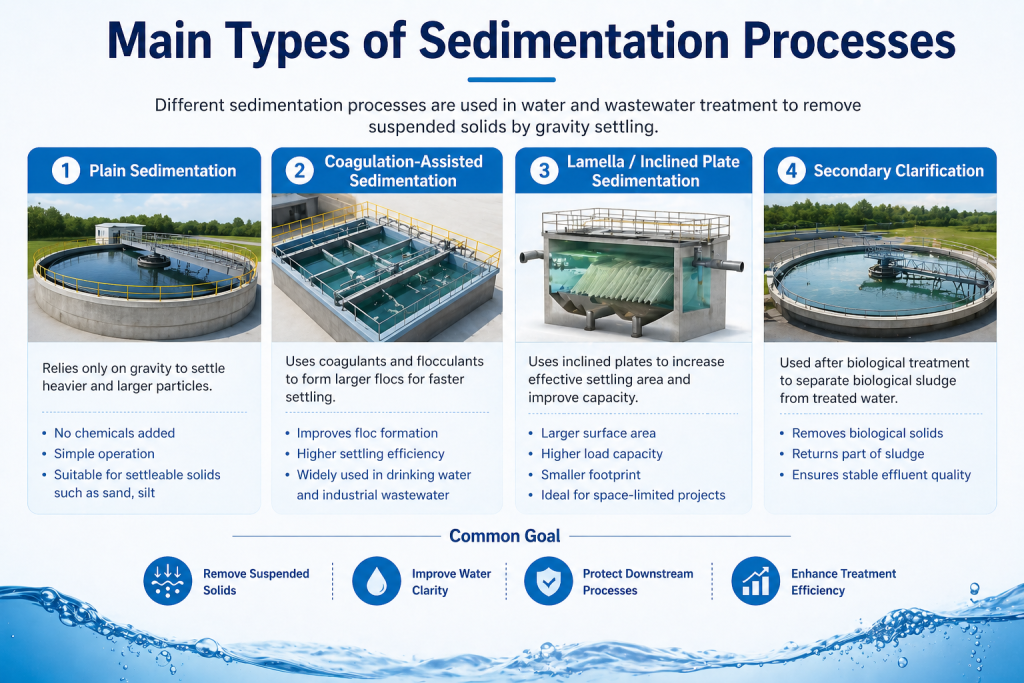 Sedimentation Process in Water and Wastewater Treatment - GL Environment
But here’s the kicker: temperature also plays a role. Colder water is thicker (more viscous) and slows down the sinking particles. So in winter, sedimentation tanks work about 10% slower—like your car engine on a frigid morning. Meanwhile, warm summer water makes particles settle faster, which is nature’s way of saying, “Enjoy your warm beer, but your water is fine.”
Common Mistakes That Make Sedimentation Fail
If the water flows too fast, tiny particles get all rebellious and refuse to sink. It’s like trying to get a toddler to nap in a bouncy castle—chaos. Treatment plants solve this with a device called a launder, which is just a fancy trough that collects clear water from the surface without disturbing the resting gunk below.
You also need to avoid short-circuiting—that’s when water takes a shortcut through the tank instead of leisurely meandering. Imagine a line at Disneyland where someone cuts to the front. It’s unfair, and it leaves your water full of floaties. Engineers fix this by adding baffles, which are basically underwater walls that make the water take the scenic route.
The Grand Finale: What You Actually Drink
After sedimentation, the water is about 60–70% cleaner, but it’s still not safe to drink. That’s when it goes to filtration (sand and charcoal) and disinfection (chlorine or UV light). Sedimentation is the heavy lifter that makes those later steps easier—like doing your dishes before your roommate finds them.
So next time you turn on the tap, give a silent salute to your local treatment plant’s giant, lazy pools of gravity-powered sludge. They’re the unsung heroes that turned a murky nightmare into something you can sip while scrolling memes. And if you’re still skeptical, just remember: without sedimentation, your morning coffee would taste like dinosaur-killer asteroid dust. Cheers to that stubborn, glorious sink.
