Water Hardness Setting On Water Softener

Okay, let’s talk about that little dial or digital screen on your water softener. You know the one—the "hardness setting" that looks like it belongs on a spaceship control pan...
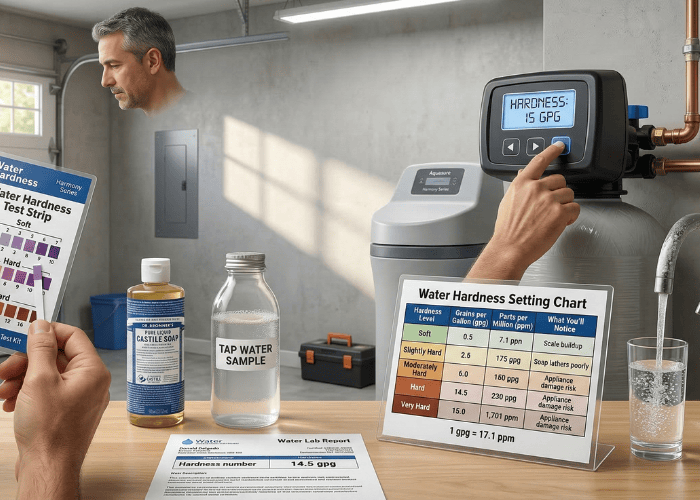
Okay, let’s talk about that little dial or digital screen on your water softener. You know the one—the "hardness setting" that looks like it belongs on a spaceship control panel. It’s actually way cooler and simpler than it seems. Think of it as the secret volume knob for your home’s water quality.
What even is "hardness"?
Hardness is just a fancy word for the amount of calcium and magnesium dissolved in your water. Imagine your water is a thirsty sponge that picked up tons of minerals as it traveled underground. That’s hard water—the stuff that leaves white crust on your faucets and makes your soap feel sad.
Your water softener’s job is to swap those rock-like minerals for soft sodium or potassium ions. But here’s the kicker: not all water is equally hard. If you set your softener too low, you’ll get half-soft water. Too high, and you’re wasting salt and money.
Must Read
Why your setting matters (a lot)
Let’s get real for a second. A wrong hardness setting is like wearing shoes that are one size off. It’s not a disaster, but it’s annoying every single day. Set it too low, and your hard water sneaks back in, leaving spotty dishes and dry, itchy skin.
Set it too high, and your softener goes into overdrive. It regenerates (cleans itself) more often than it needs to, guzzling salt and flushing extra water down the drain. Your wallet feels it, your laundry feels it, and honestly? Mother nature feels it too.
The fun science part: counting grains
Hardness is measured in "grains per gallon" (GPG)—and no, we’re not talking about oatmeal. One grain is about the size of a single grain of table salt. Most city water runs between 3 and 10 grains per gallon. Well water? That can jump to 20, 50, or even 100 grains.
If you’ve ever seen that milky-white residue on your shower glass, that’s about 10 or 15 grains of dissolved rock. Your softener is basically a tiny, quiet mining operation that pulls those minerals out of your water. Pretty wild, right?
How to find your magic number
You can buy a water test kit at the hardware store for like ten bucks. Or, call your local water company—they usually tell you the hardness for free. Once you know your grains, you dial that number into your softener. That’s it. Boom. You’re a water wizard.
But here’s a friendly tip: slightly under-set it if you’re on a well. Well water can fluctuate like a mood ring. If you set it exactly at 20 grains, and next month it’s 22, you’ll notice. A tiny buffer keeps your water consistently soft without wasting salt.
What happens when you dial it wrong?
Imagine you’re baking a cake and you add too much sugar. It’s still edible, but it’s weird, right? That’s what an overly high hardness setting does. Your water becomes extra-soft—almost slippery—and your soap doesn’t rinse off well. You might feel a residue on your skin.
 How to Measure Hardness in Water: Simple Methods Explained
Now imagine too little sugar. Your cake is gritty, flat, and disappointing. That’s hard water sneaking back in. Your pipes get scale buildup over time, your water heater works harder, and your hair gets that "straw" texture. Not cute.
Fun comparison time: your softener is a bouncer
Think of your water softener as a nightclub bouncer. The hardness setting is the "guest list." Calcium and magnesium are the loud, rowdy partygoers you don’t want inside. The bouncer has a list of how many rowdy guests are allowed in—and swaps them for calm, quiet potassium guests.
If you set the list for 10 rowdy guests, but 15 show up, the bouncer gets overwhelmed. You get mineral chaos in your pipes. If you set it for 20, but only 5 show up, the bouncer wastes energy kicking out imaginary guests. Dial the number right, and your bouncer works efficiently, keeping your water smooth and your appliances happy.
The coolest part? You can tweak it
Here’s the best news: it’s not permanent. You can change the setting any time. Notice your dishes aren’t sparkling? Dial it up a notch. Feel like your skin is too slippery? Dial it down. It’s like tuning a guitar—you listen, adjust, and find the sweet spot.
Some modern softeners even have smart settings that learn your water use. But even the old-school analog dials are satisfying to twist. Go ahead, try it. You won’t break anything. It’s just magnets, resin beads, and a little chemistry doing their thing.
Final thought: you’re in control
Your water softener is like a quiet house guest that works 24/7. The hardness setting is simply your way of telling it, "Hey, this is what I need." And once you dial it in, you’ll notice your coffee tastes better, your clothes last longer, and your shower feels like a spa.
So next time you see that little dial, give it a nod. It’s not just numbers—it’s the difference between okay water and water that makes your whole house feel different. And that, my friend, is pretty darn interesting.
