How Many Bags Of Salt For Water Softener

The other day, my neighbor Dave called me in a panic. He said his water softener was "screaming for mercy," and he had no idea how many bags of salt to dump in. I could almost...

The other day, my neighbor Dave called me in a panic. He said his water softener was "screaming for mercy," and he had no idea how many bags of salt to dump in. I could almost hear him sweating through the phone.
Dave had already bought six giant bags, just in case, because his logic was "more salt must mean softer water, right?" Spoiler alert: it doesn’t. This is exactly why we need to talk about the golden rule of salt for your softener without all the guesswork—or the overstock.
The short, not-so-sweet answer
Most standard water softeners need one to two bags of salt per refill, depending on your brine tank size. That’s usually about 40 to 80 pounds of salt.
Must Read
But here’s the kicker—your softener doesn’t eat salt like a hungry teenager. It uses it slowly, based on your water hardness and household size. (Yes, your actual water usage matters more than your anxiety.)
So, if you’re shoving in three bags because you’re worried, you’re just making a salt mountain that can crust over and cause a mess.
How to know when you really need more
Check your brine tank once a month. You want the salt level to be at least halfway full, but never packed above the water line. (Pro tip: don’t let it drop below the water level, or you’ll get a salty sludge that smells like rotten eggs.)
If you see the salt is low—like, you can see the bottom of the tank—add one full bag. Wait a day, then check again. If it’s still low, add half a bag more. This is not a race; it’s a gentle pour.
Using too much salt just wastes money and can even damage your system’s valves. Trust me, your softener doesn’t need a salt bath; it needs a steady diet.
What about those giant 50-pound bags?
Yes, standard bags are usually 40 to 50 pounds. One bag is often enough for most households for a few weeks. But if you have very hard water (over 15 grains per gallon) or a big family, you might go through a bag every two weeks.
Here’s a cheat: look at your softener’s manual. It tells you the brine tank’s total capacity in pounds. Fill it to about two-thirds full each time—never to the brim. (I’ve seen people fill it to the top, then cry when the salt bridges into a concrete block.)
A good rule: buy two bags, use one, and keep the second as backup. That way you’re never stranded without soft water—but you’re also not storing a salt mine in your garage.
The ironic part about "more salt"
You’d think adding extra salt would make your showers even silkier. Nope. Overfilling can cause salt bridging—a hard crust forms on top, and your softener can’t pull in brine. Suddenly, you have hard water and wasted salt.
Another irony: using too little salt also backfires. If you let the tank go empty, your resin beads get fouled by minerals, and you’ll need expensive cleaner. So, it’s a Goldilocks situation—not too much, not too little.
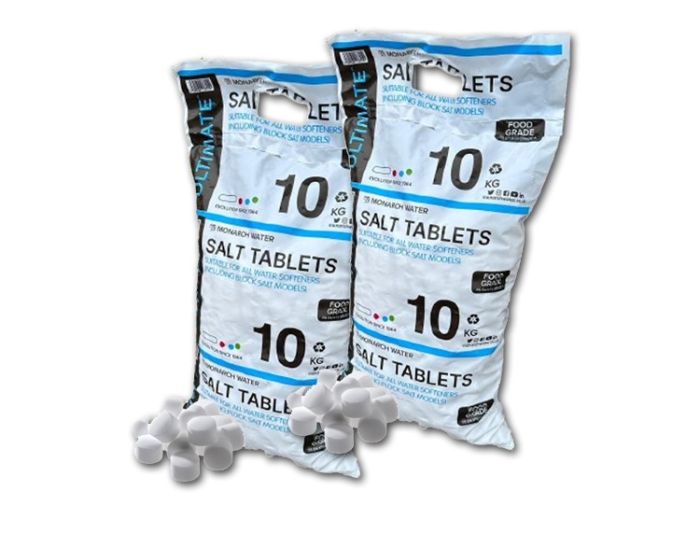 Monarch 2x Ultimate Water Softener Tablets Salt - two bags of 10kg
Think of your softener as a picky pet. It needs a consistent, moderate amount of salt to stay happy. (And it won’t thank you with belly rubs, just less scale on your faucets.)
How many bags for a first fill?
If you’re setting up a new softener or after a full cleanout, you typically need 4 to 6 bags to initially fill an empty brine tank. But this is a one-time thing.
After that, you only top off with one or two bags. Don’t freak out and buy a pallet just because it’s on sale. (I learned this the hard way when I bought ten bags and then moved three months later.)
Check your manual for the exact brine tank cubic footage. A standard 9x15-inch tank holds about 100 pounds of salt. So, two bags get you close, then you add as needed.
Signs you got it wrong (and how to fix it)
If your water feels sticky or soap doesn’t lather, you might have too much salt—or a salt bridge. Tap the side of the brine tank; if it sounds hollow, you have a crust underneath.
Break the crust with a broom handle (carefully, don’t puncture the tank). Then, remove some salt so the level drops below the bridge. Your softener will thank you with better performance.
If your water tastes salty, you’re likely adding way too much. Drain and refill with fresh salt, but only to the two-thirds mark this time. (I promise your coffee won’t taste like the ocean.)
The final word on bags
Start with one bag. Monitor your softener’s salt usage for two weeks. If it drops fast, add a second bag. If it barely moves, you’re golden.
Remember: softeners are built to be efficient. They don’t need a miracle—just a steady, sensible supply. So, save your back, your wallet, and your sanity. One bag at a time.
And please, don’t be like Dave with his six-bag panic. He’s still trying to give away salt to the neighbors. (I’m taking one for the team, though—free salt is free salt.)
