Difference Between Club Soda And Seltzer

So, you’re standing in the beverage aisle, staring at a can of club soda and a can of seltzer. They look the same, right? They both fizz, they both hiss, and they both make yo...
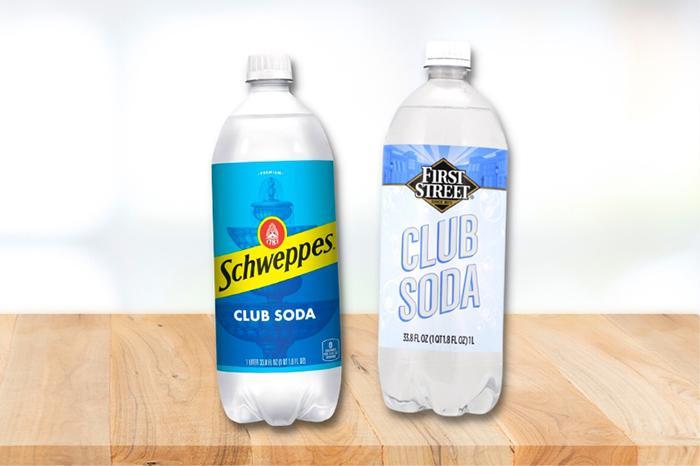
So, you’re standing in the beverage aisle, staring at a can of club soda and a can of seltzer. They look the same, right? They both fizz, they both hiss, and they both make your water seem fancier than it is. But are they secretly the same thing wearing different disguises?
Let’s cut to the chase: No, they are not the same. It’s like asking if a golden retriever and a Labrador are the same dog. Close cousins, sure, but with very different personalities. And nobody wants to serve the wrong bubbly cousin at a party.
The Grand Secret: The Mineral Difference
The biggest difference comes down to ingredients. Seltzer is basically plain carbonated water—just water with carbon dioxide gas pumped in. That’s it. No minerals, no salt, no fuss. It’s the minimalist of the fizzy world.
Must Read
Club soda, on the other hand, is a bit more extra. It’s carbonated water that has minerals like potassium bicarbonate, sodium bicarbonate, or potassium sulfate added. Think of it as water that got dressed up for a fancy date.
Those minerals don’t just hang out for decoration. They give club soda a slightly saltier, more complex taste. Seltzer tastes clean and crisp, like a sharp little slap. Club soda tastes rounder, like a polite pat on the back.
The Bubbles and the Burn
Have you ever noticed that club soda’s bubbles feel… bigger? That’s because the minerals help the carbonation last longer. Seltzer’s bubbles escape your glass like they’re late for an appointment. Club soda’s bubbles stick around, partying until the last sip.
Also, club soda often has a slightly more acidic pH, which gives it a tangy bite. Seltzer is more neutral, like Switzerland. If you’re mixing a cocktail, that tiny tang can make a huge difference.
But here’s the kicker: most people can’t tell them apart in a blind taste test. So if you’re just thirsty? Grab whichever is cheaper. Your taste buds are not detectives.
When to Use Each: The Party Etiquette
Okay, so when do you reach for club soda? Mixed drinks. Bartenders love club soda because its mineral content gives cocktails a smoother, more balanced finish. A gin and tonic made with club soda? Classy. A whiskey highball? Perfection.
Seltzer is your everyday sipper. It’s perfect for hydrating after a run, or for pretending you’re drinking something exciting while watching Netflix. Add a squeeze of lemon, and boom—you’re basically a wellness influencer.
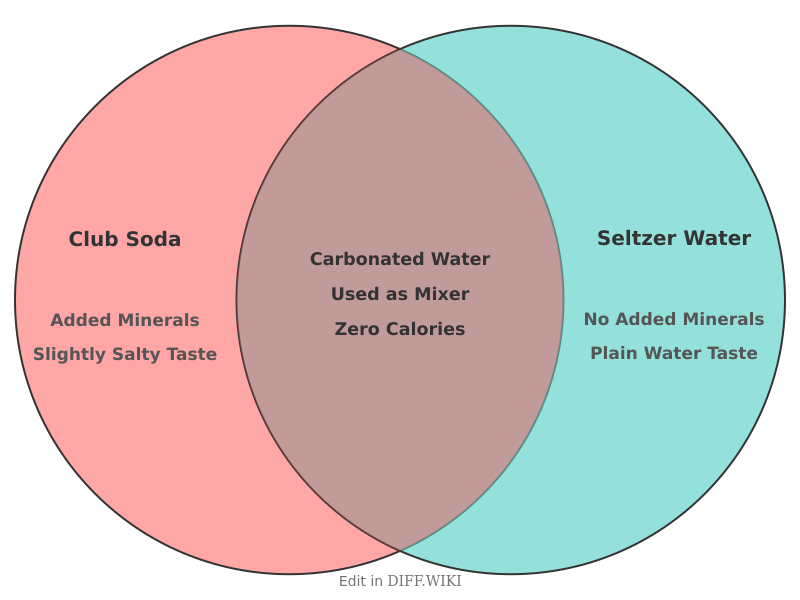 Differences between Club Soda and Seltzer Water - diff.wiki
One big warning: don’t use seltzer in a recipe that calls for club soda. Like, ever. Seltzer lacks the minerals to help dough rise or to bounce back in a batter. Club soda is the superhero for fluffy pancakes and tempura.
The Great Tonic Water Confusion
And while we’re at it—let’s clear up the other impostor. Tonic water is not club soda. Tonic water has sugar (or fake sugar) and quinine, which makes it bitter. It’s a whole different beast. Club soda and seltzer are just boring bubbly water; tonic water is the wild cousin who shows up with a ukulele.
So, if someone offers you a vodka tonic and you hate sweet drinks? That’s on you for not knowing your bubbly waters. But now you do know. You’re officially a certified bubbleologist.
The Bottom Line (Finally)
Here’s your cheat sheet: Seltzer = plain fizz. Club soda = fizz with a tiny salt kiss. You can swap them in a pinch, but purists will judge you silently. (I won’t, though. I’m too busy drinking my seltzer out of a wine glass.)
Both are infinitely better than flat water, which is basically just disappointed water. So don’t stress. Pick one. Shake it (metaphorically). Drink it. Be happy.
And remember: Whether you choose club soda or seltzer, you’re still choosing bubbles. And bubbles are always a good idea. Life is too short for flat drinks and tough conversations. So go forth, fizz with confidence, and enjoy your crisp, sparkling existence.
P.S. If anyone argues with you about this at a party? Hand them a glass of each, blindfold them, and ask them to guess. They’ll probably fail. Then you’ll have a story—and a new friend who respects your bubbly wisdom.
