Whole House Filter Replacement Cartridge

There’s a quiet, unsung hero living in your basement. It’s not the sump pump or the water heater. It’s your whole house filter cartridge, doing the dirty work so your tap wate...

There’s a quiet, unsung hero living in your basement. It’s not the sump pump or the water heater. It’s your whole house filter cartridge, doing the dirty work so your tap water doesn’t taste like a rainy sidewalk.
Most of us treat this plastic cylinder like a forgotten houseplant. We water everything around it but neglect the one thing that actually needs replacing. Let’s fix that, shall we? Because fresh water isn’t just a luxury—it’s the secret ingredient to everything from your morning coffee to your Saturday bath.
Your Water’s Invisible Road Trip
Think about the journey your water takes before it reaches your glass. It travels through miles of municipal pipes, past construction sites, and occasionally through sediment that’s older than your favorite jeans. By the time it arrives, it’s carrying a souvenir collection of rust, chlorine, and microscopic grit.
Must Read
Your whole house filter is the polite bouncer at this party. It stops that nasty sediment from staining your white shirts and that chlorine from drying out your skin. But eventually, even the best bouncer needs a break—or in this case, a complete swap-out.
Here’s the kicker: when you skip replacement, you’re essentially asking a clogged sponge to filter a river. The pressure drops, the water tastes flat, and your expensive appliances slowly start to cry.
The Tell-Tale Signs (That Your Cartridge Is Screaming)
Your house will literally tell you when it’s time. Notice a drop in shower pressure? That’s not a plumbing ghost; that’s a cartridge clogged with last month’s debris. Your morning tea might start smelling like a swimming pool, and your laundry whites could develop a mysterious gray tint.
These are not random acts of household chaos. They are very specific signals from your water system. Ignoring them is like ignoring the check engine light on a road trip to Malibu—it’ll work for a while, but the consequences are twitchy and expensive.
Pro tip: if your filter has a transparent housing and you can see a brown or orange sludge building up, you’ve waited about three weeks too long. That sludge is not “character”; it’s your water begging for mercy.
The Sweet Spot of Replacement Timing
Most manufacturers recommend a swap every three to six months. But let’s be real—life happens. You forget, you travel, you decide that sparkling water is a personality trait. The secret is to anchor the task to something you already do.
Think seasonal: replace your filter when you swap your wardrobe from sweaters to shorts, and again when you bring out the holiday decorations. That’s twice a year, and your hair will thank you for less mineral buildup. Or set a phone reminder for the same day you change your smoke alarm batteries—you’re already doing the safety shuffle.
A fun fact: the average whole house filter cartridge can trap enough sediment in six months to fill a medium-sized sandbag. That’s around two pounds of gunk that isn’t going into your dishwasher or your kidneys.
How to Do It Without Panicking (Or Calling a Plumber)
The actual swap is easier than assembling IKEA furniture and requires zero cuss words. First, turn off the water at the main shutoff valve—usually located near your water meter or where the pipe enters the house. Then, release the pressure by opening a faucet somewhere low, like a basement sink or an outdoor spigot.
Use the special wrench that came with your housing (or a standard strap wrench) to unscrew the sump. Be ready for a small splash—it’s water, not a crisis. Remove the old cartridge, wipe any gunk from the O-ring seal, and drop the new one in. Screw it back by hand, then gently snug it with the wrench—overtightening is the enemy of good plumbing.
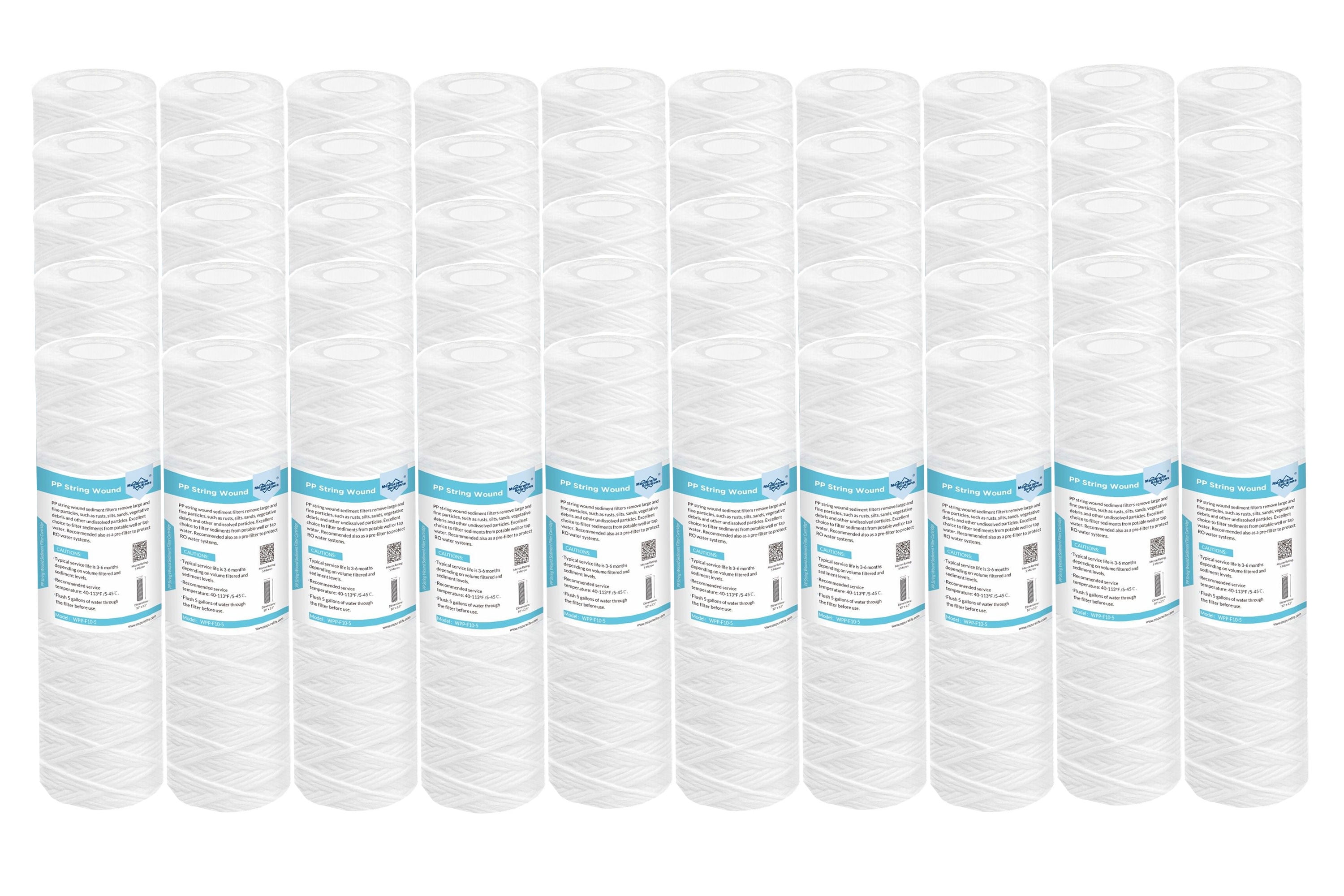 Membrane Solutions 1 Micron 10"x2.5" String Wound Whole House Water
Finally, turn the water back on slowly. Check for leaks. Then run the nearest tap for about five minutes to flush out any loose carbon dust. That’s it. You’ve just performed a ten-minute miracle that saves your pipes, your appliances, and your skin’s moisture barrier.
A Cultural Aside: The Pitcher vs. The Whole House
We get seduced by shiny countertop pitchers and under-sink units. They’re great for drinking water, but they’re like using a napkin to clean up an oil spill. Whole house filtration handles the big picture—the water you shower in, the water that fills your washing machine, the water that cleans your vegetables.
Think of it this way: that expensive night cream you use? It works better when your shower water isn’t loaded with chlorine that strips your skin’s natural oils. Your hair colorist will also send a thank-you note. Whole house filtration is the cure to “hard water hair” and that weird crust on your shower glass.
It’s the same philosophy as vacuuming your entire house even though you only walk through one hallway—the whole system breathes easier. Your pipes are less stressed, your water heater lasts longer, and your morning routine gets a quiet upgrade.
Fun Little Facts to Impress Your Friends
Did you know the first home water filters were made from crushed oyster shells and sand? The Romans used them, and they were basically water sommeliers. Today’s pleated polyester and activated carbon cartridges are the Ferrari of that ancient technology.
Another one: a single whole house cartridge can remove particles down to five microns. For scale, a human hair is about 70 microns wide. That means your filter catches stuff 14 times smaller than a strand of hair. It’s basically a microscopic bouncer.
And get this—unfiltered water can contain trace amounts of prescription drugs. Not enough to affect you, but enough to make you think twice. A good carbon block cartridge can reduce these by up to 95%. That’s not fear-mongering; that’s just modern hydrology.
A Short Reflection for Your Daily Life
Here’s the quiet truth: we drink, bathe, and cook with water more times in a day than we text or scroll. It’s the most intimate contact we have with the outside world. Yet we rarely think about its journey or how we treat it.
Replacing a filter cartridge is a tiny, boring act of maintenance. But it’s also a small ritual of respect—for your home, your health, and the simple gift of clean water. It’s the verb that makes the noun matter. You don’t just own a filter; you tend to it.
So next time you twist off that old, tired cartridge, take a quick second to appreciate the sludge you’re throwing away. That gunk didn’t make it into your morning smoothie. And that, right there, is a pretty good reason to smile before you even turn the water back on.
