Ultraviolet Light For Water Purification

Last summer, my friend Dave tried to “survive” a weekend camping trip with a water filter the size of a soda can. He spent three hours pumping murky lake water through it, onl...

Last summer, my friend Dave tried to “survive” a weekend camping trip with a water filter the size of a soda can. He spent three hours pumping murky lake water through it, only to produce a sad trickle that tasted like a sweaty gym sock. I just laughed, pulled out a little black tube, and let the sun do the work.
That’s when I introduced him to ultraviolet light for water purification. You might think it sounds like sci-fi gadgetry from a lab, but it’s actually simpler than your morning coffee routine. And trust me, after Dave’s sock-water incident, he was ready to listen.
So, What’s the Big Deal with UV?
Ultraviolet light works by zapping the DNA of bacteria, viruses, and protozoa. It’s like giving those little nasties a sunburn so severe they can’t reproduce or make you sick. No chemicals, no weird aftertaste, no pumping—just a bright light that destroys their party.
Must Read
Think of it as a nuclear option for microbes, but perfectly safe for you. (Unless you stare into the UV bulb, but honestly, don’t do that. It’s not a lava lamp.)
The magic happens at a specific wavelength: 254 nanometers. That’s the sweet spot where the light scrambles microbial DNA like a toddler with a Rubik’s Cube.
How It Actually Works (Spoiler: Super Simple)
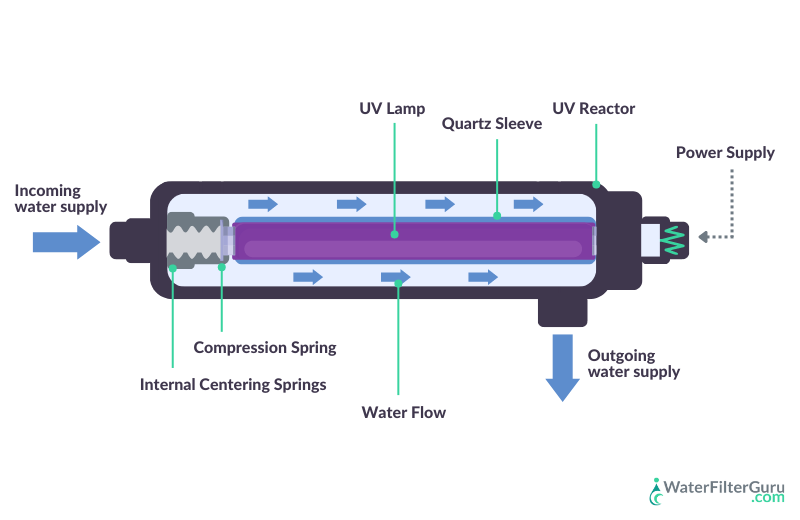
You pour cloudy water into the unit, and the UV lamp sits inside a quartz sleeve. The water flows past the light, and in a few seconds, 99.99% of pathogens are toast—dead, done, gone. No filters to clog, no chemicals to measure.
But here’s the catch: UV light needs clear water. If your source looks like chocolate milk, you’ll need to pre-filter it through a cloth or a coffee filter first. Otherwise, the silt acts like a bodyguard for the germs.
That’s why Dave’s camping setup included a simple pre-filter sleeve. I told him it was basically a “sock for the sock-water.” He didn’t laugh, but I did.
Why You Might Want One (Even If You’re Not a Prepper)
Maybe you think you’re safe because your tap water is “treated.” Newsflash: municipal systems can fail, pipes can break, and boil water advisories happen more often than we admit. A UV purifier is a “set it and forget it” backup for your kitchen sink.
Or maybe you travel to places where “don’t drink the water” is a local sport. I took a UV bottle to Mexico last year, and it saved me from the dreaded Montezuma’s Revenge. Zero stomach drama, just crystal-clear hydration.
And yes, you can also use UV for emergency preparedness. If a hurricane knocks out your power, a battery-powered UV pen can treat a bucket of rainwater. Not that I’m paranoid—just prepared, like a Boy Scout with a PhD in hydration.
 Learn About Uv Water Purification Esp Water Products Titan Strategic
The Not-So-Fun Part: Limitations
UV light won’t remove chemicals, heavy metals, or sediment. If your water is tainted with lead or pesticides, UV is useless—you need a carbon filter or reverse osmosis. So it’s not a magic bullet, just a brilliant one for biological threats.
Also, UV bulbs have a lifespan of about 9,000 hours, after which they dim like a tired old lightbulb. You’ll need to replace the lamp every year or so. Think of it as changing the batteries in your smoke detector—annoying but vital.
And please, for the love of clean water, don’t use a UV purifier on water that’s visibly green. Algae blooms can block the light, and you’ll just end up drinking pond smoothie. I learned that the hard way, and I’m still mildly traumatized.
A Quick Reality Check: Is UV for You?
If you’re a backpacker, a traveler, or a homeowner with a well, UV purification is a game-changer. It’s energy efficient (some devices run on solar or batteries), it’s fast, and it leaves the water tasting like… water. Not chlorine, not plastic, just pure wetness.
For city folks on municipal supply, UV is an extra layer of security. I have a small under-sink unit that kicks in automatically. It’s silent, invisible, and I almost forget it’s there—until I read about a boil water alert two towns over, and I just smile.
And if you’re still skeptical, try this: fill a clear glass with tap water, put it in direct sunlight for six hours (that’s solar UV), and see if it tastes better. It’s not as effective as a dedicated lamp, but it’ll give you a hint of the power hiding in plain daylight.
Final Splash (No Pun Intended)
Dave bought his own UV purifier the week after our camping trip. Last I heard, he’s now the guy who judges all other campers’ water setups. I’m not saying UV light makes you cooler, but it certainly makes you less likely to drink your own laundry rinse.
So whether you’re a weekend warrior or a paranoid prepper, ultraviolet light is the quiet hero you didn’t know you needed. Just remember: clear water, fresh bulb, and a little patience. Oh, and don’t forget the pre-filter sock. Dave insists on it.
Stay hydrated, friends. And may your microbial enemies be fried to a crisp.
