Reverse Osmosis Whole House Water Filter

So, picture this. You’re standing in your shower, belting out your best shower-time power ballad, when suddenly—wham!—a wave of air and rusty water spits right in your face. M...
So, picture this. You’re standing in your shower, belting out your best shower-time power ballad, when suddenly—wham!—a wave of air and rusty water spits right in your face. My neighbor, Dave, told me this happened to him every single morning. He said his skin felt like sandpaper, and his "crystal-clear" drinking water smelled like a swimming pool. I laughed, until I realized my own tap water was starting to taste like a mineral cocktail I never ordered.
The "Beautiful, Terrible Chemistry" of your Tap Water
Here’s the thing about your home’s water supply: it’s a chaotic blend of dissolved solids, chlorine, and hard minerals. Your city treats it to kill bacteria, which is great, but that leftover chlorine? Yeah, it dries out your hair and makes your expensive shampoo stop working. (Ever notice how your skin feels squeaky? That’s not clean—that’s stripped of moisture.)
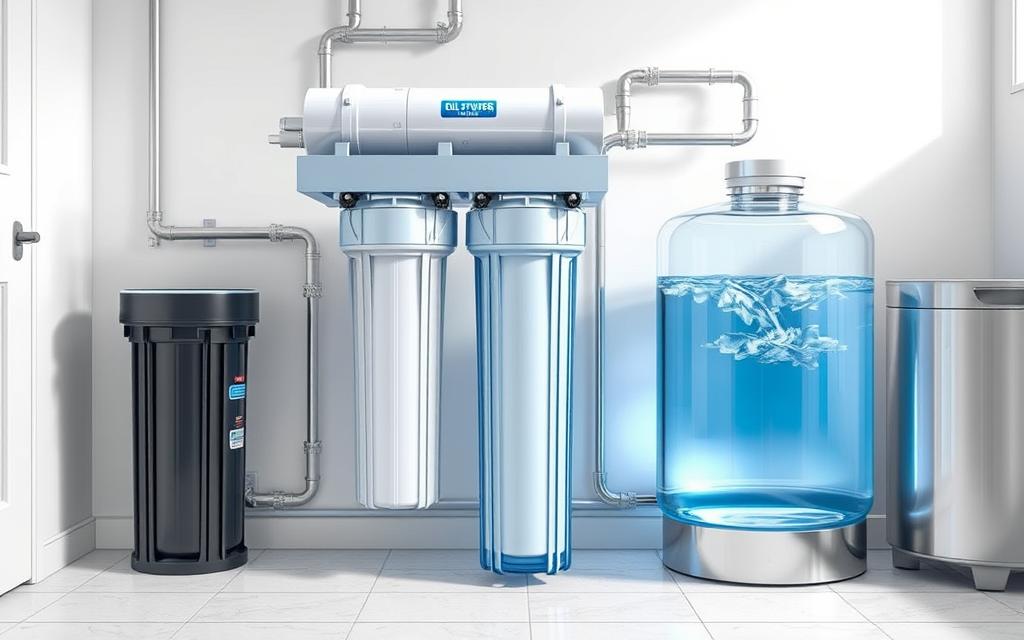
And don’t even get me started on calcium and magnesium. They build up inside your pipes like plaque in an artery, slowly killing your water heater and clogging your showerhead. A whole house reverse osmosis (RO) system doesn’t just polish the water at your kitchen sink—it tackles the problem at the front door. Think of it as a bouncer for your entire plumbing system, kicking out the bad stuff before it even gets inside.
Must Read
Wait, Isn't Reverse Osmosis Just for Drinking?
Most people imagine those little under-sink tanks that waste a bucket of water for every cup they produce. Wrong (mostly). Modern whole house RO systems are behemoths that filter every drop entering your home. The key difference? They use a high-volume membrane and a storage tank that re-mineralizes the water slightly. Why? Because pure, distilled water running through your copper pipes would actually corrode them. Irony, right? You spend thousands to purify, then you have to add a tiny bit of "dirty" back in for your pipes to survive.
The "Dave Test" and the Myth of the Filter
After Dave installed his system, he invited me over for what he called "The Great Water Tasting." He filled three glasses: one from his tap before (smelled like a public pool), one from his fridge (decent but flat), and one from his new RO system. “Taste this,” he said, grinning like a mad scientist. It was silky. No chlorine aftertaste, no metallic tang—just water that tasted like... wet nothingness. But that’s the weird part: good water should have no flavor.
Now, here’s where I have to be real with you. A whole house RO system is not a cute weekend project. You’ll need a professional to install it, and it’s going to cost you several thousand dollars. Also, it produces a lot of wastewater (about 1 gallon of brine for every 3 gallons of pure water). That’s the dirty secret nobody on Instagram tells you. But if you live somewhere with hard, chlorinated water? The trade-off is night and day.
The Shower Revelation
Let’s go back to my favorite room: the shower. After water goes through a whole house RO, your soap lathers like a dream—no more battling with soap scum. Your hair stops feeling like straw, and your skin doesn’t need a gallon of lotion right after. And the dishwasher? No more cloudy glasses. The coffee? Actually tastes like coffee, not like tap water.
 How Reverse Osmosis Removes Contaminants from Your Water
But the real win? Your appliances live longer. A water heater with hard scale buildup has to work twice as hard, burning electricity and shortening its lifespan. The RO system removes those scale-causing minerals, so your water heater chills out. (Literally, it chills out less because it works less—you get the point.) That alone can pay for the system over a decade.
The "You're Overthinking This" Section
Look, you might be sitting there thinking, "But I already have a fridge filter." Friend, fridge filters are like using a napkin to stop a flood. They catch big sediment and maybe some chlorine, but they don’t touch the microscopic ions that mess with your pipes. A whole house RO, on the other hand, filters everything—bacteria, viruses, lead, arsenic, fluoride, and even those pesky perfluorinated chemicals (PFAS) that are making headlines.
Is it overkill? Maybe. But so is wearing a raincoat in a drizzle—until the drizzle turns into a monsoon. If your water has a TDS (Total Dissolved Solids) reading over 400 ppm, you’re in monsoon territory. If it’s under 150? Honestly, you might just need a simple carbon filter. Test your water first—use a cheap TDS meter from Amazon. Data beats guessing every time.
The Verdict (With a Side of Salt)
I’ll end with a confession: I don’t have a whole house RO system. Yet. I live in an apartment, and my landlord would probably laugh at me if I suggested drilling into the main line. But if I owned a house? I’d put it on the "save up for it" list, right between a new roof and a good vacuum cleaner. The comfort of knowing every tap—from the laundry room to the garden hose—delivers pristine water is a luxury that feels like a necessity once you’ve experienced it.
So, if you’re tired of Dave’s "rusty water surprise" and want to stop buying bottled water for your coffee maker, consider it. Just remember: it’s a system, not a magic wand. It needs maintenance, annual filter changes, and a decent water pressure (above 40 psi) to work. But for that glass of perfect, taste-free water? I’d say it’s worth it. Even if the sales pitch sounds like science fiction.
