Reverse Osmosis Water Filter How It Works

Ever stared at your tap water and wondered what’s really in there besides, well, water? Maybe it tastes a little funny, or you’ve heard about microplastics and minerals you’d...
Ever stared at your tap water and wondered what’s really in there besides, well, water? Maybe it tastes a little funny, or you’ve heard about microplastics and minerals you’d rather skip. That’s where reverse osmosis, or RO, comes in – and trust me, it’s way cooler than it sounds.
What even is reverse osmosis?
Imagine you’ve got a super picky bouncer at a club. That bouncer only lets the tiniest, most innocent molecules through, while kicking out all the riff-raff. That’s basically an RO system: a membrane with pores so small you’d need a microscope to see them.
We’re talking holes that are about 0.0001 microns wide. For context, a human hair is about 70 microns thick. So, this membrane filters out stuff like lead, chlorine, bacteria, and even those tiny salt particles that make seawater taste nasty.
Must Read
It’s not magic, though it feels like it. It’s just physics doing its thing under pressure.
The “reverse” part makes all the difference
You know how osmosis works? It’s nature’s way of balancing things. If you put a salty solution next to fresh water, water naturally moves to the salty side to dilute it. That’s regular osmosis.
Reverse osmosis flips the script. It pushes water against its natural flow using applied pressure. Think of it like trying to squeeze water through a coffee filter with your hand – but way more precise and with a lot less mess.
That pressure forces only the H₂O molecules through the membrane, leaving the junk behind. This is why RO systems are popular for desalination – turning ocean water into something you’d actually drink. Cool, right?
What gets kicked out?
Here’s the fun part. An RO system is like a superhero for your tap. It removes up to 99% of dissolved solids. That includes things like arsenic, fluoride, nitrates, and even pesticides.
It’s not just about taste – though water that tastes crisp is a nice bonus. It’s about knowing that heavy metals and lurking contaminants are being shown the door. Your water goes from “meh” to “mountain spring” level.
But wait – it’s not perfect. RO systems also strip out some healthy minerals like calcium and magnesium. That’s why some people add a remineralizing filter afterward. Balance is everything, right?
How does it all fit together?
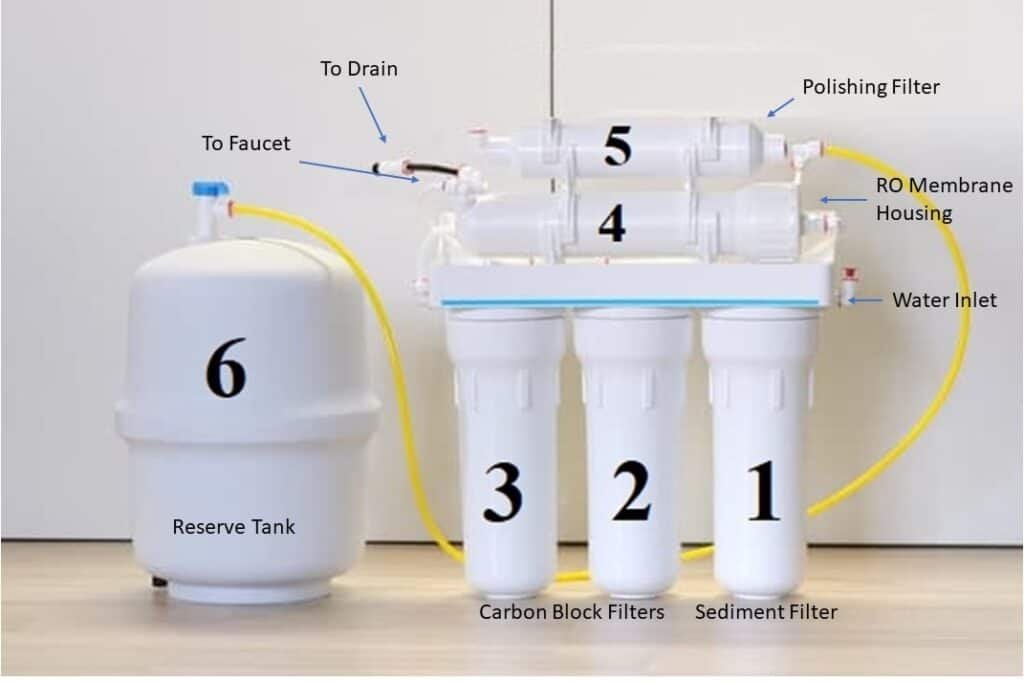
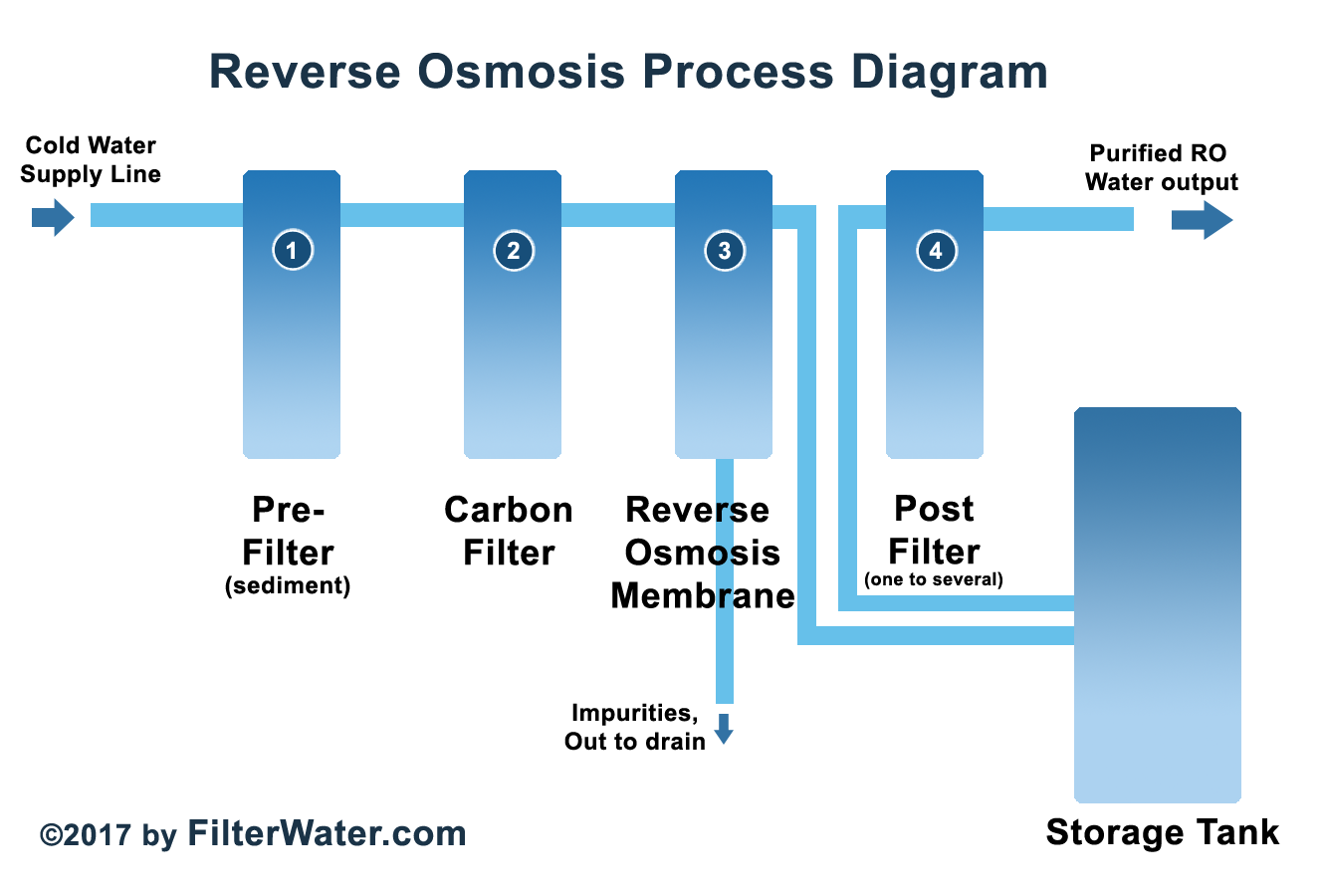
An RO system isn’t just one fancy filter. It’s more like a team. First, water runs through a sediment filter to catch sand and rust. Then it hits a carbon filter to soak up chlorine and weird smells.
 Reverse Osmosis Water Filter How It Works at Shannon Lehmann blog
After that pre-treatment, the water meets the big star: the RO membrane. That’s where the squeeze happens. What comes out is pure, slow-dripping perfection – but don’t expect a firehose. It takes time, which is why you usually see a little storage tank under the sink.
Finally, there’s often a post-filter to polish the flavor. The whole process is like a spa day for your water.
Is it worth the hype?
Honestly, that depends. If your tap water tastes like a swimming pool or you live in an area with old pipes, RO is a game-changer. You’ll notice the difference in your coffee, tea, and even ice cubes.
On the flip side, RO systems produce wastewater. For every liter of filtered water, you might lose two or three liters down the drain. That’s a bit of a bummer, but newer models are getting way more efficient – some only waste one liter for every two you get.
And let’s be real: the upfront cost can sting a little, but you’re basically buying a tiny water factory for your countertop or cabinet. No more plastic bottles, no more guessing what’s in that glass.
The verdict? It’s pretty darn clever.
Reverse osmosis takes a simple idea – a filter – and turns it into a scientific marvel. It’s the same technology used to clean dialysis fluid and purify water for astronauts. Yes, astronauts. That’s the level we’re talking about.
So next time you take a sip from an RO system, imagine that microscopic bouncer working overtime. Every drop you taste has been through a journey of pressure, rejection, and precision that would make a chemist smile.
Pretty cool for something that just sits under your sink, huh?
