Total Dissolved Solids Meter Water Tester

So, you’ve heard about a Total Dissolved Solids Meter Water Tester, and you’re probably thinking, “That sounds like something a mad scientist would use to test if their potion...
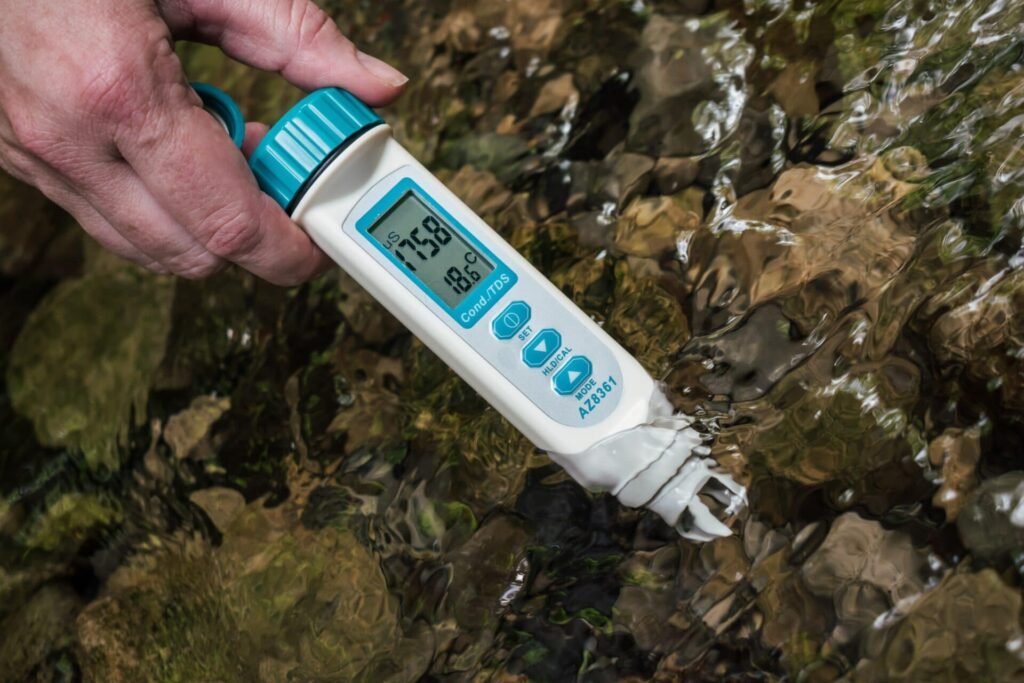
So, you’ve heard about a Total Dissolved Solids Meter Water Tester, and you’re probably thinking, “That sounds like something a mad scientist would use to test if their potion is ready.” Honestly, you’re not wrong. But trust me, this little gadget is way more fun than it sounds—and it might just save you from drinking water that tastes like a dusty swimming pool. Let’s dive in (pun totally intended).
What in the World Is Total Dissolved Solids?
First, let’s break down that mouthful of a name. Total Dissolved Solids, or TDS for short, is just a fancy way of saying “everything floating in your water that isn’t H2O.” We’re talking minerals, salts, tiny bits of metal, and even the ghost of that old penny you dropped in the sink last week. Your water is basically a soup, and this meter tells you how thick that soup is.
Think of it like this: pure water has almost nothing in it—it’s shy and boring. But tap water? It’s got a whole party of calcium, magnesium, and sometimes even lead (rude guests, honestly). A TDS meter is the bouncer that tells you how rowdy that party is.
Must Read
Why You Actually Need One (No, Really)
Maybe you’re thinking, “I don’t have a science lab in my kitchen—why do I care?” Fair point. But here’s the secret: that weird taste in your coffee or the white crust on your kettle? That’s your water screaming for help. A TDS tester gives you the cold, hard numbers so you can stop blaming the coffee beans.
Plus, if you’re one of those people who bought a fancy water filter (like a reverse osmosis system or a Brita), this meter is your truth teller. You might discover your “purified” water is still hosting a mineral rave. Don’t be the person who finds out their expensive filter is just a fancy decoration.
How to Use This Magic Wand (It’s Easy)
Using a TDS meter is embarrassingly simple. You literally just dunk the probe into a glass of water, press a button, and wait three seconds. The screen lights up with a number, and you’re suddenly a water detective. No PhD required—just a glass and some curiosity.
Most meters measure in parts per million (PPM). A reading of 0–50 means your water is practically a ghost town, which is great for espresso. A reading over 300? Your water is a mineral disco. Over 1000? Uh, you might want to call a plumber and a priest. Seriously, that water is chaotic.
The Little Jokes Along the Way
One time, I tested my friend’s aquarium water and got a reading of 800 PPM. I told him, “Your fish are basically living in a hard-rock concert.” He moved the fish. The meter didn’t care—it just beeped and went back to sleep. These devices have zero drama, and I respect that.
Another fun game? Test your bottled water against your tap water. You’ll probably find your fancy $5 imported water is no better than the hose outside. It’s the ultimate “gotcha” moment for your wallet. Instant regret, measured in seconds.
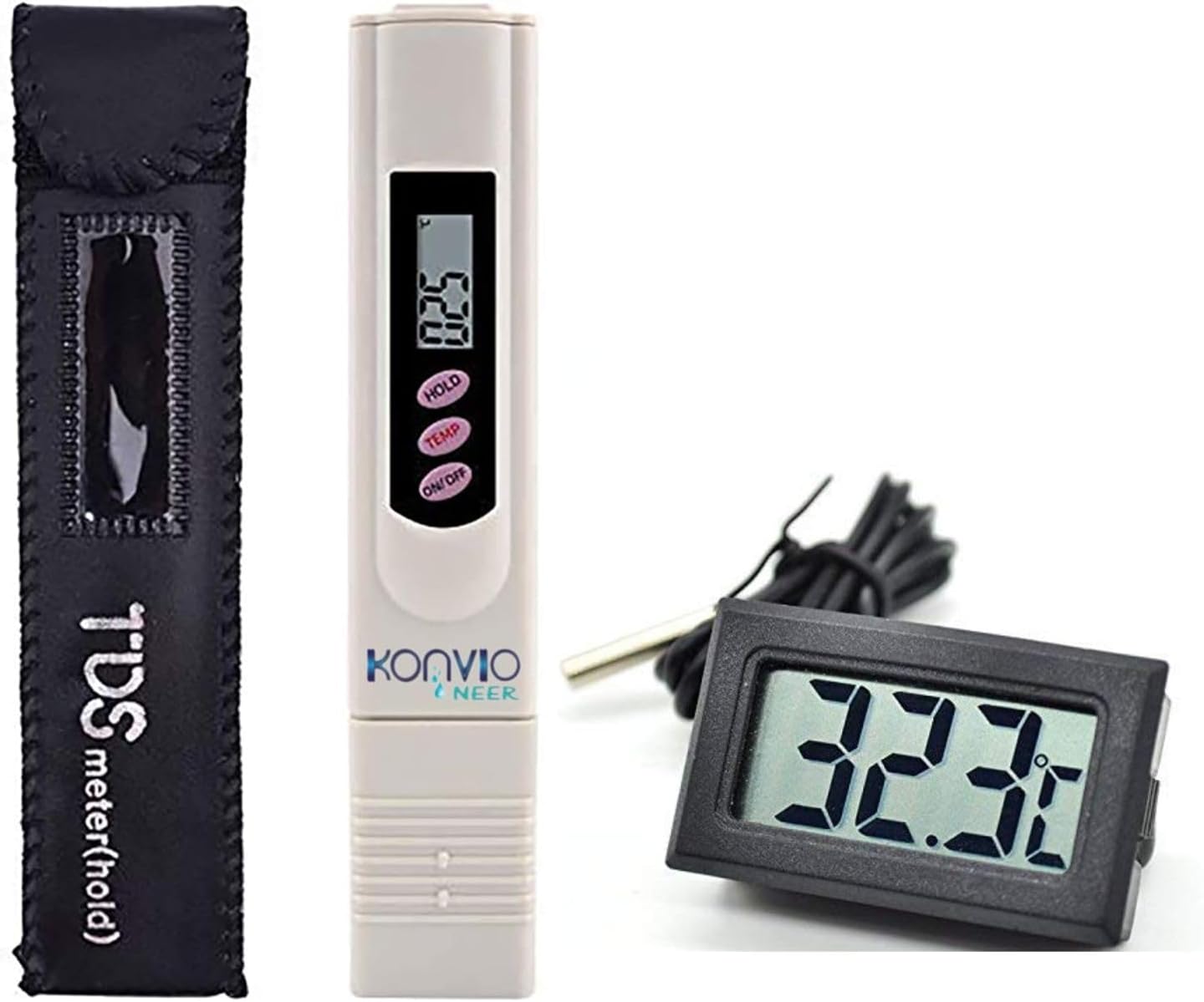 Konvio Neer Imported Tds Meter, Total Dissolved Solids Meter, Water
Where to Use Your New Best Friend
Don’t limit yourself to drinking water! This little device is a party trick waiting to happen. Test your pool, your fish tank, your humidifier, and even that mysterious puddle after a rainstorm. Is the puddle clean enough to drink? Probably not, but now you’ll know with science-y confidence.
You can also test your plants. Seriously, some houseplants are divas about water hardness. If your fern starts looking droopy, check the TDS. It might be giving you a silent protest. A meter turns you from a plant parent into a plant scientist. Admire your lab coat (imaginary or not).
The Downside: It Won’t Make You Rich
Let’s be real: a TDS meter won’t tell you if there are bacteria or viruses in your water. It’s like a bouncer who only checks IDs for minerals, not germs. So don’t throw away your water filter just because the number is low. You still need to be smart. Also, it can’t tell you if that water tastes like old sneakers—you’ll need your tongue for that. But hey, it’s a start.
And yes, some meters are cheap plastic that break if you look at them wrong. Spend the extra five bucks for the metal-tipped one. Your future self—and your sanity—will thank you.
The Uplifting Conclusion (I Promise)
Here’s the beautiful truth: a Total Dissolved Solids Meter Water Tester is a tiny hero. It gives you back control in a world full of confusing labels and fancy marketing. That bottle of “glacial spring water”? The meter laughs. That tap water you were worried about? Maybe it’s actually perfect for your morning tea.
At the end of the day, this device reminds us that even the simplest things—like a glass of water—have secrets. And being curious enough to uncover them? That’s always a good idea. So go ahead, buy a TDS meter. Test your water. Test your neighbor’s water (with permission, please). Test the water from that weird fountain in the park. Smile every time the number pops up. You’re not just measuring solids—you’re measuring your own tiny victory over the unknown. And that, my friend, tastes pretty sweet.
