Uv Water Treatment System Troubleshooting

So the other day, my buddy Dave calls me, frantic. He’s staring at his pristine, expensive UV water treatment system, and the “Service Required” light is blinking like a disco...

So the other day, my buddy Dave calls me, frantic. He’s staring at his pristine, expensive UV water treatment system, and the “Service Required” light is blinking like a disco ball at a bad party. “It’s been six months of perfect water,” he moaned, “and now I’m terrified to drink from the tap.” I laughed—not at his pain, but because I’d been there. That blinking light is basically the universe telling you to pay attention, not to panic. Let’s dive into the weird little world of UV system gremlins before you end up calling Dave for emotional support.
The Light That Lies (Or Just Blinks)
First up: that “Service” or “Replace Lamp” indicator. You see it, your heart sinks, and you think you need to call a plumber and sell a kidney.Hold your horses. Most UV systems have a timer that automatically triggers this after 365 days of run time, even if the lamp is still glowing like a champion. The lamp does not actually die at exactly 365 days—it loses intensity over time, so the alert is a safety net, not a death sentence.
Try resetting the system first. Check your manual (yes, dig it out from under the cat hair) for the reset button combination. If light goes off, you’re good for another few weeks—but don’t slack on replacing that bulb soon. Procrastination and UV systems don’t mix well, you know?
Must Read
When the Water Runs, but the Light Flickers
If the UV lamp itself is flickering or the ballast (the power box) is humming like a haunted transformer, you’ve got a connection issue. I once spent an hour troubleshooting only to find the lamp cord was half-chewed by my dog—thanks, Buster. Check the plug, the cord, and the connection to the quartz sleeve. Tightening a loose connection can solve 90% of flicker dramas without spending a dime.
Another sneaky culprit: old ballasts hate cold mornings. If your system is in an unheated basement or garage, the lamp might struggle to ignite. Give it a few minutes—if it stabilizes, fine. If not, it’s likely the ballast or lamp is toast. Just don’t start tapping it with a hammer. I’ve tried. It doesn’t help.
The Cloudy Water Conspiracy
You turn on the tap, and the water looks like a foggy London afternoon. Your UV system is likely clean, so what’s the deal? UV only works on clear water. If your water is cloudy, muddy, or has weird floaties, the UV light can’t penetrate to kill the bugs. The system is literally throwing up its hands and saying, “I can’t do my job, buddy!”
This means your pre-filtration is failing. Check the sediment filter before the UV chamber—if it’s clogged or old, replace it. You might need a finer micron filter or an extra carbon block if you have hard water issues. Clear water is the UV’s best friend; cloudy water is its nemesis. Fix the filter, and your UV will stop feeling like a superhero without powers.
The Leak that Will Make You Swear
Nothing kills a peaceful Saturday like finding a puddle forming around your UV reactor. Those little O-rings and compression fittings are the silent traitors of any water system. Over time, the rubber dries out and shrinks. Before you call a plumber for a $200 visit, try these two tricks: turn off the water, unthread the fitting, and apply a tiny bit of food-grade silicone grease to the O-ring. Re-tighten—gently, you’re not building a car engine.
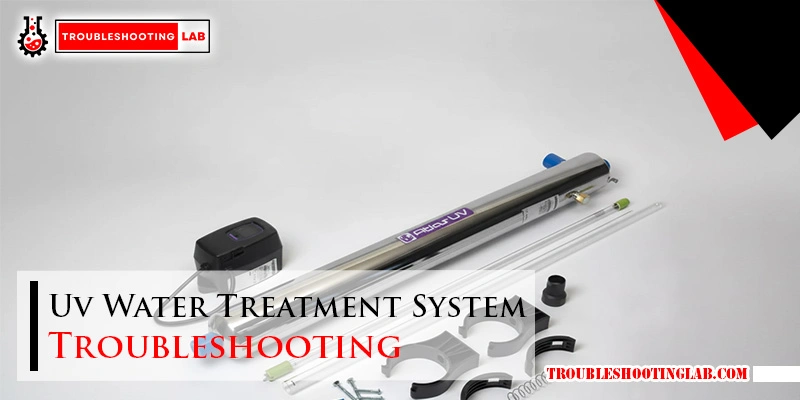 Uv Water Treatment System Troubleshooting: Quick Fixes & Tips
If it’s still leaking, the quartz sleeve (the glass tube inside) might have a micro-crack. I know, it sounds dramatic, but it happens from accidental knocks or thermal shock. That crack will let water into the electronics and fry your system quick. If you see a crack, order a new sleeve immediately. Your wallet will whimper, but a safety system isn’t the place to bargain hunt.
The “My Water Tastes Weird” Panic
So the UV lamp works, the water is clear, but your tap water now tastes like a swimming pool. UV should not change the taste at all—it only kills microbes, it doesn’t add chemicals. If you taste chlorine or a metallic tang, that’s likely from your municipal supply or old pipes, not the UV unit. But if you taste nothing unusual? You’re just paranoid, my friend. Drink up.
However, if you get a rancid, musty taste, it might be bacteria growing in the system itself—usually because the UV hasn’t been on long enough to sanitize the chamber after a power outage. Run the water for 10 minutes with the UV on full blast. If the taste lingers, you need to shock the system with a mild hydrogen peroxide flush. Don’t skip this step—it’s like giving your water a spa day.
The Final Pro Tip (Because I Like You)
Here’s the truth: most UV system “failures” are just signs of neglect or misunderstanding. Treat the lamp and quartz sleeve like yearly chores, like changing your smoke alarm batteries. Set a calendar reminder. Honestly, if you only do one thing today, clean the outside of the quartz sleeve with a soft cloth and some white vinegar. You’ll be amazed at the film that builds up.
If, after all this, your system still throws a tantrum? Don’t outsmart yourself. Call the manufacturer’s tech support. They’ve heard every dumb question (including mine about the dog chewing the cord). Your UV system is a workhorse, but it’s not a mind reader. Give it a little love, a little grease, and a fresh lamp, and it’ll happily zap your water for another year. Now go drink a glass—it’s safe, I promise.
