Water Filters For Industrial Applications

You might not think about it while sipping your morning latte, but the clean water in that cup probably passed through an industrial filter the size of a small car. Behind eve...

You might not think about it while sipping your morning latte, but the clean water in that cup probably passed through an industrial filter the size of a small car. Behind every microbrew, pharmaceutical capsule, and silicon chip is a quiet revolution in water treatment. It’s not glamorous, but it’s essential—and surprisingly fascinating.
The Big Leagues of Clean
Forget the Brita pitcher on your counter. Industrial water filters handle thousands of gallons per minute, removing everything from sand to microscopic bacteria. Think of them as the Michelin-star chefs of hydration—meticulous, powerful, and utterly uncompromising. A single misstep here can shut down a factory.
These systems use multi-stage processes: sediment filters catch the big stuff, carbon filters trap chemicals, and reverse osmosis membranes squeeze out anything smaller than a water molecule. It’s like a spa day for H₂O, but with high pressure and zero cucumber slices.
Must Read
Why Do Industries Care So Much?
Because dirty water is expensive. Scale buildup alone costs manufacturers billions annually in energy and equipment repairs. Plus, if your bottled water tastes like yesterday’s factory runoff, you’re not winning any PR awards.
Fun fact: The semiconductor industry uses water purer than anything found in nature—so clean it can actually leach minerals out of the pipes it flows through. Talk about high maintenance. A single chip fab can use up to four million gallons of ultrapure water per day.
Filter Tech That Feels Like Sci-Fi
Some modern filters use ceramic membranes with pores smaller than a virus. Others rely on electrodeionization, which zaps ions out of solution like a tiny lightning storm. It’s the water equivalent of a Dyson vacuum—unnecessarily cool, but you’re glad it exists.
And then there’s the humble bag filter. It looks like a giant tea bag, but it’s the unsung hero of food processing, keeping ketchup smooth and beer crystal clear. Next time you enjoy a crisp lager, silently thank the bag filter.
Practical Tips for the Curious
If you’re sourcing an industrial filter, ignore the price tag first. Focus on flow rate, micron rating, and chemical compatibility. A cheap filter that clogs hourly is no bargain—it’s a headache with threads.
Also, test your water three times a year. Seasonal changes in rivers and groundwater can surprise even seasoned operators. A spike in iron or silica can destroy your membranes overnight. Think of it as a regular dental checkup, but for your factory’s circulatory system.
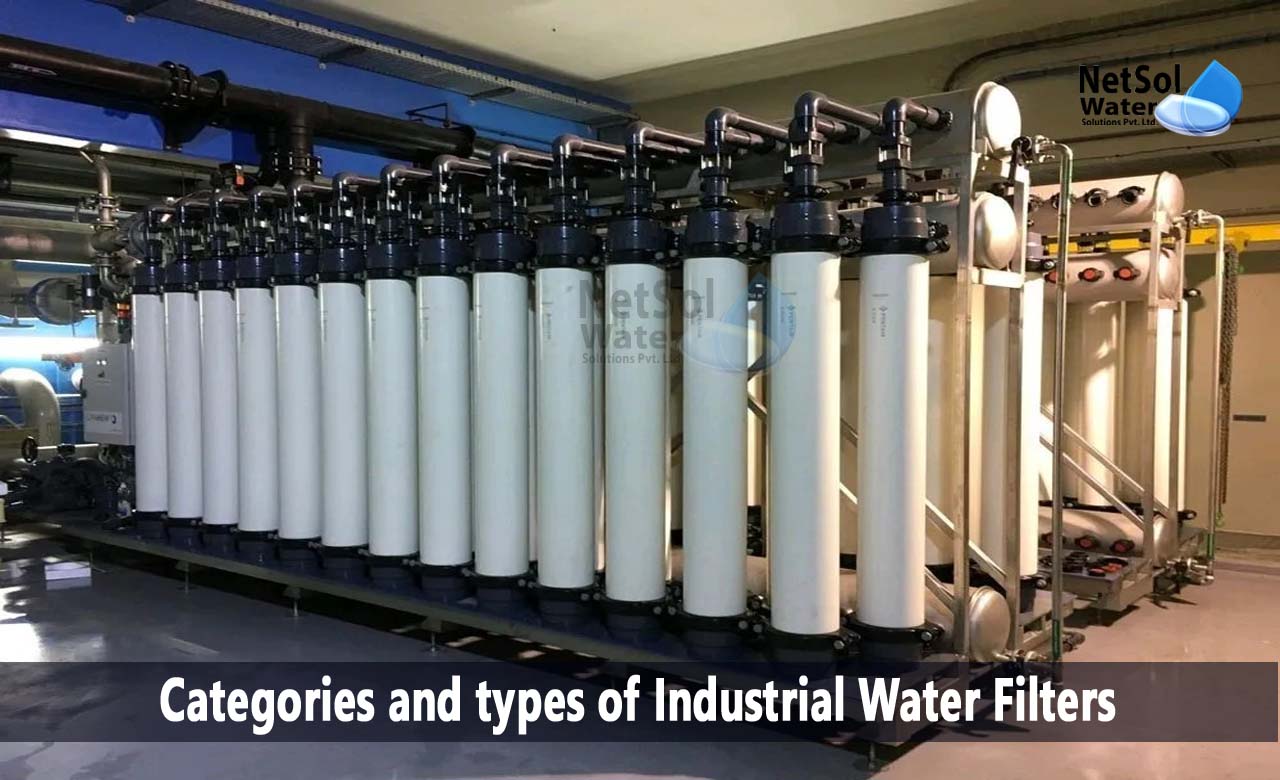 What are the Categories and types of Industrial Water Filters
Pro tip: Always install a bypass line. Because the one time you forget, the main filter will fail during a heatwave, and you’ll be explaining to your boss why the production line smells like boiled swamp. It’s a career-limiting move.
Cultural References and Random Nods
Industrial water filters are the James Bond of utilities: unseen, vital, and occasionally exploding under pressure. They’re also the reason your fizzy soda doesn’t taste like chlorine. Remember the Flint water crisis? That scarred a generation—and reminded us that filtration isn’t just luxury, it’s justice.
In Japan, some factories decorate their filter rooms with bonsai trees—a quirky way to remind workers that water is alive and deserves respect. Meanwhile, in Germany, engineers treat filters like precision instruments, calibrating them to the nearest micrometer.
The Quiet Satisfactions
Here’s a little secret: watching a backwash cycle is oddly meditative. All that dirty water swirling away, replaced by crystal clarity—it’s a small, satisfying victory. You can almost hear a faint “ahh” from the pipes.
And yes, you can apply this to life. A good filter—at home or work—lets the good stuff through and catches the nonsense. It’s a metaphor wrapped in a mechanical process. Go ahead, enjoy that deep thought.
Final Reflection: Filter Your World
So next time you fill your glass from the tap, remember the industrial-scale patience that made it safe. The coffee you drink, the makeup you apply, the plastic bottle you recycle—all touched by a filter somewhere. We live in a world that runs on clean water, and that’s a quiet, wonderful truth.
Maybe we could all use a personal filter—one that catches worry and lets peace flow through. Until we invent that, the industrial kind will do just fine. Cheers to clarity, in every sense.
