Nsf/ansi/can 61 Section 5 And 8 Difference

You’ve probably never thought about your faucet’s secret life. But every time you pour a glass of water, the pipe behind the wall is whispering secrets—about lead, about plast...
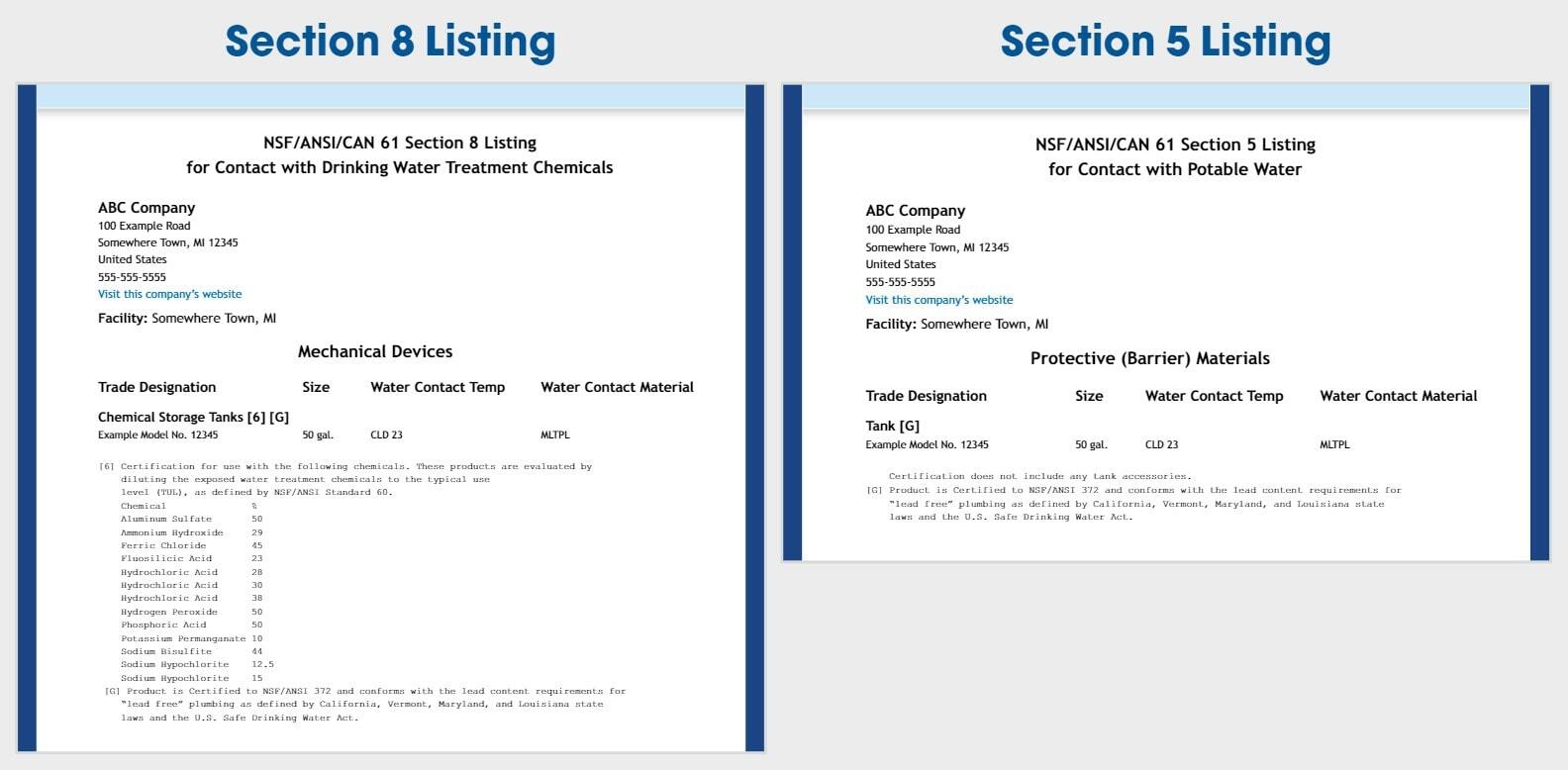
You’ve probably never thought about your faucet’s secret life. But every time you pour a glass of water, the pipe behind the wall is whispering secrets—about lead, about plastic, about safety. That’s where NSF/ANSI/CAN 61 comes in, a standard that quietly ensures your drinking water doesn’t turn into a chemistry set.
The trouble starts when people talk about "certification" as one big blanket. Actually, the standard is a layered cake, and Section 5 and Section 8 are two very different slices. Think of it as the difference between a pop quiz and a full-blown final exam for your pipes and fittings.
The Pop Quiz: Section 5
Section 5 is the standard for endpoint devices—the stuff you actually touch every day. We’re talking faucets, drinking fountains, and ice makers. These are the last stop before water hits your glass.
Must Read
Imagine Section 5 as a rigorous solo artist audition. Each individual faucet model is tested to see how much contaminants—like lead, cadmium, or mercury—leach into still water over a static period of 16 to 24 hours. It’s a controlled, lab-condition scenario.
Fun fact: A single faucet can sit in a water bath for days, and technicians measure parts per billion of nasties. That’s like finding one drop of something bad in an Olympic-sized swimming pool. Scary precise, right?
Practical tip: If you’re buying a kitchen faucet for a home renovation, always look for the Section 5 mark. It’s your assurance that the metal or plastic in that handle won’t silently pollute your morning coffee.
The Final Exam: Section 8
Section 8 is the standard for the hidden infrastructure—the pipes, fittings, valves, and connectors that live inside walls, under floors, or buried in the ground. These components handle continuous flow under pressure, not just a quiet soak.
Think of Section 8 as a marathon, not a sprint. Instead of testing a single faucet in a beaker, engineers test an entire plumbing assembly—pipes, joints, and all—over a 72-hour period with water constantly flowing. The goal is to see what leaches out when water is moving at full speed, mimicking real-world use.
Cultural reference: Remember the movie The Big Short? Section 5 is like checking one mortgage for fraud. Section 8 is stress-testing the entire housing market to see if it collapses. Each has its own job, but one is much more systemic.
Fun fact: Section 8 testing uses chlorinated water—just like your tap—to simulate how pipes age in real-life, chemical-rich environments. It’s not just about what’s new; it’s about what happens years down the road.
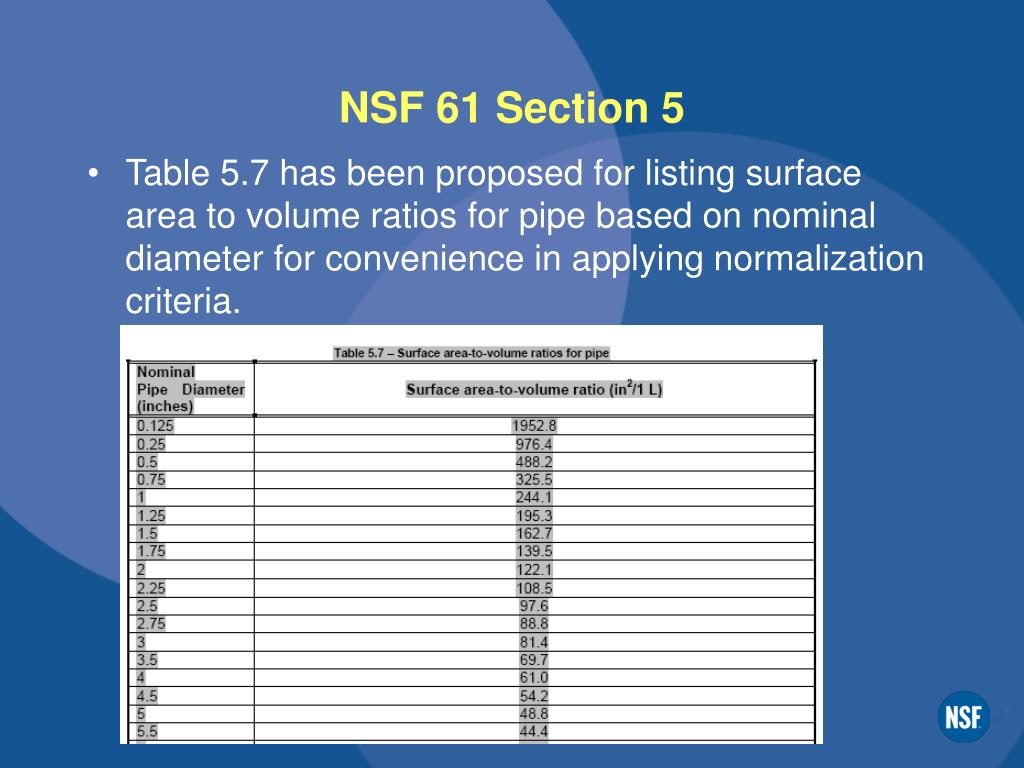 PPT - NSF 61 Section 5 Revisions for Tank and Pipe Coatings PowerPoint
Why Should You Care About the Difference?
Here’s where it gets personal: not all "NSF 61 certified" products are equal. A plastic pipe might pass Section 8 with flying colors, but a brass fitting might fail. Meanwhile, a faucet with Section 5 approval could still have lead in its internal valves—just not enough to fail the static test.
Practical tip: When you’re building or remodeling, ask your plumber or contractor for spec sheets. Say, "Hey, is this pipe Section 8 certified? And is that faucet Section 5?" You’ll sound like a pro, and they’ll know you’re serious about water quality.
Another fun fact: In Canada, the standard is identical to the U.S. version thanks to the CAN in the name—making it a rare, friendly cross-border agreement. No need for a passport check on your water safety.
The Hidden Impact on Your Morning Routine
Picture this: You wake up, fill a glass from the tap, and drink. If your house was built before 1990, your pipes might not be Section 8 certified. The risk is low, but it’s a quiet gamble—especially if you have children or pregnant women in the house.
Smart move: If you’re paranoid, run your tap for 30 seconds before drinking that first glass. Water that’s been sitting overnight in pipes has a higher chance of picking up leached metals. This small habit is a hack that no certification can replace.
Note: Section 5 and Section 8 don’t cover everything. They don’t test for bacteria, viruses, or pesticides—that’s another standard (NSF 42 or 53). So think of these as the chemistry department of water safety, not the whole university.
The Big-Picture Connection
Ultimately, the difference between Section 5 and Section 8 is a story about trust and systems. A beautiful faucet can be perfect, but if the ugly pipe behind the wall is not, your water still suffers. We’re so focused on the shiny visible parts that we forget the hidden ones matter more.
Reflection: The same applies to life, doesn’t it? We polish our public Image—our Section 5—but the foundations we build in private—our Section 8—determine how healthy we really are. Check your pipes, check your habits, and drink deeply.
