What Happens When You Put Calcium In Water

You’ve probably done it a hundred times without thinking: you turn on the tap, fill a glass, and take a sip. But have you ever stopped to wonder what’s actually swimming in th...
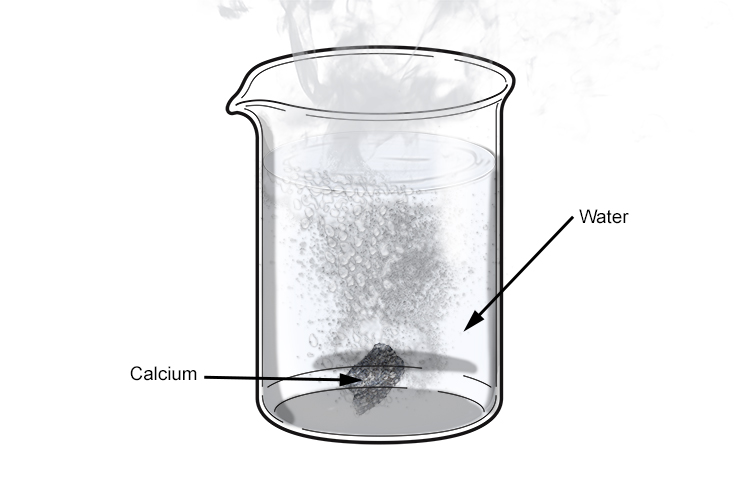
You’ve probably done it a hundred times without thinking: you turn on the tap, fill a glass, and take a sip. But have you ever stopped to wonder what’s actually swimming in that clear liquid? One of the most common—and most misunderstood—guests is calcium.
We’re not talking about the shiny gray metal you might remember from chemistry class. That stuff reacts violently with water, fizzing and popping like a tiny firecracker. No, we’re talking about the dissolved calcium carbonate and calcium ions that quietly hitch a ride from the ground into your glass.”
It’s a Chemical Chemistry Party
Must Read
When calcium meets water in its natural, friendly form, the reaction is surprisingly chill—no explosions, no drama. The calcium carbonate (from limestone or chalk) simply dissolves, releasing calcium ions and bicarbonate ions into the solution.
Think of it as a microscopic dance: the calcium ions slip between water molecules, creating a gentle chemical bond. That’s why hard water feels a little slick—it’s the mineral content giving your soap a run for its money.
Fun fact: the British are famously obsessed with this. They call it “limescale,” and it’s the enemy of every kettle in the realm. Hard water is just a cultural victory lap for calcium.
The Limescale Chronicles
If you live in an area with hard water, you’ve met limescale—that chalky white crust on your faucet. It’s what happens when water evaporates, leaving calcium carbonate behind like a ghostly fingerprint.
But don’t get frustrated. That crust is also a quiet reminder that you’re drinking a mineral that builds strong bones and healthy teeth. Your water is basically a liquid multivitamin from the earth.
Practical tip: To prevent limescale, wipe down your shower door with a squeegee after each use. It takes ten seconds and saves you from scraping later. Or, embrace it—and call it “artisanal mineral decor.”
What About the Taste?
You might notice that calcium-rich water tastes slightly different—a bit fuller, a touch richer. That’s because the ions interact with your taste buds, adding a subtle minerality. It’s like the difference between tap water and a fancy bottled spring water.
Some connoisseurs actually chase this. They’ll choose water with specific calcium levels, the way a wine lover picks a vintage. In Japan, they call mineral-dense water “kōso sui”—alkaline ionized water—and swear by its health benefits.
Spoiler alert: your body doesn’t really care about the extra hype. It just quietly absorbs the calcium and moves on. But hey, if it makes you feel like a wellness influencer, bottoms up.
The White Gold in Your Cup
So what actually happens to that calcium when you drink it? In your stomach, the acidic environment breaks it down into free calcium ions. Those ions then travel to your intestines, where they’re absorbed into your bloodstream.
From there, most of it gets stored in your bones and teeth—literally building your skeleton one sip at a time. The rest helps your heart beat, your nerves fire, and your muscles contract. You are basically a walking, talking calcium-powered machine.
Fun fact: a single glass of hard water can contain as much calcium as a tablespoon of milk. Not bad for H2O.
 Calcium Reacting With Water
When Things Get… Heated
There’s a reason your kettle gets that white buildup. When you boil hard water, the calcium bicarbonate breaks down into calcium carbonate, which is insoluble. That’s the white stuff floating or clinging to your pot.
It’s harmless—just a bit annoying. You can remove it by boiling vinegar or lemon juice in the kettle. The acid dissolves the calcium carbonate like magic. Old-school chemistry meets your morning tea routine.
Or you can just laugh and think of it as the earth’s way of saying, “You’re welcome for the minerals.”
Cultural Connections: From Rome to Your Sink
The Romans were masters of calcium. They used Roman concrete—made with volcanic ash and lime—to build structures that still stand today. That concrete hardened because of a chemical reaction with water, forming calcium-silicate-hydrate.
Fast-forward to your kitchen. That same calcium carbonate that clogs your coffee machine is the stuff that built the Pantheon’s dome. Perspective is everything.
In India, adding a pinch of lime (calcium hydroxide) to a pot of rice water is a traditional trick to enhance texture and nutrition. Calcium doesn’t judge—it just works.
Three Practical Tips for Water Love
Tip one: If you’re worried about limescale in your kettle, add a tiny splash of lemon juice to your water before boiling. It prevents the calcium from precipitating into crusty deposits.
Tip two: For your plants, hard water is actually a win—they need calcium for cell wall strength. Just let the water sit overnight to let chlorine evaporate first.
Tip three: If you’re brewing the perfect cup of coffee, consider the mineral content. Too little calcium and it tastes flat; too much and it becomes bitter. Some baristas even add a pinch of calcium chloride to their water for balance.
A Final Pour
When you put calcium in water, you’re not causing a chemical meltdown. You’re starting a quiet, ancient partnership—the kind that built mountains, shells, and you. That glass of water on your nightstand isn’t just wet. It’s a slow, steady gift from the earth to your bones.
So next time you fill a glass, give it a little nod. You’re drinking a story of geology, biology, and human history—all in one sip. Stay hydrated, stay sturdy, and let the minerals do their thing.
And if your kettle gets a bit crusty? Well, that’s just calcium leaving a love note. You’re welcome.
