Is Reverse Osmosis Same As Distilled Water

Okay, let’s settle this once and for all. You’re standing in the water aisle, confused. One bottle screams “Reverse Osmosis!” and the other whispers “Distilled.” Are they the...
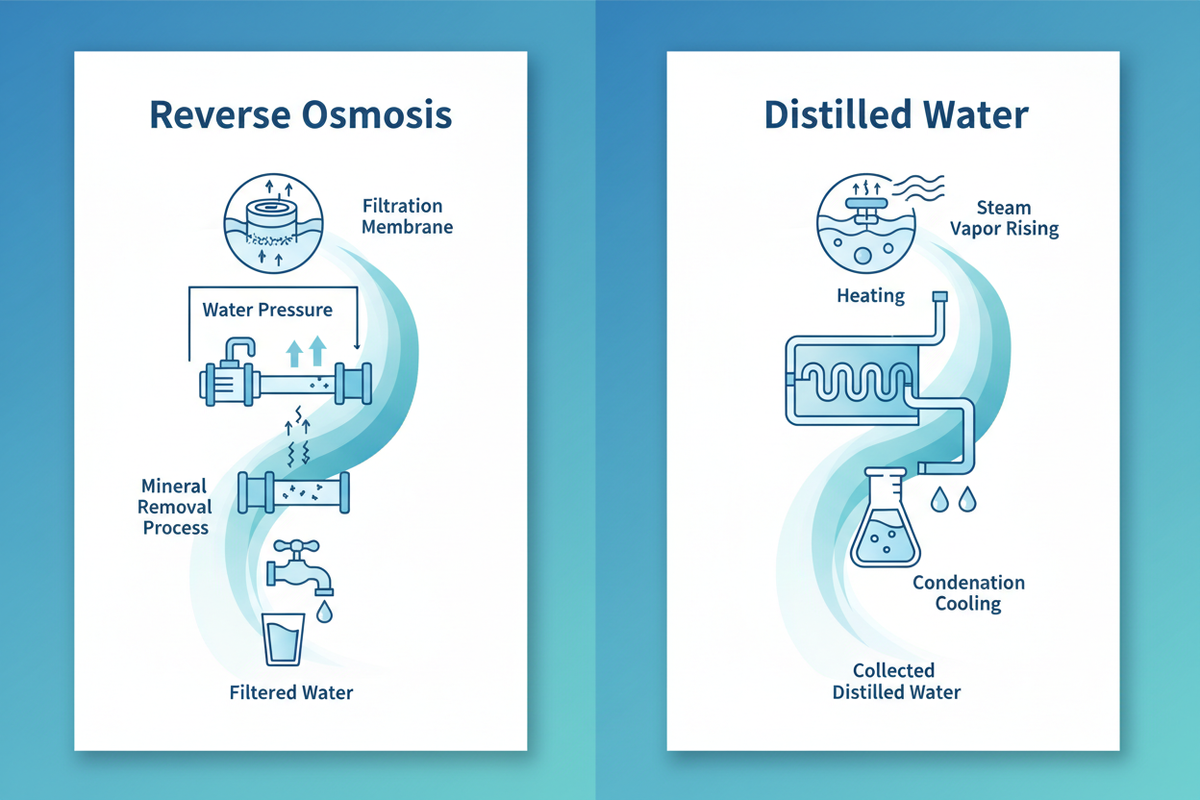
Okay, let’s settle this once and for all. You’re standing in the water aisle, confused. One bottle screams “Reverse Osmosis!” and the other whispers “Distilled.” Are they the same thing? Spoiler alert: nope. Not even close, actually.
The Short Answer (Because We’re All Busy)
Think of it like this: distilled water is the overachiever of water purification. Reverse osmosis (RO) is the practical, hardworking friend who gets the job done without the drama. Both produce very pure water, but they take completely different routes to get there.
Distilled water has been boiled into steam, then condensed back into liquid. That’s right – it’s basically rain on steroids, but man-made in a machine. Reverse osmosis, on the other hand, uses pressure to push water through a super-fancy filter. No boiling involved. Just pure, stubborn physics.
Must Read
How They Actually Work (No Science Degree Required)
Distillation is the old-school champ. You heat water until it turns to steam, leaving all the nasty stuff behind (minerals, bacteria, your ex’s bad vibes). Then you catch the steam and cool it down. What you get is almost chemically pure H₂O. It’s so clean that it’s basically a blank slate.
Reverse osmosis is the cool new kid on the block. It forces water through a membrane with teeny-tiny holes. Only water molecules fit through – everything else (like lead, chlorine, or that floating piece of lettuce) gets flushed away. Think of it as a bouncer at a VIP club for water molecules.
So here’s the key difference: distillation uses heat, RO uses pressure. Heat changes the state of water (liquid to gas). Pressure just forces it through a door. Two different parties, but both end up with very clean water.
The “But Which One is Cleaner?” Debate
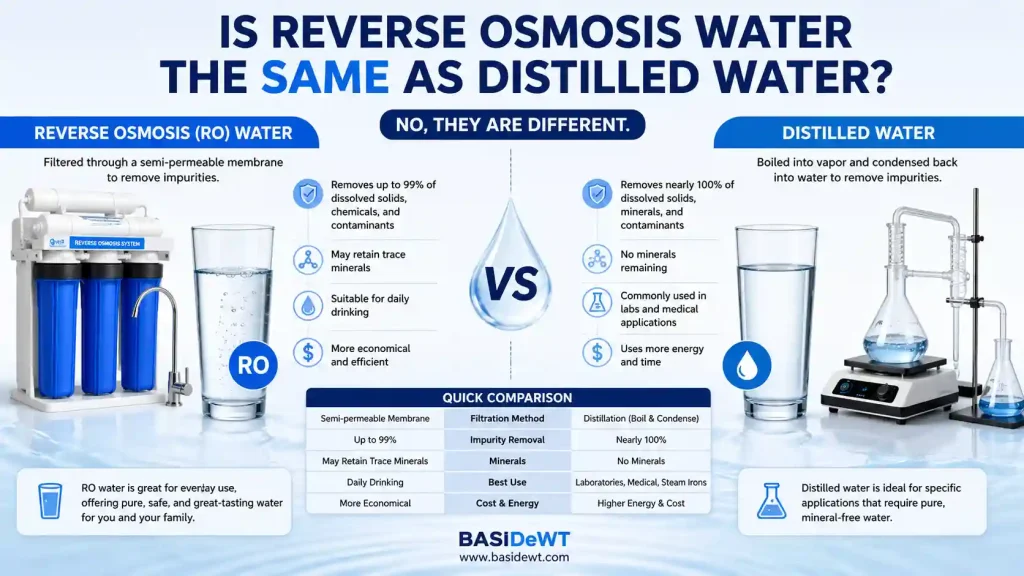
Technically, distilled water is slightly purer. Distillation removes almost everything – including volatile compounds and some chemicals that RO membranes might miss. It’s the nuclear option for water purification.
But here’s the punchline: do you really need that level of purity? Unless you’re filling a car battery, a steam iron, or a lab experiment, distilled water is overkill. It can even taste flat because it’s missing all the natural minerals. RO water retains a tiny amount of minerals, which makes it taste better and is actually good for you.
Think of it like this: distilled water is the plain toast of the water world. RO water is a solid avocado toast – still simple, but with a little personality.
 Is Reverse Osmosis Water the Same as Distilled Water? - Basidewt-Best
The Real World Differences (Because You Have to Live With This)
Distilled water is expensive to make. It takes a ton of energy to boil all that water. Your electricity bill will cry. And it’s slow – like watching paint dry slow.
Reverse osmosis is much faster and cheaper to run. You can install an RO system under your sink and get clean water on demand. It’s the lazy person’s distilled water, and I say that with total affection.
Here’s the kicker: both remove fluoride, which is a big deal for your teeth. If you’re using either for drinking, you might want to supplement fluoride via toothpaste. Your dentist will thank you.
The Final Verdict (No Pun Intended)
So, is reverse osmosis the same as distilled water? Absolutely not. But are they cousins? Sure. They both aim for the same goal: leaving the gross stuff behind. Distilled water is the meticulous librarian who reads every word. RO is the cool uncle who knows a shortcut.
Should you buy one over the other? If you need water for a medical device or a science experiment, go distilled. For daily drinking, cooking, or making your coffee taste less like a swimming pool, get an RO system. Your taste buds will high-five you.
And if you’re still confused? Just buy a good filter pitcher and call it a day. Nobody’s judging you for wanting clean water – unless you’re the one trying to pass off RO as distilled. Then we’ll have words. But over coffee, obviously.
