Ultraviolet Light Water Filtration Systems

Let’s be honest for a second: tap water is kind of a gamble, isn’t it? You turn on the faucet, cross your fingers, and hope it doesn’t taste like a swimming pool or a rusty pi...
Let’s be honest for a second: tap water is kind of a gamble, isn’t it? You turn on the faucet, cross your fingers, and hope it doesn’t taste like a swimming pool or a rusty pipe. Most of us just grumble and buy bottled water, which is basically a pyramid scheme for plastic. But there’s a quieter, cooler solution sitting in the shadows, and it involves ultraviolet light.
The “Sun” in Your Sink
Imagine if a tiny, angry sun moved into your kitchen cabinet. That’s essentially what an ultraviolet (UV) water filtration system is. It blasts your water with a specific wavelength of UV light that nukes bacteria, viruses, and other microscopic freeloaders. It doesn’t use chemicals, it doesn’t change the taste, and it doesn’t require any weird rituals. It just shines a light on the problem.
Think of it as a tanning bed for germs, except instead of getting a glow, they get dismantled at the molecular level. Poof. Gone. It’s oddly satisfying.
Must Read
I had a friend who installed one after his well water gave him a “mystery flavor” that he described as “dirt and regret.” He said it was like his water suddenly got a personality transplant from “grumpy old man” to “cheerful mountain stream.”
How It Actually Works (No Science Degree Required)
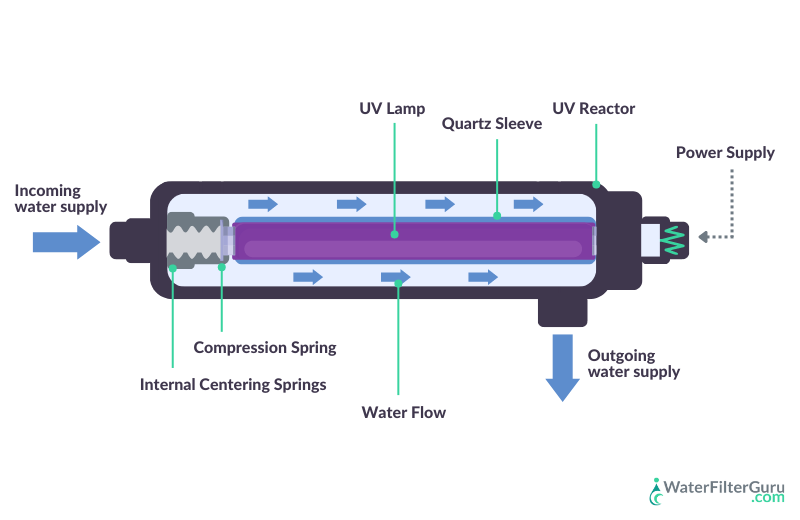
You don’t need to know how a toaster works to enjoy toast, and you don’t need to be a physicist to enjoy UV filtration. Here’s the basics: Water flows past a special bulb that emits UV-C light. This light is so intense that it scrambles the DNA of any living thing swimming in the water.
Imagine a bad guy in a movie getting hit by a ray gun that makes him forget his own name. That’s exactly what happens to E. coli and Giardia. They just become confused lumps that can’t reproduce or make you sick. They become the zombies of the microbial world, except harmless.
The best part? You don’t have to wait. There’s no storage tank, no slow drip. It’s instant. Like a microwave for bacteria, but colder.
The “Wait, It’s Not Magic” Reality Check
Here’s the thing every new UV owner learns, usually while standing in a puddle: UV light needs clear water. If your water is cloudy, full of sediment, or looks like weak tea, the light can’t reach the germs. It’s like trying to get a sunburn through a wool blanket. The critters just hide behind the mud and laugh.
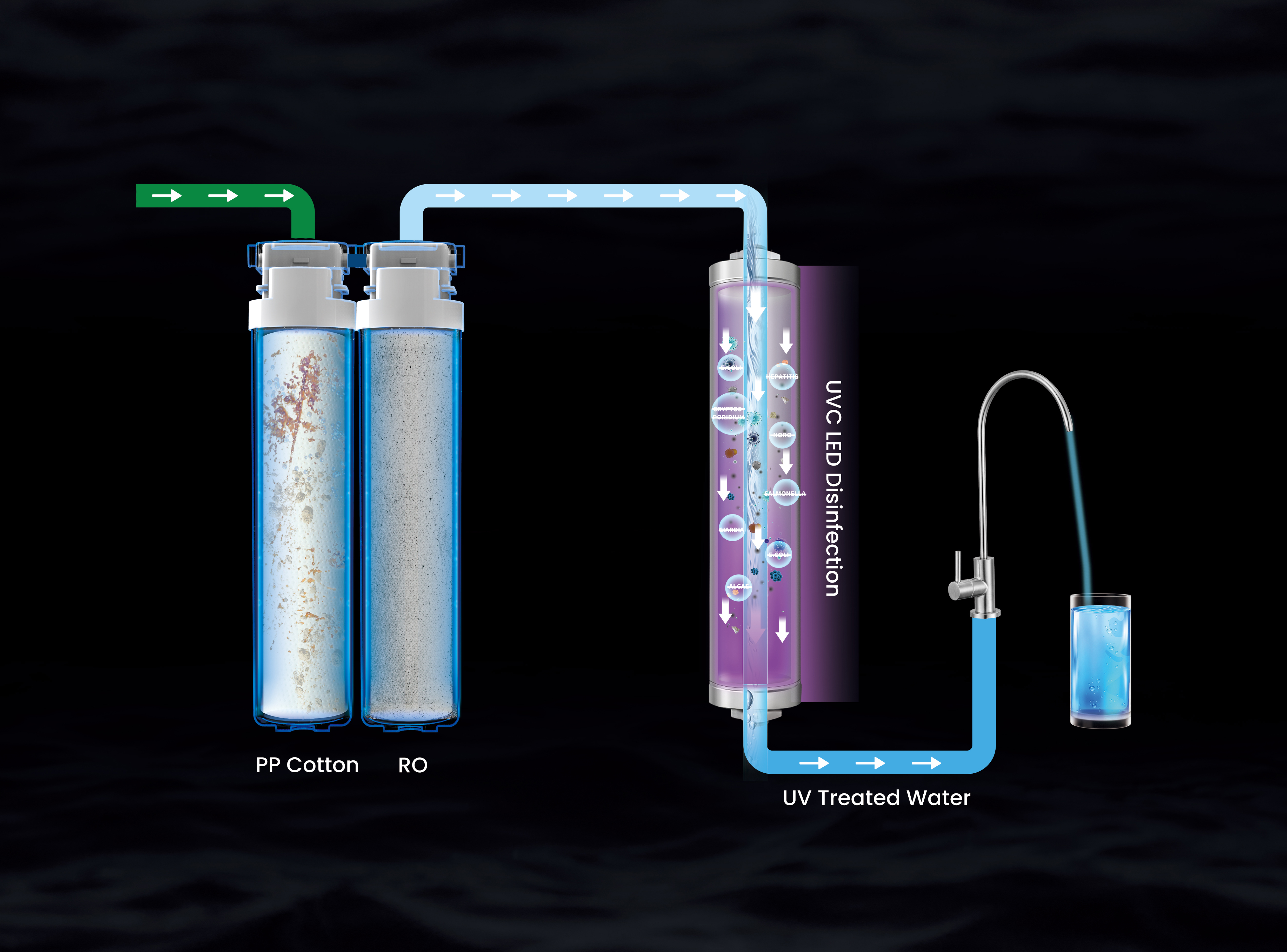
This is where the anecdote comes in. My cousin bought a UV system, set it up, and then bragged about his “hygienic fortress” of water. Two days later, his water turned brown during a storm. The UV bulb was powerless. He learned that day that UV filtration is the sidekick, not the superhero. You still need a regular filter (like a sediment or carbon filter) to clean the water first. Think of it as a bouncer at a club. The bouncer checks for dirt and debris; the UV light then checks for the sketchy characters.
 Reverse Osmosis Drinking Water Filter System with UVC LED | Safe
So, to make a long story short: sediment filter first, UV light second. Like putting on sunscreen after you’ve showered. Common sense, really.
Why You Might Want One (Besides the Cool Factor)
Reason one: Taste. UV doesn’t add anything, so your water tastes like, well, water. If your current tap water has a “pool party” vibe from chlorine, a carbon filter handles that, but UV ensures the pool party doesn’t include live guests. Reason two: Peace of mind. If you live in an area with boil water advisories, a UV system is like having a personal bodyguard for your drinking glass.
Reason three: You hate buying bottled water. I personally have a closet full of reusable bottles I bought during my “I’ll save the planet” phase. A UV system actually makes the planet-saving part real, because you stop buying plastic. Plus, you get to tell people you have a “water disinfection ray gun” in your house, which is excellent dinner party conversation.
But let’s be real: the bulb needs to be replaced once a year. It’s like changing a lightbulb, but with higher stakes. Forget to do it, and your water is just regular water with a dead lightbulb in it. Great decoration, bad germ killer.
The Verdict? It’s Pretty Chill
Ultraviolet water filtration isn’t a miracle. It won’t remove heavy metals, pesticides, or that weird “metallic tang” from old pipes. It handles only living things. But for 99% of homes, that’s the scary part. You can’t see bacteria, but your stomach sure can feel them. UV makes them stop existing.
So, if you’re tired of the water game, and you want a system that requires little more than an annual bulb change and some non-cloudy water, give UV a shot. It’s like having a powerful, invisible, microbe-melting sunbeam on tap. Just don’t stare at the bulb. It will fry your eyes. But for your water? It’s perfect.
