Reverse Osmosis Filtration System For Home

The first time I tasted water from a reverse osmosis system, I actually laughed. It was at a friend’s house, and she handed me a glass with a straight face, saying, “Just try...
The first time I tasted water from a reverse osmosis system, I actually laughed. It was at a friend’s house, and she handed me a glass with a straight face, saying, “Just try it.” I took a sip, expecting tap water, and got… nothing. It was so clean it felt weird in my mouth. That moment of pure, stupid confusion is exactly how I fell down the rabbit hole of home filtration.
Let’s be real: tap water is a gamble. Some days it tastes like a swimming pool; other days it smells like a basement. Your water supply is basically a soup of chlorine, sediment, and mystery minerals. And don’t even get me started on the “hard water” scale buildup. You know that chalky white crust on your kettle? That’s your water’s way of saying “hello.”
What even is a Reverse Osmosis (RO) System?
Imagine a bouncer at a very exclusive club. That bouncer is the semi-permeable membrane. It lets water molecules through, but it slams the door on pretty much everything else—lead, chlorine, fluoride, pesticides, microplastics, and even bacteria. The water gets forced through this membrane using household water pressure, leaving all the bad stuff behind.
Must Read
It sounds complicated, but the science is actually hilarious in its simplicity. You’re not “filtering” water; you’re literally squeezing it through a super-fine sieve. The rejected junk gets flushed down the drain, which is why these systems waste a bit of water. It’s a little wasteful, yes, but so is buying 500 plastic water bottles a year. (Spoiler: the ROI usually favors the RO system.)
The “Under the Sink” Situation
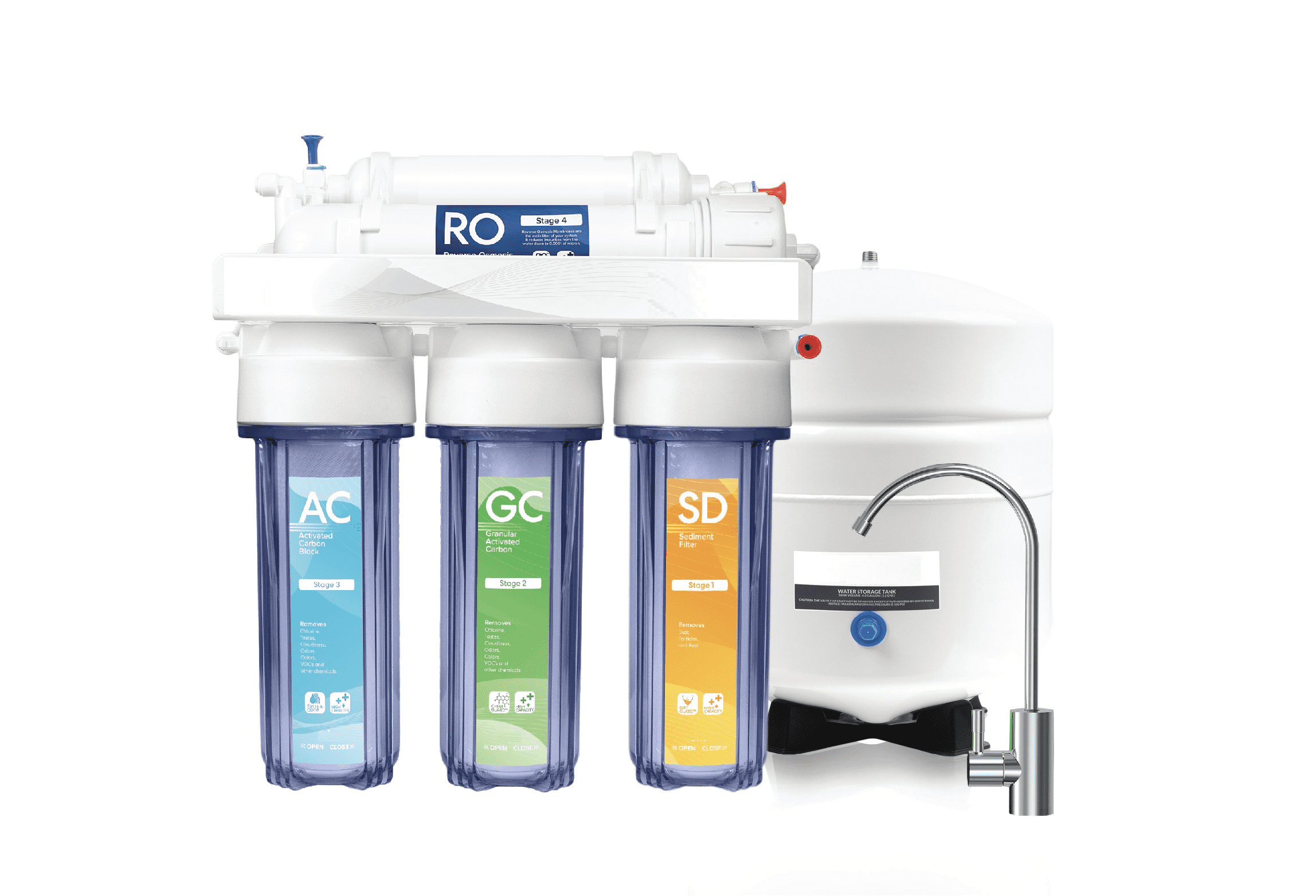
Most home RO systems are these sleek, white modules that live under your kitchen sink. They look like a miniature chemistry set—three or four canisters connected by tubes. Don’t be intimidated by the spaghetti of tubes. Once you install it (or pay someone to do it in 30 minutes), you just get a dedicated faucet on your counter.
The best part? The water comes out at a glacial pace. It takes about 60 seconds to fill a glass. This is actually a feature, not a bug—it forces you to slow down and appreciate the purity. (Or, if you’re me, it’s a constant reminder to refill the pitcher before you’re dying of thirst.)
Why you might actually need one (and why you might not)
You need an RO system if your tap water tastes like a chemical lab. If you live in an older house with lead pipes, this is practically a health insurance policy. It’s also a godsend for people who hate the mineral aftertaste of bottled water. On the flip side, RO strips out everything, including healthy minerals like calcium and magnesium.
That “pure” water is essentially empty. Some people call it “dead water.” But honestly? It’s dead delicious. You can always add a re-mineralizing filter later if you’re worried about missing out on rocks. Most coffee snobs will tell you RO water makes the best cup because it doesn’t react with the beans.
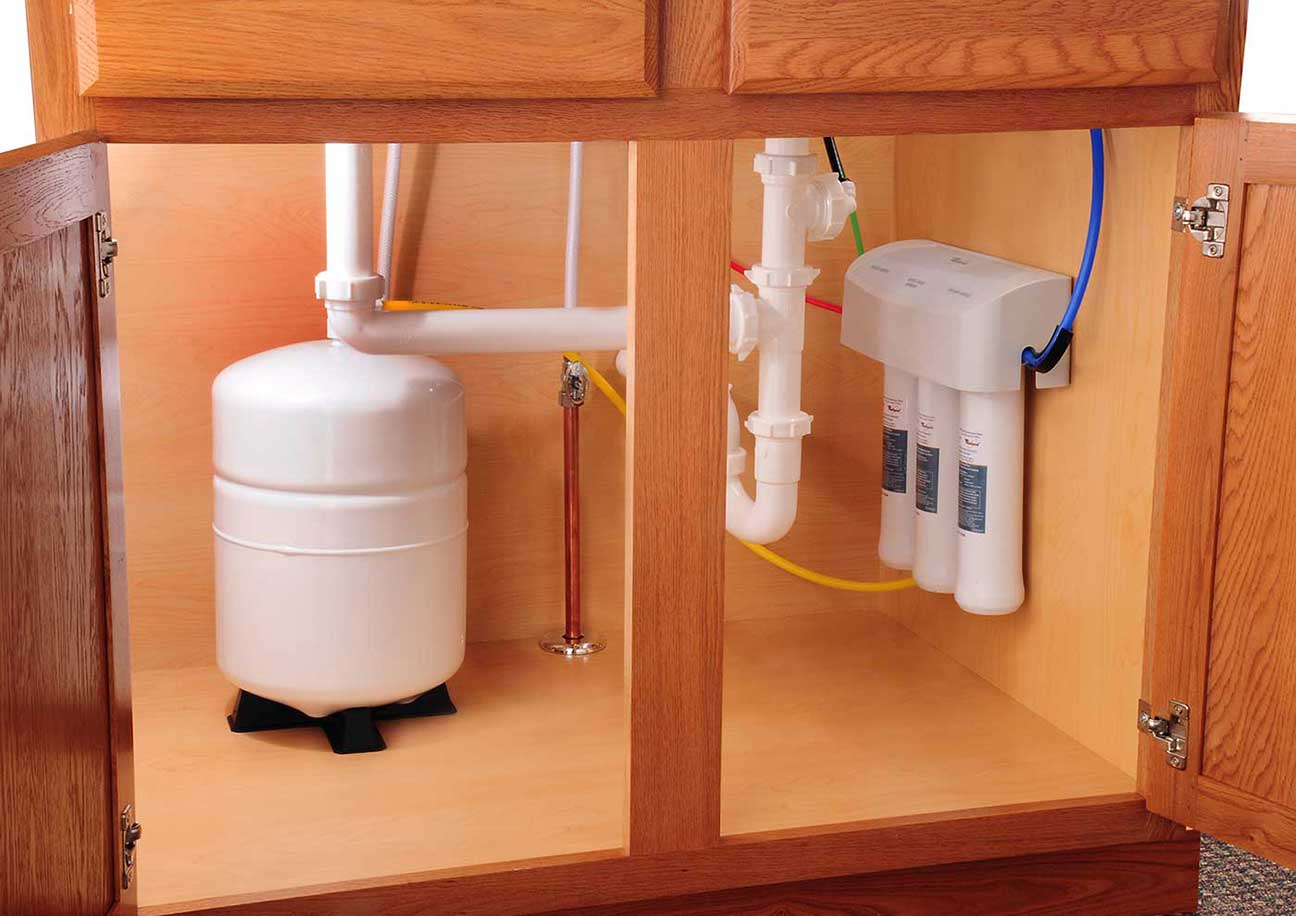 Reverse Osmosis Home Water Filtration System | Whirlpool
The little annoyances nobody tells you about
First, noise. The system makes a gentle gurgling sound when it’s flushing the rejected water down the drain. It sounds like a tiny toilet. You’ll stop noticing it after two days. Second, the storage tank. Most units have a big blue tank that holds about 3 gallons. That tank takes up half your under-sink cabinet space. Say goodbye to storing your stockpot there.
And third, the filter changes. You have to swap out the pre-filters and post-filters every 6 to 12 months. The membrane itself lasts 2 to 3 years. If you forget, your water goes from “crisp mountain stream” to “slightly sad pond.” Set a calendar reminder, for the love of hydration.
The boring but important part: cost and installation
A decent under-sink RO system runs between $150 and $400. The high-end ones come with a booster pump (if your water pressure is low) and a TDS meter. Installation is usually DIY-friendly if you own a wrench and aren’t afraid of tightening plastic fittings. Most kits come with a saddle valve that pierces your existing cold water line—it feels violent but it works.
If you rent, get a countertop RO system. They don’t require permanent installation and just plug into a standard faucet. They look a bit like a fancy Brita on steroids. They work just as well, though they produce water even more slowly. Perfect for a single person or a couple with low water needs.
The verdict: Is it overkill?
For most people, a simple carbon filter (like a Brita) is probably fine. But if you’re a water snob—or if your tap water tastes like sadness—reverse osmosis is absolutely worth it. The first glass of RO water you drink will feel like a betrayal of everything you knew about water. It’s so clean it almost seems fake. You’ll find yourself drinking way more of it, which is never a bad thing.
At the end of the day, it’s just plumbing with attitude. And your future self, sipping a crystal-clear glass of nothingness, will thank you. Just remember to buy a spare filter before you run out. Learned that one the hard way. (Don’t ask.)
