Are Distilled And Deionized Water The Same

You’ve seen them in the grocery aisle and maybe in your lab or coffee machine: bottles labeled “distilled” and others marked “deionized.” At first glance, they look like twins...
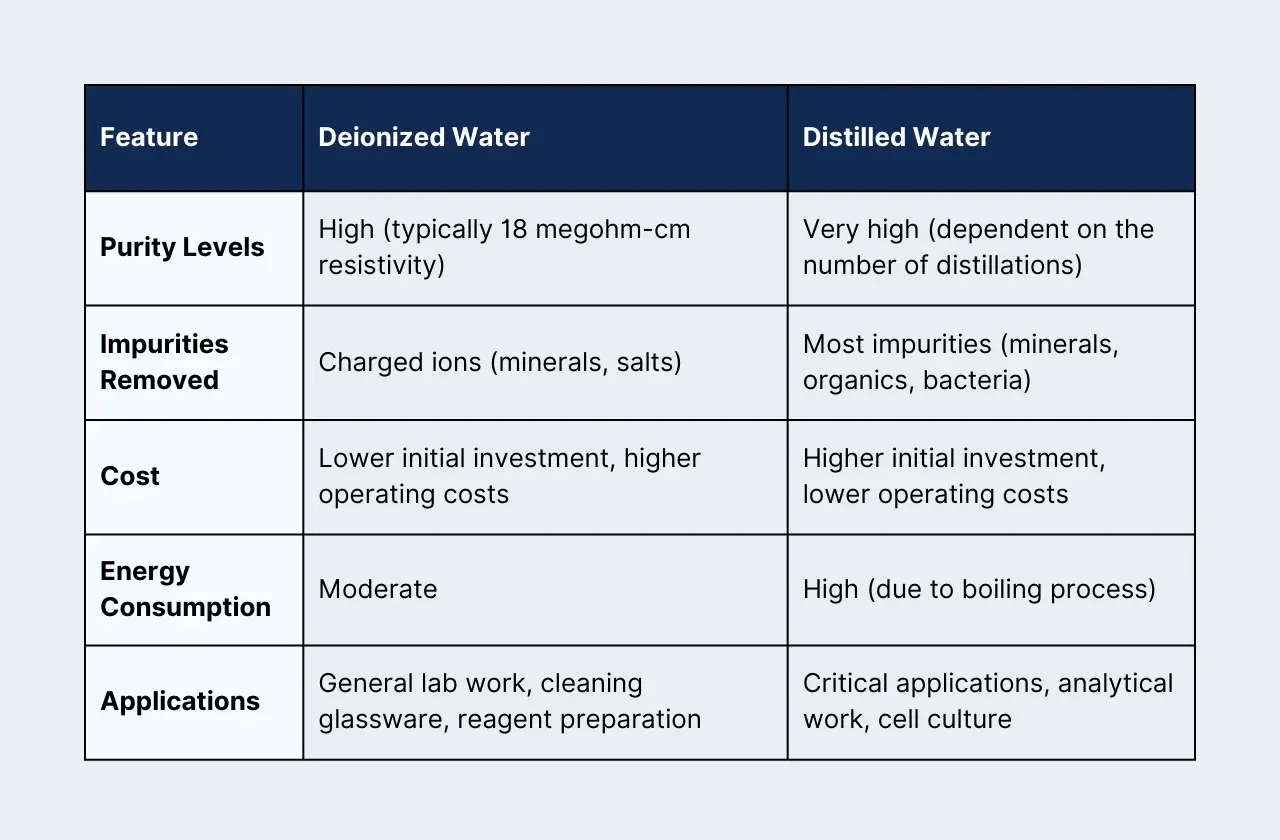
You’ve seen them in the grocery aisle and maybe in your lab or coffee machine: bottles labeled “distilled” and others marked “deionized.” At first glance, they look like twins—crystal clear, tasteless, and pure. But here’s the truth: they are not the same. Think of them as cousins with very different résumés.
Distilled water is the old soul of the purification world. It’s made by boiling water into steam, then condensing that steam back into liquid. This process leaves behind minerals, bacteria, and other impurities—like a spa treatment for H₂O. Deionized water, on the other hand, is the tech-savvy rebel. It uses electrically charged resins to yank out dissolved salts and ions—like a magnetic bouncer at a VIP club.
So, which one should you reach for? Let’s dig into the details, but keep it light—because water doesn’t have to be boring.
Must Read
The Science of Simplicity (Without the Headache)
Distillation is nature’s original filter—think rain cycles, but sped up. When you boil water, most minerals, heavy metals, and even microbes stay behind in the pot. The steam rises, pure and innocent, then condenses. Fun fact: NASA uses distilled water in space because it keeps pipes scale-free and astronauts safe.
Deionization (or DI) is more like a chemistry hack. Water passes through special resins that swap unwanted ions (like calcium and magnesium) for hydrogen and hydroxide. These then combine to form—you guessed it—more water. The result is extremely pure water, but it won’t remove bacteria or viruses. That’s why many labs use DI water, but they often run it through a UV light first.
Both methods strip away “stuff”—but distilled is a physical process, while deionized is a chemical one. They start with the same goal, but the journey is totally different.
What’s in Your Glass? A Practical Breakdown
Distilled water tastes flat—many people notice it. That’s because removing minerals like calcium and magnesium also removes the “mouthfeel” we associate with crisp water. It’s the same reason rain tastes so neutral. If you’re using it in your iron or humidifier, go distilled—mineral buildup is a nightmare for appliances.
Deionized water is even more aggressive. It’s so “hungry” for ions that it can leach metals from pipes over time. That’s why you don’t drink it straight from the DI tap. It’s perfect for car batteries, aquariums (where purity matters for fish health), and cooling systems in data centers. Pop culture nod: In Breaking Bad, Walter White used deionized water in his meth lab—because science demands precision.
But what about your favorite pour-over coffee? Baristas rarely use either. Distilled water makes weak coffee, and DI water can create a bitter, metallic extraction. The ideal is spring water—with just the right mineral balance for flavor.
When to Use Which (And When to Skip Both)
For drinking, distilled is safe but boring—like a French baguette without butter. If you’re fasting or on a strict detox, some advocates swear by it. But most nutritionists say: why remove the good stuff? Our bodies need trace minerals from water. A better bet is filtered tap water (think Brita or charcoal) that keeps beneficial ions.
 Distilled Water Vs. Deionized Water — Microbe Online
Deionized water is a no-go for drinking unless you’re in an emergency. It can actually pull electrolytes from your body. Imagine drinking a water that makes you thirstier—that’s paradox of DI water. Lab techs know this: they always have a bottle of spring water nearby for their own hydration.
For skincare, both types have fans. Distilled water is gentle for washing sensitive skin or mixing with toners. Deionized water is used in luxury skincare because, free of impurities, it allows active ingredients to absorb better. But don’t use it for eye contact lens rinsing—it can cause stinging. Stick to sterile saline.
Everyday Hacks & Cultural Shortcuts
Here’s a pro tip: If you need distilled water and don’t have it, collect rainwater—it’s naturally distilled by the sun. Just don’t drink it if you live in a polluted area. In Japan, some high-end onsen (hot springs) have distilled water systems for their pools because it’s softer on the skin.
For cleaning, white vinegar mixed with distilled water creates a streak-free glass cleaner. And if you have a CPAP machine, always use distilled water to prevent mineral crust. Deionized water can corrode the machine’s delicate parts over time.
Fun fact: The world’s most expensive water, “Bling H₂O,” is distilled and deionized—then infused with crystals for “energy.” Yes, people pay $40 per bottle. Your tap water is free and probably fine.
The Zen of Purity: What It Teaches Us
Distilled and deionized water are not the same—one is a gentle boil, the other an ionic party. They remind us that pure doesn’t always mean better. Life, like water, needs a little mineral grit to give it flavor. The best water for you is the one that hydrates, refreshes, and doesn’t cost a fortune.
So next time you see those two bottles, you’ll know the difference. And maybe you’ll appreciate your kitchen sink filter just a little more. After all, perfection isn’t about removing everything—it’s about keeping what matters.
Drink up, friend.
