Salt Pellets Or Crystals For Water Softener

So the other day, my neighbor Carol huffed over the fence, clutching a bag of salt like it was a winning lottery ticket. She’d just spent twenty minutes in the hardware aisle,...
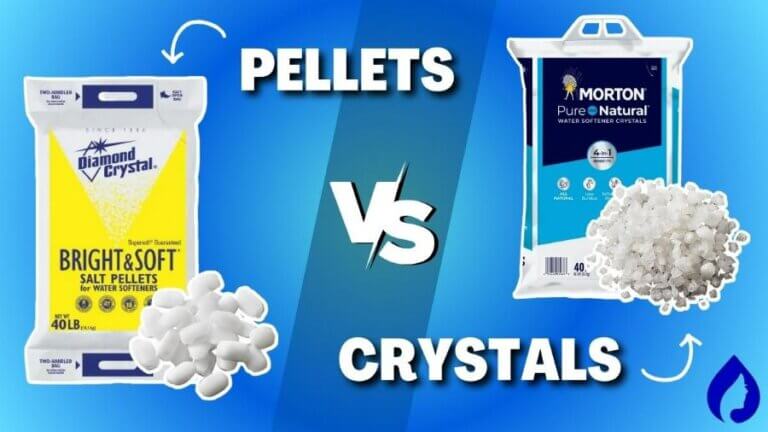
So the other day, my neighbor Carol huffed over the fence, clutching a bag of salt like it was a winning lottery ticket. She’d just spent twenty minutes in the hardware aisle, staring at pellets and crystals, feeling completely out of her depth. “It’s just salt, right?” she sighed. Wrong, Carol. Very, very wrong. Let’s save you from that same existential crisis in the plumbing aisle.
The Great Salt Showdown
At its core, the battle between salt pellets and crystals comes down to one thing: purity versus performance. Pellets are the refined, tidy option—think of them as the capsule wardrobe of water softeners. Crystals? They’re the wild, natural-looking cousin who shows up unannounced but always brings the best wine.
Pellets are made by compressing evaporated salt into uniform, button-like shapes. Crystals (sometimes called “solar salt”) are formed by evaporating seawater in large ponds, leaving jagged, irregular chunks. Fun fact: those little pellets have less than 1% insoluble matter, while crystals can hover around 1.5% to 3%. In a water softener, that matters more than you’d think.
Must Read
Why Pellets Win the Cleanliness Contest
If you ever want to feel like a control freak, go with pellets. Their low insoluble content means less gunk builds up in your brine tank. You know that sludgy, mud-like mess people complain about? That’s the crystal’s dirty secret—literally.
But—and this is a big, sarcastic “but”—pellets are more expensive. You’re paying for the manufacturing and the packaging. Your water softener won’t know the difference, but your wallet will. Balance, people. Balance.
Crystals: The Rustic, Budget-Friendly Rebel
Solar salt crystals are cheaper and often easier to find in bulk. They dissolve a bit faster than pellets, which can be a bonus if your family wars over hot water. However, that faster dissolve rate can also cause bridging—where the salt forms a hard crust inside the tank, and your softener starves.
Then there’s the bridging problem. Imagine your salt turns into a solid, unbreakable pancake at the bottom of the tank. You’ll be chipping at it with a broom handle while muttering curses. That’s crystals for you.
The Technical Twist: Evaporated vs. Rock Salt
Before you march off, let’s clear up one more thing. You might see “pellets” and “crystals” next to a bag marked rock salt. Run. Rock salt is cheap, but it’s full of dirt and minerals that can gum up your system. Pellets and crystals are both processed to be purer, but rock salt is basically the litter box of the salt world.
Side note for the curious: If you have a iron problem in your water, pellets are almost always recommended. Crystals can actually worsen the iron staining because of their higher impurity levels. Don’t say I didn’t warn you when your laundry turns orange.
 Water Softener Salt Pellets
What’s Your Water Really Like?
Here’s the part where I ask you to actually test your water. Most people guess. “It’s kinda hard, I think.” That’s like guessing your blood type. Get a test kit—they’re cheap—and check your grain hardness. If it’s below 15 grains per gallon, crystals might work fine. Above that? Pellets keep your system running like a dream.
Also, consider your regeneration frequency. A high-efficiency softener? Feed it pellets. An older, simpler model? Crystals won’t make it cry. Your appliance manual is the boss here—not the guy at the hardware store named Chad.
The Verdict (Yes, I’m Picking a Side)
Look, I’m not here to kill your vibe. If you want to save a few bucks and don’t mind occasionally busting up a salt bridge with a screwdriver, crystals are fine. They’re the scrappy, recycled-paper-towel choice. They get the job done, just messier.
But if you value set-it-and-forget-it peace of mind, go with pellets. They’re the premium option that keeps your brine tank clean, your softener healthy, and your temper cool. Trust me—nothing ruins a relaxing shower like scrubbing salt crust off a tank at 11 PM on a Tuesday.
One Last Tip From My Plumber Friend Dave
Dave told me, “Never mix pellets and crystals in the same tank. They react differently and form a weird paste.” Paste. That word should terrify you. Pick one salt type and stick with it. Your softener isn’t a cocktail bar—it doesn’t need variety.
And whatever you do, buy the purest salt you can afford. A $2 bag of mystery rock salt is a $500 repair bill waiting to happen. You’re welcome.
