Will Reverse Osmosis Remove Lead From Water

So, you’re wondering if reverse osmosis (or RO, as the cool kids call it) can kick lead out of your drinking water. Let’s get straight to the point: yes, it absolutely can. In...
So, you’re wondering if reverse osmosis (or RO, as the cool kids call it) can kick lead out of your drinking water. Let’s get straight to the point: yes, it absolutely can. In fact, it’s one of the most effective methods out there. Think of RO as the bouncer at a fancy club—lead doesn’t stand a chance.
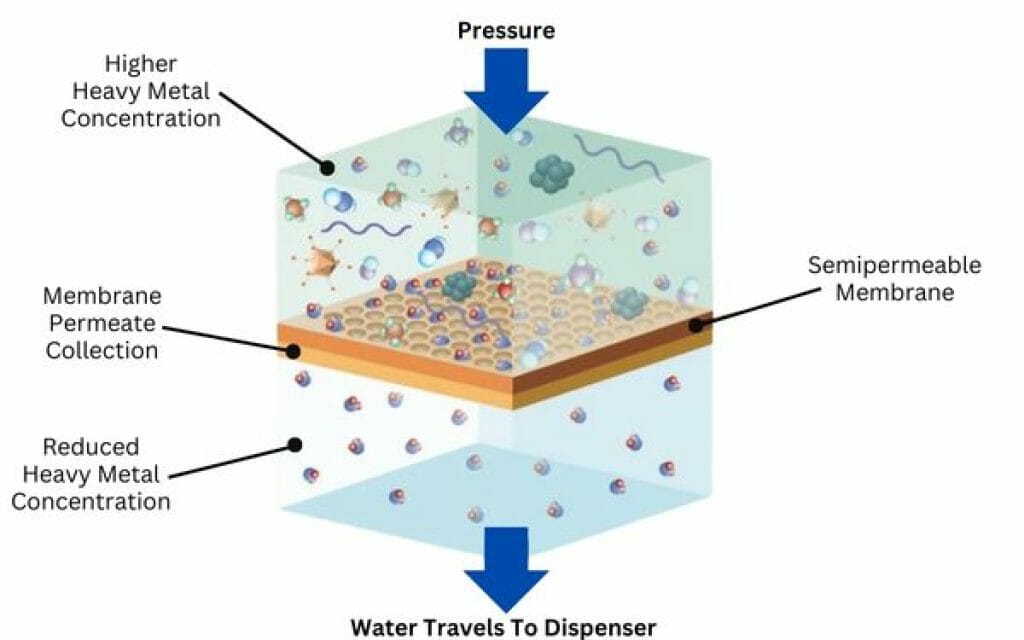
But hold on, let’s not get ahead of ourselves. How does this wizardry actually work? Imagine pushing water through a super-fine mesh so tight that only water molecules can squeeze through. Lead particles? They’re too big and clumsy—they get left behind, sulking in the rejection stream.
The Science Bit (Made Simple, I Promise)
Reverse osmosis uses pressure to force water through a semi-permeable membrane. That membrane has pores so tiny—about 0.0001 microns—that they make a sieve look like a chain-link fence. Lead ions, which are roughly 0.001 microns across, are ten times larger. So, yeah, they get blocked.
Must Read
A good RO system can remove up to 99% of lead from your tap water. That’s not just “a little less lead”—that’s practically kicking lead out of your life. You might even feel like a superhero saving your family from invisible villains.
Now, a little reality check: not all RO systems are created equal. Cheaper models might slack off a bit. But a quality unit with a carbon pre-filter? That’s your golden ticket. (Bonus: that pre-filter also catches chlorine, so your water won’t taste like a swimming pool.)
But Wait—There’s a Catch (There’s Always a Catch, Right?)
Here’s the thing: RO systems are a bit dramatic. They also remove good minerals like calcium and magnesium. You know, the stuff that makes water taste alive. Plus, they waste some water in the process—about 3 to 4 gallons for every gallon of clean water. Ouch.
But don’t panic! You can get a remineralization filter to add those good vibes back in. And if you care about the planet, some modern systems waste only 1:1. So, you can save the Earth and drink lead-free water. Go you.
Also, let’s talk about pH levels. RO water can be slightly acidic—like a mildly grumpy lemon. But your body handles that just fine. If it bothers you, a simple pH-boosting filter solves that. Problem? Solved.
Is Lead Really That Big of a Deal?
Uh, yes. Lead is not your friend. It’s a neurotoxin that can mess with kids’ brains, give adults high blood pressure, and generally act like that one guest who ruins the party. Even tiny amounts over time can be harmful. So, removing it is non-negotiable.
The scary part? You can’t see, taste, or smell lead in water. It’s a sneaky ninja. That’s why testing your water is step one—unless you enjoy Russian roulette with your health. (Please don’t.)
If you live in an older home (think pre-1986), your pipes might contain lead solder. Or worse, lead service lines. RO is your best bet for peace of mind. Boiling water? Doesn’t help—it actually concentrates the lead. So don’t boil your troubles away; filter them.
 Does Reverse Osmosis Remove Lead From Water? Truth Revealed (2024)
Other Options? Let’s Compare (Because Options Are Fun)
You might hear about activated carbon filters—like those in Brita pitchers. They’re okay for taste, but they only remove about 50-70% of lead. That’s like wearing a raincoat in a hurricane. Better than nothing, but not great.
Then there’s distillation, which boils water and collects steam. It also removes lead, but it’s slow, uses a ton of energy, and tastes flat. RO wins on all fronts: fast, efficient, and your water stays crisp.
What about ion exchange? That’s for water softeners—they trade hardness minerals for sodium. They barely touch lead. So, yeah, stick with RO for the heavy lifting.
So, Will RO Solve All Your Water Woes?
It will absolutely handle lead, but it’s not a magic wand. It won’t remove every single contaminant—like some volatile organic compounds (VOCs) can slip past if your membrane is old. But for lead? RO is the MVP.
And here’s a pro tip: change your filters on time. A neglected RO system is like a sleepy watchman—it might let lead sneak in. Set a reminder on your phone. Your future self will thank you.
The cost? A decent under-sink RO system runs about $150-$300, plus $50-$100 for annual filters. Compare that to the cost of bottled water (and the plastic waste). Over a year, RO saves you money and the planet. Win-win.
The Uplifting Conclusion (You Made It!)
Here’s the beautiful truth: you have the power to turn your tap water into a crystal-clear, lead-free oasis. Reverse osmosis isn’t just a gadget—it’s a shield for your family, a little machine that says, “Nope, not on my watch.” And that feels pretty darn good.
So go ahead, get that RO system. Drink your water with a smile, knowing you’ve outsmarted an invisible toxic ninja. And remember: every time you take a sip, you’re not just hydrating—you’re winning. Cheers to that, friend.
