Ada Requirements For Paper Towel Dispensers

So, picture this: I’m at a trendy new coffee shop, feeling very adult with my oat milk latte. I go to wash my hands, because #hygiene, and then I turn to grab a paper towel. A...

So, picture this: I’m at a trendy new coffee shop, feeling very adult with my oat milk latte. I go to wash my hands, because #hygiene, and then I turn to grab a paper towel. And the dispenser. It’s mounted at what I can only describe as shoulder height for a giraffe.
I’m six feet tall, and I had to reach up. I looked around, half-expecting a tiny step ladder to be part of the decor. That’s when it hit me — this wasn’t just annoying; it was a total fail for anyone who isn’t a basketball player.
Let’s talk about the ADA, or the Americans with Disabilities Act. It's not just about ramps and wide doorways (though those are crucial). It’s also about the tiny, annoying things we take for granted, like grabbing a towel after you wash your hands. And yes, there are very specific rules for paper towel dispensers.
Must Read
The Reach Range: The Sweet Spot
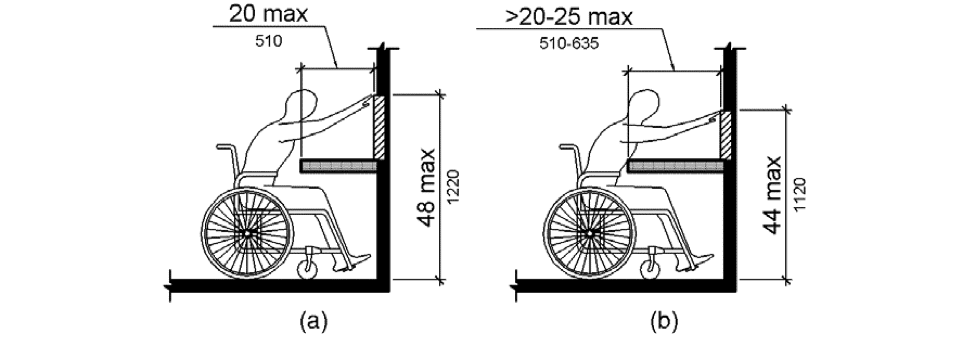
The big boss rule? The dispenser has to be within reach of someone in a wheelchair. We’re talking about a specific reach range. The dispenser must be mounted so that the towel dispenser’s operating mechanism is no higher than 48 inches from the floor.
But wait, there’s a twist (and a side-eye to that coffee shop). If the dispenser is mounted over a counter or an obstruction that’s deeper than 20 inches, the maximum height drops to 44 inches. It’s a math problem, but the point is: you shouldn’t need a physics degree to dry your hands. Seriously, designers, take note.
Operation: One-Handed and No Pinching
Here’s where it gets fun. The ADA doesn’t just care about height; it cares about effort. You can’t have a dispenser that requires tight grasping, pinching, or twisting of the wrist. Think about those old-school crank dispensers or the ones with a tiny lever you have to yank.
Instead, the mechanism must be operable with a closed fist or the palm of your hand. That means lever handles that push down easily, or those motion-sensor automatic ones are the absolute heroes of the bathroom world. They’re basically the "everybody gets a towel" champions.
Forward Reach vs. Side Reach: The Geometry Lesson
If the dispenser is mounted in a corner and you have to reach forward from a wheelchair, the maximum high reach is 48 inches. But if you’re approaching from the side — like rolling up parallel to the wall — the side reach limit is just 46 inches for the highest operable part.
I know, I know. It sounds like a real estate zoning issue for towels. But this matters because bathrooms are cramped. If the dispenser is placed next to a hand dryer or a trash slot, the approach angle matters. ADA planners must have a secret love for measuring tapes, I swear.
The Clear Floor Space: Don’t Block the Roll
You also need a clear floor space in front of the dispenser. That means no trash cans, no cleaning buckets, and definitely no mop handles leaning on the wall. The space must be at least 30 inches by 48 inches. This ensures a wheelchair can pull up and face the dispenser directly.
 Paper Towel Dispensers Mounted Outside The Allowable Reach Ranges - NATSO
And the kicker? The dispenser can’t protrude too far into the path of travel. If it sticks out more than 4 inches from the wall, you have to think about cane detection for visually impaired users. So that giant, bulky industrial dispenser? It might be a safety hazard. Funny how something so simple gets so complicated, right?
Automatic vs. Manual: The Great Debate
Automatic, sensor-based dispensers are basically ADA royalty. They require no force, no pinching, and no reaching for a handle. You just wave your hand, and voilà — a towel appears. They're the gold standard because they cater to everyone, including folks with limited hand strength or arthritis.
But manual dispensers aren't totally outlawed. They just need to meet the force requirements: no more than 5 pounds of force to activate. That’s about as much effort as tapping a light switch. If you need to Hulk-smash the lever to get a towel, it’s a violation. And honestly, nobody has time for a forearm workout after using the loo.
The Little Details That Drive Us Crazy
Ever find a dispenser that’s empty? That’s not an ADA issue (that’s a janitor issue). But the location of the sight window? That can be. The ADA doesn’t explicitly regulate the window, but it’s common sense: if you can’t see the towel roll from a seated position, you’re in for a sad, wet-handed surprise. Designers should place the window low enough so it’s visible.
Also, the direction of the towel matters. Towels that dispense downward, toward the user, are preferred. Side-dispensing towels often require an awkward twist of the wrist — and we already established that’s a no-go. Small victories, people. Small victories.
Why This All Matters (Beyond the Legal Stuff)
Look, compliance isn’t just about avoiding lawsuits. It’s about dignity. Imagine being a wheelchair user and having to ask a stranger to dry your hands because the paper towels are mounted in the stratosphere. That’s not just inconvenient; it’s humiliating.
Good design is invisible. When a towel dispenser works for everyone — a kid, a tall person, a parent holding a baby, a person in a wheelchair — you don’t even notice it. But when it fails? Oh, you notice. And you probably write a grumpy blog post about it, like me.
So next time you’re in a public bathroom, take a second. Check the height of the paper towel dispenser. Is it within that 48-inch magic zone? Can you operate it with a closed fist? If it works easily for you, chances are it works for someone who needs it even more. And that, my friend, is the whole point.
