Is Boiled Water The Same As Distilled Water

So, picture this: you’re out of coffee filters again, and your tap water has that faint... something. Maybe you’re considering boiling a pot, thinking, *“Hey, that’s basically...
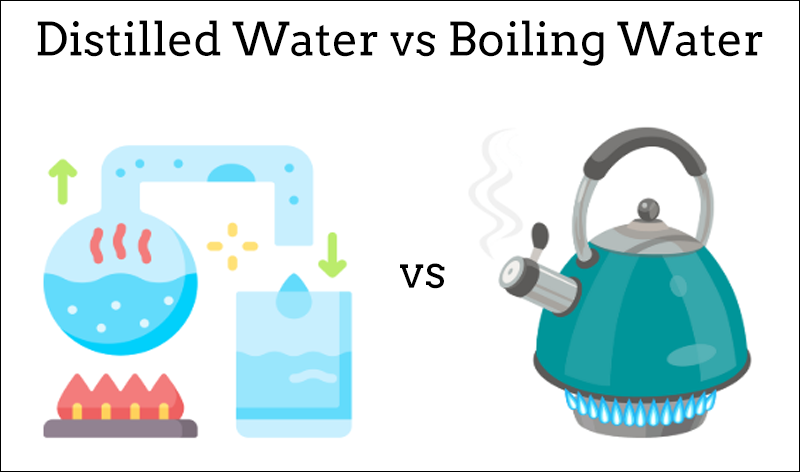
So, picture this: you’re out of coffee filters again, and your tap water has that faint... something. Maybe you’re considering boiling a pot, thinking, “Hey, that’s basically distilled, right?” Well, friend, grab your mug. Let’s chat.
Let’s get one thing straight right now: boiled water and distilled water are not the same thing. At all. I know, I know—it’s a gut punch. But trust me, we’ll laugh about this later.
What boiling actually does
Boiling water is like giving it a hot, steamy bath. It kills bacteria, viruses, and other microscopic party crashers. That’s why you do it for pasta or when camping—it makes water safe to drink.
Must Read
But here’s the kicker: boiling does not remove dissolved minerals, salts, or chemicals. All that calcium, magnesium, and fluoride? They’re still in there, doing their little mineral dance. You’re just serving them hot.
Think of it like this: boiling is a bouncer at a club who only kicks out the rowdy germs. He ignores the quiet guys in the corner holding heavy metals. Distillation? That’s a whole different bouncer.
What distillation does (and why it’s extra)
Distillation is boiling’s overachieving older sibling. It takes steam from boiling water, then condenses it back into liquid. The result? Pure H₂O—nothing else.
All those minerals, salts, and chemicals? They get left behind in the original pot. You end up with water so pure it’s almost too pure. It’s like the platonic ideal of water.
Fun fact: distilled water can actually taste flat. Why? Because minerals give water its flavor. Without them, you’re just drinking wetness. Kind of boring, right?
Can you tell them apart? (Spoiler: yes)
Pour a glass of boiled water and a glass of distilled water. Boiled water might look clear but can have tiny bubbles clinging to the sides—residual minerals. Distilled water? It looks impossibly clear, like it’s trying to be invisible.
Taste them. Go on. Boiled water usually tastes a little... earthy? Maybe faintly metallic? Distilled water tastes like nothing. It’s the water of the void. Very philosophical, but not great for coffee.
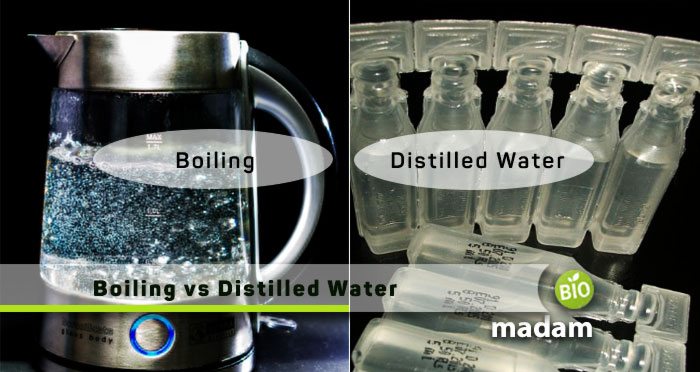 Is Boiling Water the Same as Distilled Water - biomadam
If you want to get really nerdy, grab a TDS meter (total dissolved solids). Boiled water will still have numbers—often 50–300 ppm. Distilled water? Usually 0–5 ppm. That’s the scientific mic drop.
When you should (and shouldn’t) use each
Boiled water is your best friend for drinking, cooking, or making baby formula in a pinch. It’s safe, it’s easy, and it tastes like... well, water. Just don’t expect it to save your car battery or your iron.
Distilled water is for appliances. Steam irons, humidifiers, car batteries, and scientific experiments. Why? Because minerals in tap water can clog and corrode delicate parts. Distilled water keeps them running smooth.
But don’t drink distilled water long-term. It lacks minerals your body needs. Plus, it can leach minerals from your teeth and bones over time. (Sounds dramatic, right? It’s true.)
The big takeaway
Boiled water is safe but not pure. Distilled water is pure but not necessary for drinking. They’re cousins, not twins.
So next time someone asks, “Is boiled water the same as distilled water?” You can smile, sip your coffee, and say, “Absolutely not. One is a spa day for germs, the other is a total personality transplant for water.”
And then offer them a mug of cold tap water. They’ll thank you later. Probably.
