Calcium Hypochlorite Tablets For Well Water

Okay, let’s talk about well water. It’s great, right? No city bills, no weird chemicals, and it’s your water. But sometimes, that “fresh-from-the-earth” vibe comes with a side...
Okay, let’s talk about well water. It’s great, right? No city bills, no weird chemicals, and it’s your water. But sometimes, that “fresh-from-the-earth” vibe comes with a side of bacteria, viruses, or just a funky smell.
That’s where our tiny hero, the Calcium Hypochlorite Tablet, struts in. Think of it as a scuba-diving chlorine bomb—but one you can actually control. And yes, it sounds like a chemistry set, but I promise it’s way easier than assembling IKEA furniture.
What Even Are These Little White Pucks?
Imagine a breath mint for your well, but instead of minty freshness, it delivers powerful sanitization. Calcium hypochlorite is chlorine in solid form—stable, cheap, and shockingly effective.
Must Read
You drop a tablet (or a few) into your well water, and it releases chlorine to kill all the nasty stuff: bacteria, viruses, algae, and even that slimy film on your pipe walls. It’s like sending a tiny, angry army of cleaners on a mission.
And no, it won’t make your water taste like a swimming pool—if you do it right. More on that in a sec.
Why Not Just Use Bleach? (The Great Laundry Room Debate)
I hear you. “Can’t I just pour in some Clorox?” You could. But household bleach is weak sauce—usually only 5-8% chlorine. You’d need a bucket-load, and it has extra junk like stabilizers and fragrances. No thanks.
Calcium hypochlorite tablets pack a 65-75% chlorine punch. They’re pure, concentrated, and designed for this exact job. Plus, they’re dry, which means no sloshing, no splashing, and no sudden inspiration to bleach your socks while treating your water.
The Magic Trick: How to Drop One In
First, don’t panic. You don’t need a hazmat suit. You just need a pair of gloves (chlorine+skin=ouch) and a little patience.
Here’s the super-simple method: 1. Figure out your well depth and water volume. Most tablets come with a dosage chart. If you’re lazy (like me), use the “round peel” method—two tablets per 100 gallons of water for a basic shock treatment.
2. Drop the tablets directly into the well casing. Yep, just pop the well cap and let them fall. They’ll sink to the bottom, fizz a little, and start killing things. Fun fact: If you drop one on your driveway, it will make a white stain that haunts your weekend. Don’t ask me how I know.
Wait, Do I Need to Run the Faucets?
Oh, absolutely. After dropping the tablets, run every outside and indoor faucet until you smell chlorine. This spreads the love (and the sanitizer) through your entire pipe system.
Let the water sit for 6-12 hours. This is the “shock and awe” phase. No drinking, no cooking, no watering your prize petunias—just let the chlorine do its thing.
After that, flush the system by running water until the chlorine smell fades. Pro tip: Don’t flush into your septic tank for too long, or you’ll kill the good bacteria there. Drain outside if you can.
But What About the Taste? (The Eternal Question)
Honestly, after a proper shock treatment, the chlorine taste should vanish. If it lingers, you might have used too many tablets. Or you have a stubborn well—like that one friend who never laughs at your jokes.
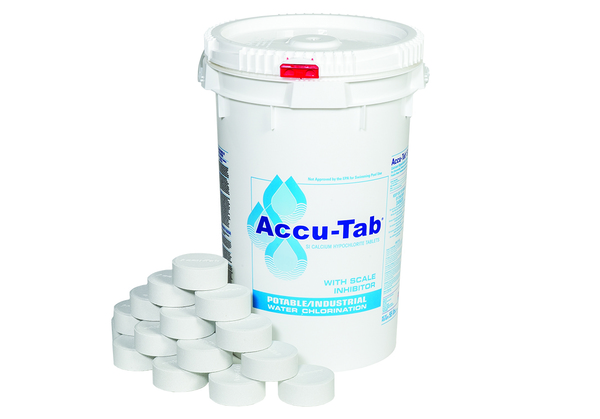
 Calcium Hypochlorite Based Chlorine Tablets (70% Min Available Chlorine
Solution: Install a simple carbon filter on your kitchen faucet. It’s cheap, easy, and it strips out any leftover chlorine. Suddenly, your water tastes like mountain spring again—without the actual mountain or spring.
And if you do taste a hint of chlorine, just call it “the price of safety.” Or better yet, add a lemon slice. Trust me, nobody’s judging your water-flavored lemonade.
The Pros vs. The Cons (Because Life Isn’t Perfect)
Pros: These tablets are cheap, long-lasting, and crazy-effective. One bucket can treat a well for years. They’re also easy to store—no liquids, no spills, just dry pucks in a cool, dark place (like your garage, next to that dusty treadmill you swore you’d use).
Cons: You need to handle them carefully—gloves, goggles, and no licking your fingers. Also, if your well has lots of iron or manganese, the chlorine can react and turn your water rusty red or black. That’s not a disaster; it just means you need to flush extra or add a pre-filter.
Oh, and one more thing: Never mix these tablets with acid or ammonia-based cleaners. That creates a toxic gas cloud. Not the kind of party trick you want at your next BBQ.
When Should You Shocked Your Well? (The Schedule)
At the first hint of trouble: weird taste, bad smell (like rotten eggs—yep, that’s hydrogen sulfide), or after a flood. Also, do it once a year for preventive maintenance.
Or if you just bought the house? Shock it immediately. The previous owner might have been a lovely person, but I don’t trust their well-water care routine any more than I trust a squirrel with a firecracker.
After a long vacation? Give it a shock too. Stagnant well water is like a hotel room for bacteria—they throw a wild party while you’re gone. Crash it with chlorine.
Uplifting Conclusion: You Are a Water Wizard
Look at you. You’ve just learned how to wield the power of dry chlorine to turn your murky, maybe-gross well water into something clean, safe, and delicious. That’s not just home maintenance—that’s alchemy.
Sure, handling these tablets requires a little care. But you’ve cooked steak on a grill and survived IKEA—you can handle a puck of hypochlorite. And every time you pour a glass of crystal-clear water, you’ll smile, knowing you took charge of your own well-being.
So go ahead—grab a pair of rubber gloves, a bucket of tablets, and give your well the spa day it deserves. Your water will thank you. Your faucets will sparkle. And you? You’ll feel like a superhero in a rubber apron. Cheers to clean water, my friend!
