Municipal Water Treatment Chemical Supplier

You’ve probably never thought about the quiet heroes living in that industrial park off the highway. But when you turn on your tap for a glass of water, you’re tasting their h...
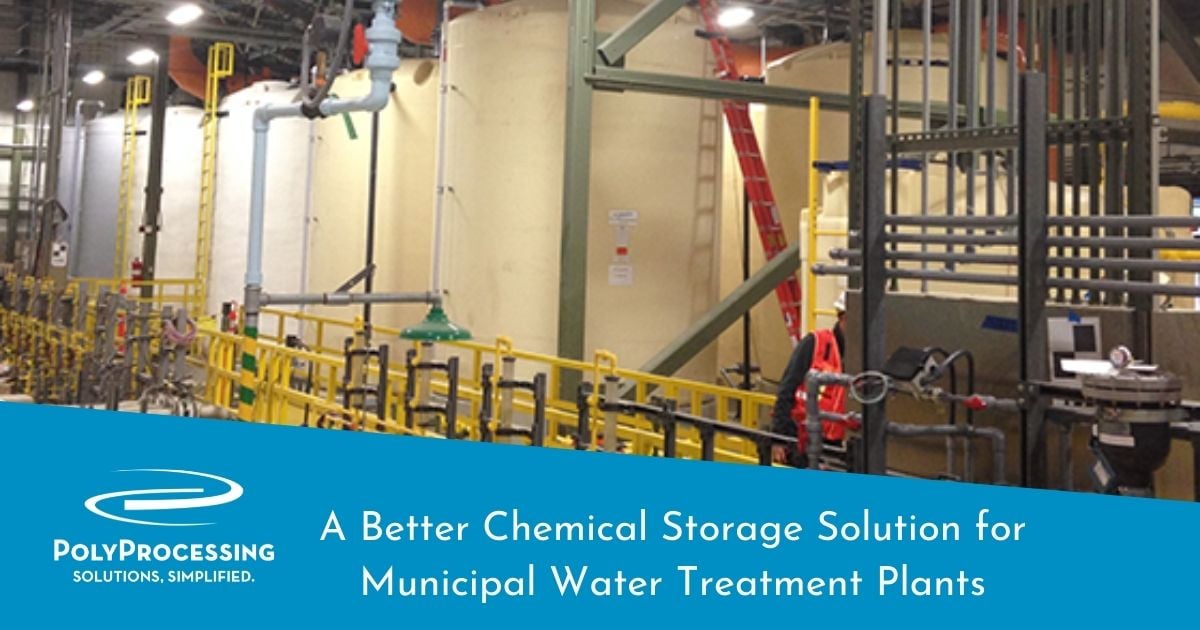
You’ve probably never thought about the quiet heroes living in that industrial park off the highway. But when you turn on your tap for a glass of water, you’re tasting their handiwork. Municipal water treatment chemical suppliers are the unsung sommeliers of your morning coffee.
The Aqua Architects
Imagine a city without them. The water would be a murky, bacterial soup, and your shower would feel less like a spa and more like a biology experiment. These suppliers provide the chemical toolkit that transforms raw, often gnarly river water into the clear, safe H2O we take for granted.
Think of them as the backstage crew for the world’s biggest magic show. You don’t see them, but absolutely nothing works without them. It’s a quiet, essential hustle that keeps civilization from turning into a medieval plague pit.
Must Read
The Cocktail of Cleanliness (Your Water’s Secret Recipe)
Your water glass is a carefully crafted cocktail. First up is chlorine, the badass bouncer that kicks out bacteria and viruses. Then comes alum, a flocculant that acts like a magnet, clumping dirt particles together so they can be filtered out.
Don’t forget the pH adjusters, like lime or caustic soda. They prevent your pipes from corroding into a rusty mess, which would turn your laundry a lovely shade of orange. It’s chemistry—but with the very practical goal of saving your favorite white t-shirt.
Fun fact: the same polymer used to clarify your drinking water is often used in diaper manufacturing. So, your baby’s comfort and your hydration are chemically connected. You’re welcome.
Why Your Supplier Matters (More Than Netflix)
Choosing the right municipal water treatment chemical supplier is like choosing a good yoga instructor. A bad one leaves you stiff, stressed, and full of toxins. A great one keeps everything flowing smoothly and in perfect balance.
These suppliers aren’t just dump trucks of chemicals. They’re consultants, problem-solvers, and emergency responders. When a surprise algae bloom turns your reservoir into green Jell-O, they’re the ones who roll in with the algicide at 2 a.m.
Practical Tip #1: If you operate a treatment plant, look for a supplier that offers on-site testing. Chemistry is personal; the “one-size-fits-all” approach is for cheap socks, not your community’s health.
The Cultural Connection: Water as the New Wine
Remember when everyone started obsessing over terroir in wine? Water is having a similar moment. Microplastics, forever chemicals (PFAS), and lead are the new sulfites. People are demanding transparency, and the supplier is the secret key to that transparency.
Cities in Oregon and Colorado are now asking suppliers for granular activated carbon to strip out those concerning PFAS compounds. It’s a cultural shift—we’re no longer just asking for “clean”; we’re asking for “pristine.” The supplier who can deliver that is the star of the municipal show.
Practical Tip #2: Ask your local water department which supplier they use. If they don’t know, raise an eyebrow. If they do, give them a nod. That knowledge is a sign of a well-run ship.
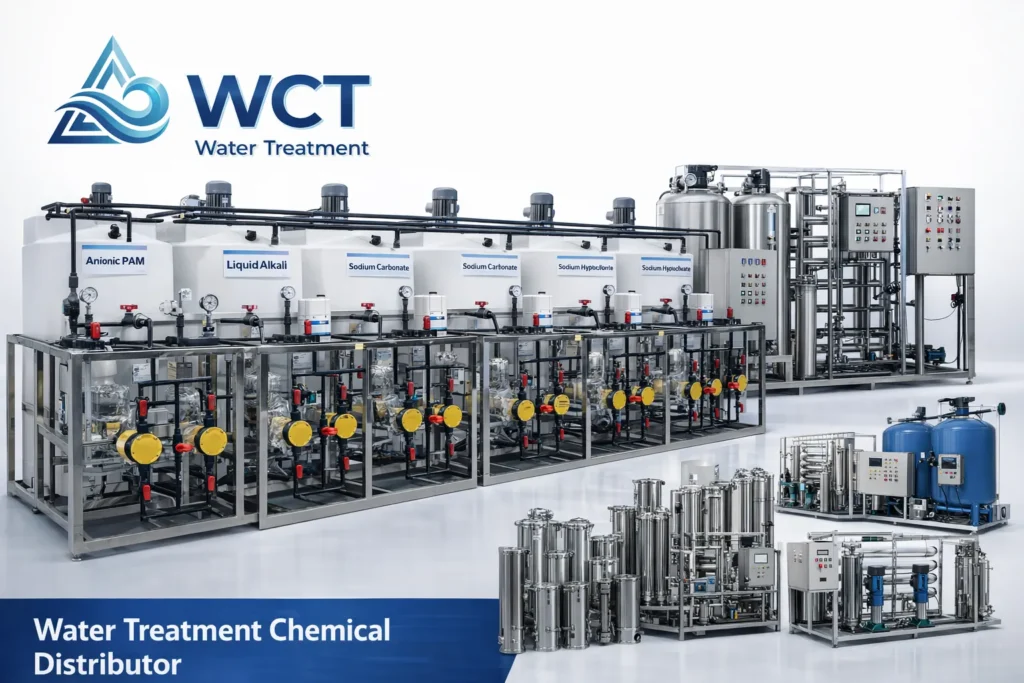 Water treatment Guide - WCT Water Treatment Supplier
Green Chemistry: The New Cool
The old-school image of a chemical supplier is a guy in a hazmat suit yelling into a walkie-talkie. The new reality is much cooler: green chemistry is trending hard. Suppliers are developing biodegradable coagulants and non-toxic corrosion inhibitors.
Think of it as the farm-to-table movement, but for water. Instead of dumping harsh synthetic molecules into the river, these innovators use plant-based polymers and natural minerals. It’s chemistry that doesn’t need a public apology later.
Fun Fact: Chitosan, derived from shrimp shells, is a natural flocculant. So, your water might be filtered by a material that could also be used to make a very weird, seafood-scented Band-Aid. Nature is weird and wonderful.
Practical Tips for the Home Filter Enthusiast
Even if you don’t run a plant, you can play chemist at home. If your tap water tastes like a swimming pool, it means your municipal supplier is using a higher chlorine residual—perfectly safe, but not ideal for your avocado toast.
Tip: A standard activated carbon pitcher will remove that chlorine taste, mimicking what advanced treatment plants do. You’re essentially being your own chemical supplier on a micro scale. Empowerment tastes good.
For those with well water, know your enemy. Hard water (calcium and magnesium) is a nuisance. A phosphate-based sequestrant from your supplier can turn a crusty shower head into a smooth operator. It’s the little things.
The One Thing You Can Do Today
Here is the most luxurious, low-effort action you can take: thank your water. Seriously. The next time you fill a glass, pause for a second. Acknowledge the complex supply chain and the chemical wizardry that made it happen.
You can also look up your city’s annual water quality report (often called a Consumer Confidence Report). It’s like a transparent menu for your tap. If you see chemicals like “polyphosphate,” you now know it’s protecting your pipes, not poisoning your pet.
Final Reflection: In a world of endless choices and anxiety, your tap water is a quiet constant. It’s the product of science, labor, and yes, a municipal water treatment chemical supplier working in the background. That simple, cold glass of water isn’t just hydration. It’s a daily reminder that someone, somewhere, is obsessing over the details so you don’t have to. Drink up, and appreciate the invisible.
