Is Refrigerator Filtered Water Safe To Drink

So, the other day, my friend Mark—a guy who once argued that tap water “has too much *character*”—poured me a glass from his fancy fridge. He grinned, “Try this. It’s like a s...

So, the other day, my friend Mark—a guy who once argued that tap water “has too much character”—poured me a glass from his fancy fridge. He grinned, “Try this. It’s like a spa day for my hydration.” I took a sip, nodded politely, and immediately thought: Wait, is this actually safer than what comes out of my kitchen sink? I mean, it tastes cleaner, sure, but does that mean it’s better for you? Let’s dive into that icy, filtered mystery—because your taste buds might be lying to you.
The Short, Bubbly Answer
Most refrigerator filters—the ones in those sleek Samsung or Whirlpool doors—are pretty good at their job. They typically use a carbon-based filter that traps chlorine, sediment, and some funky smells. So yes, that glass is generally safe to drink, especially if your tap water is already decent.
But here’s the kicker: they’re not designed to remove everything. If your local water has lead, pesticides, or heavy metals, a standard fridge filter might just giggle and let them through. Sort of like a bouncer at a club who only checks for flip-flops, not bombs. (Side note: check your filter’s certification—if it says “NSF 42,” it’s for taste and odor; “NSF 53” is the serious one that tackles contaminants.)
Must Read
The Waiting Game (and Why It’s Gross)
Here’s the dirty little secret: most people forget to change their filter. You know that little light that blinks “Replace” until you ignore it for six months? Yeah, that’s your fridge crying for help. Old filters become a petri dish for bacteria—they trap sediment but never flush it out, so you’re basically drinking water that’s marinated in yesterday’s mold spores.
One study found that expired filters can actually add bacteria to your water. Imagine pouring yourself a crisp glass of “clean” H2O that’s really a microbial joyride. Ironic, right? You buy a filter to avoid the tap, but end up breeding tiny roommates in your water dispenser. (Thanks, modern convenience.)
What About Those Tiny Plastic Particles?
Let’s get paranoid for a second—because that’s what we do on the internet, right? Microplastics are everywhere, and fridge filters are notorious for not catching them. Those carbon granules might snag a chunk, but nanoplastics? They’ll slip through like a whisper.
Now, is that a dealbreaker? Eh, depends on your anxiety level. The WHO says we need more data, but I’d rather not chug a ziplock bag’s worth of plastic over a decade. If this bugs you, consider a reverse osmosis system—but be warned: it wastes a lot of water and costs more than your mortgage. (Just kidding, but it’s pricy.)
The pH Obsession (Because We’re All Basic)
You’ve probably seen ads for “alkaline water” promising to fix your soul. Fridge filters don’t change pH—they just remove chlorine and make it taste like nothing. Newsflash: pH isn’t the enemy. Your stomach acid is way stronger than any water, so drinking “alkaline” is like throwing a pebble at a tsunami. But hey, if it makes you feel fancy, go for it.
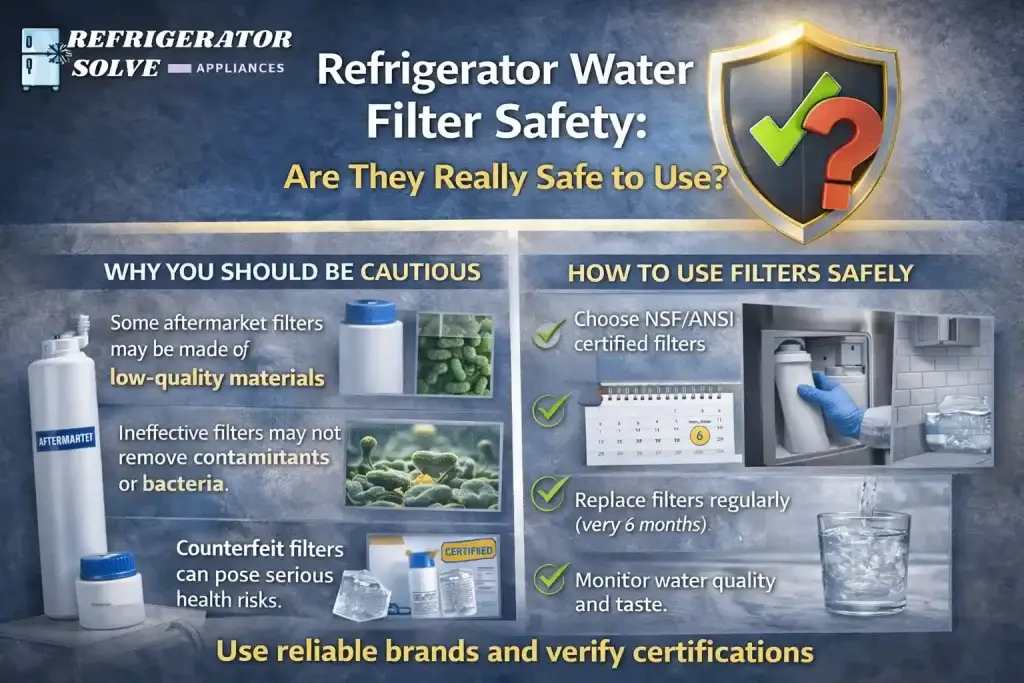 Refrigerator Water Filter Safety: Are They Really Safe to Use?
What can be an issue is the lack of minerals. Filters strip out some good stuff like calcium and magnesium, which tap water usually has. So you’re drinking “purified” water that’s basically a blank slate. It’s safe, but it’s also like eating plain pasta—no seasoning, no soul. (Your bones won’t care, but your taste buds might.)
The Real Danger: Your Fridge’s Build Quality
Here’s a plot twist: the biggest risk isn’t the filter—it’s the plastic tubing inside your fridge. Some older models have components that can leach BPA or other chemicals into the water, especially if it sits for hours. A 2019 study found that water from some refrigerator dispensers had higher levels of copper and lead than tap water. Wait, what?
Yes, your fridge might be slowly poisoning you while pretending to be a health guru. The fix? Let the water run for a few seconds before filling your glass—that flushes out any stale, leachy residue. Also, check if your model is certified for lead reduction. If not, maybe stop treating it like a luxury upgrade and start treating it like a soda machine with anxieties.
So, Should You Drink It?
In short: yes, but with eyes open. If you change the filter every 6 months (mark your calendar!), run the water first, and live in an area with decent municipal water, you’re fine. You’re probably drinking safer water than bottled stuff, which also has microplastics and costs the Earth a litter-size tantrum.
If you’re on a well, have old plumbing, or live near a Superfund site, don’t rely on that fridge filter alone. Get a test kit. Seriously, it’s like a $20 checkup for your sink. Otherwise, enjoy your cold, tasteless hydration—just remember that “filtered” doesn’t mean “miracle cure,” and your fridge is not a doctor. (Unless it dispenses ice cream. Then it’s a saint.)
