Is Filtered Water The Same As Purified Water

So, you’re standing in the water aisle at the grocery store, or maybe you’re staring at your fancy kitchen faucet, and a question hits you harder than a rogue hangnail: Is fil...
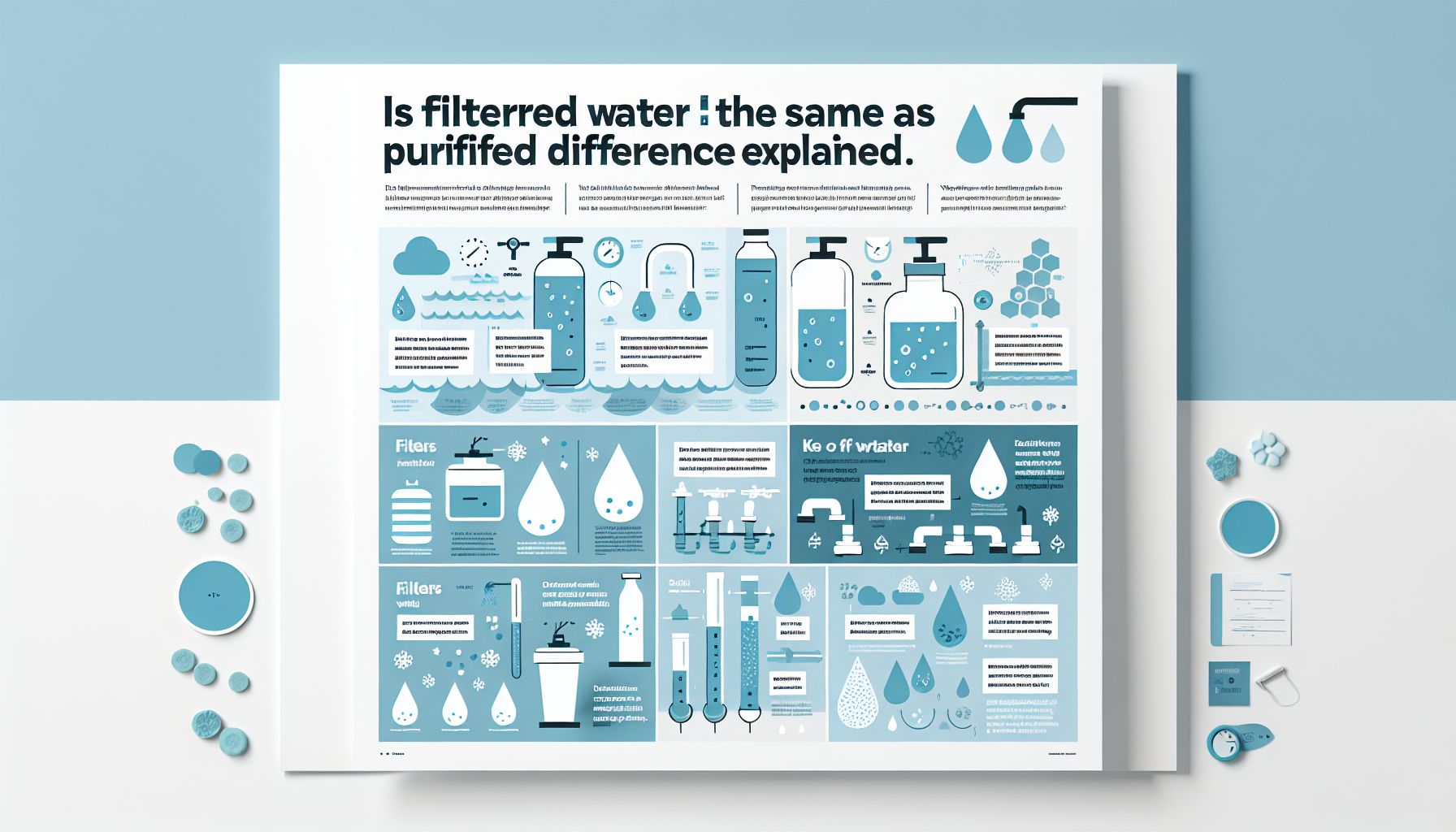
So, you’re standing in the water aisle at the grocery store, or maybe you’re staring at your fancy kitchen faucet, and a question hits you harder than a rogue hangnail: Is filtered water the same as purified water? You’d think by now, with all our technology and billion-dollar bottled water empires, we’d have a straight answer. Spoiler alert: No, they are not the same, and I’m about to blow the lid off this watery conspiracy.
The Great Water Identity Crisis
Let’s start with the basics. Imagine you’re at a party, and filtered water is that friend who shows up on time but spills a little wine on the couch. It’s better than nothing, but it’s not exactly winning any awards. Filtered water has run through a simple barrier—like a Brita pitcher—that catches big stuff like sediment and chlorine. It’s like a bouncer who only checks IDs but lets party crashers in if they look friendly.
Purified water, on the other hand, is the James Bond of H2O. It has gone through industrial-level snooping via reverse osmosis, distillation, or deionization. This process removes nearly everything, including bacteria, viruses, and even dissolved minerals. It’s so clean that you could technically pour it into a car battery (though please don’t, because that’s weird and you’ll ruin your battery).
Must Read
Think of it this way: filtered water is like using a paper towel to clean a minor spill. Purified water is like hiring a hazmat team to vacuum the whole room with a nuclear-grade sponge. One is a quick fix; the other is a commitment to purity.
What Actually Gets Removed?
Here’s where the facts get juicy. A standard charcoal filter—the kind in most pitchers—only traps about 30% of common contaminants. It’s basically a sieve for bad taste and smell. If your tap water tastes like a swimming pool, a filter is your buddy. But if you’re worried about lead, pesticides, or pharmaceutical residue? Yeah, your filter is laughing at you while it lets those hitchhikers through.
Purification systems, however, are the overachievers. Reverse osmosis can remove up to 99% of total dissolved solids. That means it yanks out fluoride, arsenic, and even that weird trace of ibuprofen that leak into municipal water. I’m not saying your tap water has emergency painkillers in it, but I’m also not not saying that. Let’s just say purification is the neurotic parent who checks your pockets for snacks before you leave the house.
A surprising fact: distilled water is so pure that it can pull minerals out of your body if you chug it for weeks. It’s like that friend who’s so clean they make you feel dirty just standing next to them. Don’t be that friend—balance is key.
The Taste Test Lie
Everyone swears filtered water tastes better, and I get it: a Brita pitcher is like a magic wand for gross tap water. But purified water can taste flat because it lacks the natural minerals—like calcium and magnesium—that your tongue recognizes. It’s the difference between a crisp apple and a flavorless apple-shaped gummy. Filtered water keeps some zing; purified water is a blank slate.
Now, here’s the kicker: the FDA and EPA have different definitions! The FDA says purified water must have less than 10 parts per million of dissolved solids. Filtered water? No official standard. It’s the wild west in that Brita. Your filter could be doing a great job or just making you feel superior while you sip.
 Is There A Difference Between Filtered And Purified Water at June
I once tested my own tap with a cheap meter and found it had 180 ppm of stuff. After a basic filter? 150 ppm. After a friend’s fancy reverse osmosis system? Zero. It was like comparing a snow globe to a vacuum.
Which One Should You Actually Use?
If you’re a normal human who just wants not gross water for coffee and hangovers, filtered water is totally fine. It’s cheap, easy, and will keep your morning brew from tasting like a municipal pipe. Unless your city water is known to contain lead or bacteria—then you might as well be sipping from a garden hose.
Purification is your best bet if you live near an old factory, have a compromised immune system, or just love the idea of drinking water that’s been through more scrutiny than a reality TV contestant. It’s also great for fish tanks and lab experiments. But don’t use it exclusively long-term—doctors warn that too much pure water can leach electrolytes. Yes, you can literally love water to death.
A hilarious truth: some people buy “purified” bottled water that’s actually just filtered tap water from another city. The plastic bottle costs more than the water itself. You’re paying for a marketing team to tell you your own faucet is inferior. That’s the real purification: of your wallet.
The Final Sip
So, in the grand water-battle, filtered wins for everyday taste and convenience. Purified wins for extreme cleanliness and sci-fi-level purity. They’re like cousins at a family reunion—related, but one brings a casserole and the other brings a hazmat suit. The best move? Get a decent filter for drinking, and save the purified stuff for when you want to feel like a smug astronaut.
Now go hydrate, you beautiful human. Just don’t tell me you’re drinking from the hose.
