How Often To Replace Reverse Osmosis Filters

So there I was, holding a glass of what I thought was the purest water on earth. It tasted… fine, I guess. Then my friend, a self-proclaimed “water snob,” took one sip and win...
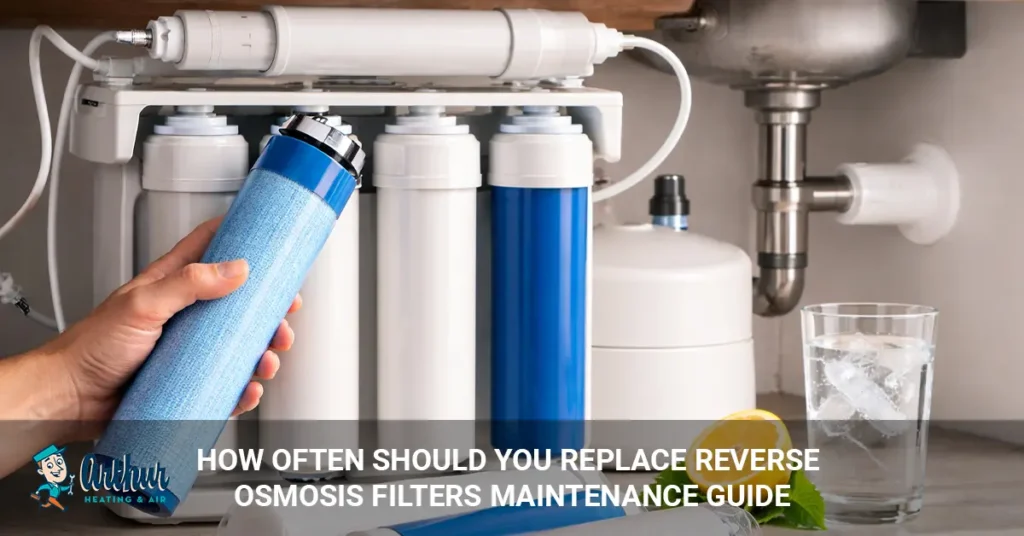
So there I was, holding a glass of what I thought was the purest water on earth. It tasted… fine, I guess. Then my friend, a self-proclaimed “water snob,” took one sip and winced like I’d served him battery acid. “Dude,” he said, “your filter is dead. Pray for your kidneys.” That’s when I learned the hard truth: reverse osmosis filters don’t last forever, and ignoring them is basically asking for weird-tasting water—or worse.
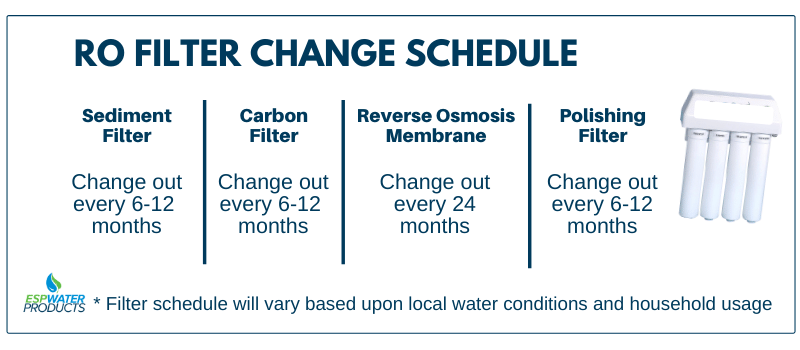
The Sediment and Carbon Pre-Filters: The Unsung Heroes (Change Every 6–12 Months)
Think of these as the bouncers for your fancy membrane. They catch the big stuff: dirt, rust, and that weird chlorine taste that makes your water smell like a swimming pool. If you slack off, they get clogged fast, and your whole system starts gasping for air. Change them every 6 to 12 months—but if you notice your water pressure dropping like my motivation on a Monday morning, do it sooner. Seriously, don’t be that person who waits until the sediment looks like a science experiment.
Pro tip: If your water source is city water, lean toward the 6-month mark. Well water? You might need to swap them even faster—like every 3 months if your tap looks like weak tea. (I’m looking at you, rural folks.)
Must Read
The RO Membrane: The Star of the Show (Replace Every 2–3 Years)
This is the real MVP—the semi-permeable diva that actually removes heavy metals, fluoride, and those funky contaminants. But even divas get tired. Plan to replace the membrane every 2 to 3 years, depending on how much water you drink and how hard your water is. If your water starts tasting “flat” or like a wet dog (don’t ask how I know), the membrane is likely tapped out. Signals: slower production, weird odors, or your TDS meter reading skyrocketing above 50 ppm.
Here’s the kicker: If you skip the pre-filter changes, your membrane will die way faster. It’s like making a celebrity work without their assistant—they get cranky and fail. Replace the membrane on schedule, or you’ll be drinking water that’s barely less sketchy than tap.
The Post-Filter and Polishing Stage: The Final Touch (Change Every 12 Months)
This little guy sits after the membrane to catch any rogue tastes from the storage tank. It’s usually a carbon block or an alkaline filter if you’re fancy. Swap it out every 12 months, even if it looks clean. Why? Because bacteria can still grow in there, and nobody wants a microbe smoothie. Trust me, a stale-tasting water is your first clue—your nose will second that the moment you pour a glass.
 How To Change Reverse Osmosis Filters
Side note: Some systems have a “TDS booster” or remineralization filter. Those also need annual love, unless you like water that fights back with zero flavor. (I’m not judging—some people like their water sad.)
Signs Your Filters Are Screaming for Help
Your system isn’t shy when it’s suffering. Watch for these drama queen behaviors: a sudden drop in production (like taking 10 minutes to fill a cup), ice cube tasting like a musty basement, or your family complaining that “the water is gross.” Also, if your TDS meter shows a reading higher than what’s coming out of your tap? You’ve got a problem, my friend—and it’s time to replace everything, stat. Don’t rely on taste alone; contaminants like arsenic or lead don’t have a flavor. They’re silent jerks.
The Manufacturer’s Guidelines vs. Real Life
Everybody likes to say “follow the manual,” but let’s be real: manuals are written by engineers who think we all drink exactly 10 gallons a day. Your mileage will vary. If your family downs water like it’s going out of style, you’ll need to change filters more often. Hard water areas? Add a softener or replace pre-filters every 3 months. The best advice I got from a plumber: “Buy a cheap TDS meter and test your water monthly. When the membrane output hits 80% of your tap water’s TDS, it’s done.” That’s smarter than any sticker on a box.
So yeah, I now have a schedule taped to my fridge. It tells me exactly when to swap everything, and my water snob friend hasn’t winced since. Your filters have an expiration date, and pretending they don’t is just lazy. Stay on top of it, and you’ll enjoy water so pure it almost feels like a flex. Alright, I’m off to check my own membrane… and maybe pour myself that perfect, non-funky glass of H₂O. Cheers!
