Water Filtration System With Reverse Osmosis

Ever wondered what’s *actually* in your tap water? It’s a pretty wild thought, right? We turn on the faucet and just... trust it. But what if I told you there’s a way to get w...

Ever wondered what’s actually in your tap water? It’s a pretty wild thought, right? We turn on the faucet and just... trust it. But what if I told you there’s a way to get water so pure it’s like the sky decided to rain inside your kitchen?
That’s where reverse osmosis (or RO) comes in. It sounds super high-tech and scientific, but it’s actually a simple, incredibly clever trick. Think of it as the ultimate bouncer for your drinking glass.
So, how does this "reverse" trick work?
Normally, water naturally moves from a low-salt area to a high-salt area—it’s called osmosis. RO flips that rule on its head. It uses pressure to push water through a super-fine membrane, leaving the bad stuff behind.
Must Read
Imagine squeezing a sponge so hard that only the cleanest drops come out the other side. That’s your water, getting a serious ninja-level purification. It’s like having a microscopic gatekeeper that says, “Sorry, lead, chlorine, and pesticides—you’re not on the list.”
What does it actually take out? (Spoiler: A lot)
Honestly, the list is impressive. Reverse osmosis removes up to 99% of dissolved solids. That includes heavy metals like lead and mercury, nasty stuff like arsenic, and even fluoride and chlorine.
It also kicks out most bacteria and viruses. So, if your water ever feels a bit “minerally” or tastes like a swimming pool, RO says, “Not on my watch.” It’s basically giving your water a spa day—every single time you pour a glass.
Why is it cooler than a regular filter?
You know those pitcher filters? They’re fine for taste, but they use basic carbon. Reverse osmosis is like upgrading from a bicycle to a rocket ship. While a standard filter catches big chunks, RO goes after the invisible troublemakers.
Think of it this way: a regular filter is a window screen—it keeps out leaves. RO is a bank vault door for your water molecules. It is the difference between “filtered” and “practically distilled.” Your taste buds will notice the difference instantly.
But wait—is it a waste of water?
Alright, let’s be real. Traditional RO systems do produce some “reject” water. For every gallon of clean water, you might send a few gallons down the drain. It sounds bad, right?
But modern systems are getting way more efficient. Some now have a 1:1 ratio, meaning one gallon waste for one gallon pure. Plus, that waste water can be used to water your plants or wash dishes. It’s not as thirsty as you’d think.
The "pure" water taste—weird or wonderful?
Okay, honest moment: some people say RO water tastes “flat.” That’s because it’s so pure it has almost no minerals. It’s like the clean canvas of the water world.
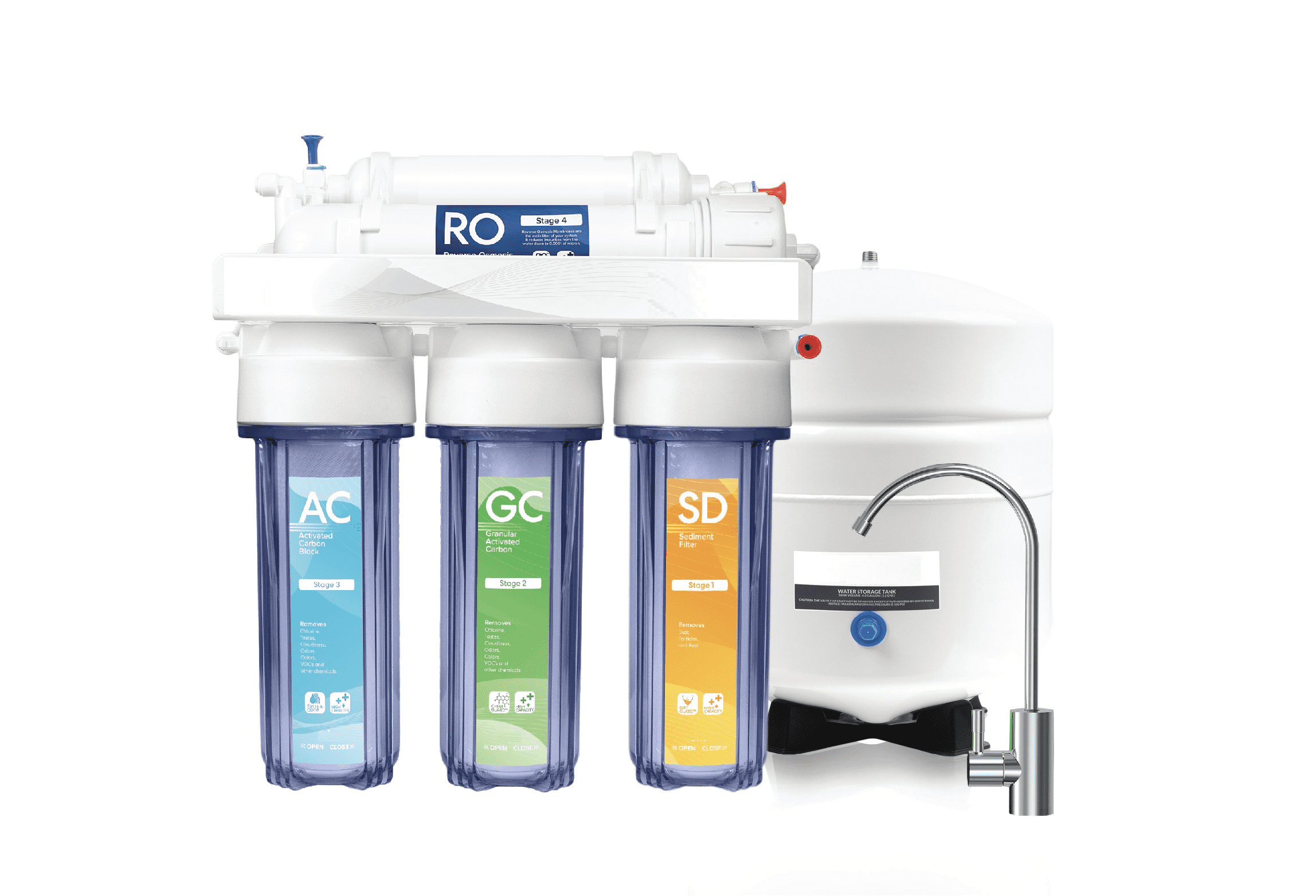 5 Stage: Complete Home Reverse Osmosis Drinking Water Filtration System
But here’s the cool part: you can add those minerals back! Many RO systems come with a remineralization stage. It adds a pinch of calcium and magnesium, giving you that crisp, mountain-spring taste. You get the purity and the yum.
Who actually needs this in their life?
Honestly? Anyone with well water, old pipes, or a picky palate. If your city water has a funny smell or you live in an area with hard water, RO is a game-changer.
It’s also amazing for coffee geeks. Good coffee is 98% water, so using ultra-pure water makes your morning brew taste incredible. It’s like your beans finally get to shine.
The installation: DIY or call a friend?
An under-sink RO unit looks like a small space station. You’ve got a few filters, a tank, and some tubes. If you’re handy, you can install it in an afternoon. It’s like putting together IKEA furniture—except the result is delicious water.
If that sounds like a headache, a plumber can do it in under an hour. The upkeep is chill: just swap the filters every 6 to 12 months. It’s not high-maintenance; it’s just a little love for your H2O.
Is it worth the hype?
Think about everything that touches your water—pipes, treatment plants, old infrastructure. Reverse osmosis hits the reset button. You are literally drinking the cleanest water you can possibly make at home.
It’s like having a tiny, personal water factory under your sink. Every sip feels a little bit like a cheat code for health. And honestly? That’s pretty cool.
So next time you fill a glass, ask yourself: Is my water as clean as it could be? If the answer is “probably not,” maybe it’s time to invite a little reverse osmosis into your life. Your taste buds—and your body—might just thank you.
