Trusted Type I Water System For Research Labs

So, you’re running a research lab. Congratulations—you’re basically a wizard in a white coat, mixing potions and chasing data dragons. But let’s be real: your lab’s most finic...

So, you’re running a research lab. Congratulations—you’re basically a wizard in a white coat, mixing potions and chasing data dragons. But let’s be real: your lab’s most finicky VIP isn’t that fancy centrifuge or the PCR machine. It’s water. Yes, plain, old H2O. And not just any water—we’re talking about a Trusted Type I Water System, the rock star of lab purity.
You might be thinking, “Water? For real? I can get that from the tap.” Sure, you could, but that’s like bringing a soggy napkin to a sword fight. Tap water is packed with ions, bacteria, and organic impurities that will wreck your experiments faster than you can say “contamination.” A Type I system—also known as ultrapure water—is your laboratory’s guardian angel, zapping everything down to the last speck of grime. It’s the difference between a Nobel-worthy result and a sad, failed gel.
What Makes Type I Water So Special?
Imagine water so pure it makes a diamond look dirty. Type I water boasts a resistivity of 18.2 MΩ·cm at 25°C, which is basically the water equivalent of a zen monk’s mind—completely still, free of ions. It also has a total organic carbon (TOC) level below 10 parts per billion. That’s fewer impurities than you’d find in a politician’s apology.
Must Read
This stuff is so clean, it’s actually hungry. It will literally eat carbon dioxide from the air if you leave it sitting out. Trust me, you don’t want your water “hangry” during a crucial HPLC run. A good Type I system keeps it fresh, on demand, like a barista for your beakers.
The Nitty-Gritty (Without the Snooze Fest)
Your typical Type I system isn’t just a pipe and a filter. It’s a multi-step superhero origin story. First, there’s reverse osmosis (RO), which shoves water through a membrane so tight, only water molecules get through—goodbye, 99% of contaminants. Then comes deionization, a tag-team of resins that grab any lingering ions and whisper, “Not today, sodium.”
Finally, there’s UV light and ultrafiltration. The UV is like a tanning bed for bacteria—minus the tan, plus the instant death. Ultrafiltration removes even pyrogens and endotoxins, which are basically tiny biological gremlins. So when you buy a “Trusted Type I Water System,” you’re buying a four-part harmony of purity.
And here’s a fun fact: some of these systems beep at you when the water gets lazy. Yes, there’s a “water quality” alarm. It’s like having a tiny conscience for your experiments. “Excuse me, your water resistivity dropped to 18.1. Fix it or I’ll judge you.”
Why You Can’t Just Wing It
I once knew a lab manager who thought, “Eh, the aging distilled water is fine.” Three months later, his mass spec results looked like a Jackson Pollock painting. Unpredictable contaminants will sabotage your reproducibility, waste reagents, and make you question your life choices. A trusted system removes that guesswork, letting you focus on your brilliant science rather than playing “Is my water clean today?” roulette.
Plus, let’s talk about cost. Yes, a Type I system is an investment—think of it as buying a very expensive, very pure future. But compare it to the cost of failed experiments, wasted time, and redoing a six-month study. It’s like paying for a luxury car once versus buying a new set of tires every week. Your grant money will thank you.
Ease of Use (Because You Have a Life)
The best part about a modern Type I system? It’s practically idiot-proof. Touchscreens, automatic flushing, and cartridge replacement reminders that pop up like a friendly, water-obsessed butler. Some models even connect to your lab’s Wi-Fi, so you can get a notification on your phone that your water is still amazing. “Room temp, purity 18.2—you’re welcome.”
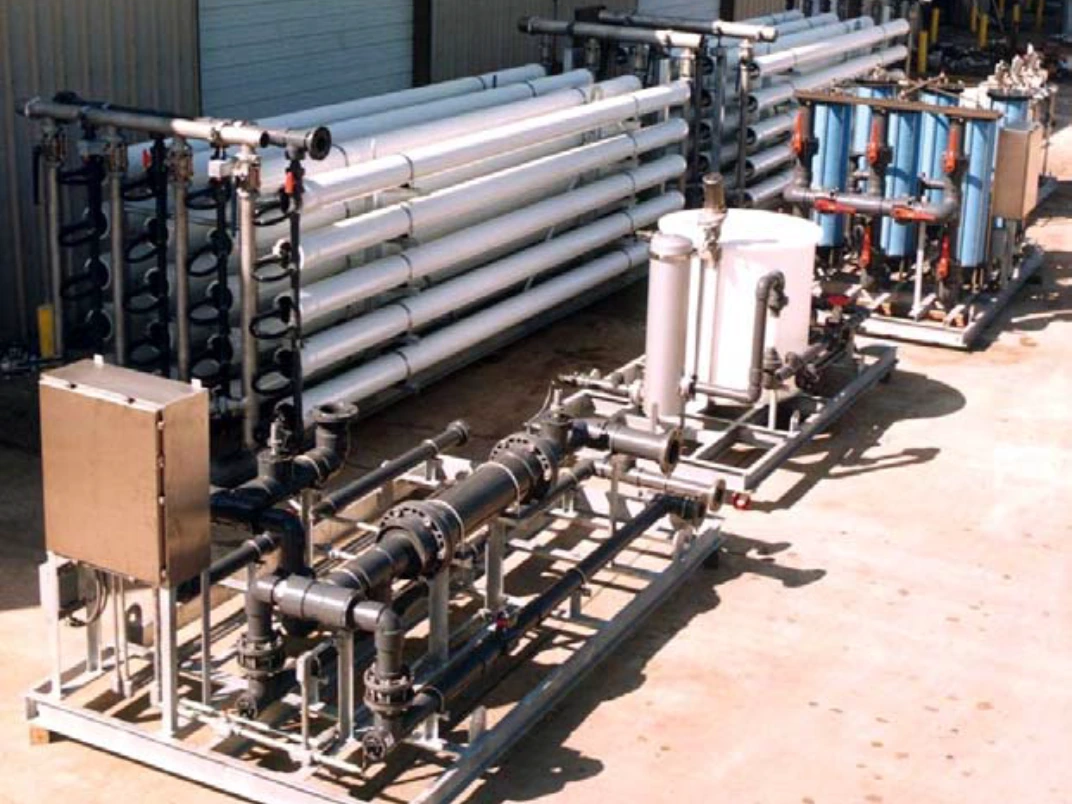 Thermotics® | Trusted OTSG & Water Solutions Since 1967
No more wrestling with glass stills that look like steampunk nightmares. No more waiting an hour for a liter. Just press a button, and whoosh—pure, ultrapure water, faster than you can say “pipette.” It’s the closest thing to instant gratification in a lab full of waiting.
A Little Trust Goes a Long Way
Now, “trusted” isn’t just a buzzword. It means the system has been validated, its parts are reliable, and it doesn’t suddenly develop a leak at 3 AM on a Sunday. Look for systems from reputable brands like Milli-Q (the gold standard), ELGA, or Thermo Scientific. These aren’t the dollar-store version—they’re the Rolls Royce of water purification.
You’ll also want a system with built-in monitoring—a real-time display of resistivity and TOC. That way, if the water quality dips, you’ll know instantly. No “surprise, your cells died” moments. It’s like having a bodyguard for your experiments who also sends you text updates.
Installation and Maintenance (Not Spooky)
Setting one up is easier than assembling IKEA furniture. Seriously. Most systems are compact, wall-mountable, or roll-around carts. And maintenance? Swap a cartridge every six months or so—pop out the old one, click in the new. It’s like changing a printer cartridge, except this one doesn’t yell at you about magenta.
Some systems even have self-cleaning cycles. So you can go to lunch, and your water system is basically doing yoga and meditating on purity. Meanwhile, your labmates are arguing over the last pipette tip. You win.
The Uplifting Conclusion
Look, science is hard enough without your water acting like a chaotic teenager. A Trusted Type I Water System isn’t just a tool—it’s your partner in crime-fighting against contamination. It’s the silent, reliable friend who never complains, never messes up, and always delivers purity on demand.
Imagine finishing your day, looking at your clean data, your happy cells, and your perfect chromatography. That’s not a fantasy. That’s a Tuesday afternoon with the right water system. So go ahead, invest in one. Your future self—and your experiments—will throw you a tiny, pure-water-powered party. And you’ll smile, because you’ve got the cleanest H2O in town. Cheers to that, my friend!
