How Long Can Sperm Live Inside A Woman's Body

Let’s talk about the tiny, wriggly VIP that sparks so many questions: sperm. You might think their journey is a simple sprint to the finish line, but it’s actually a survival...
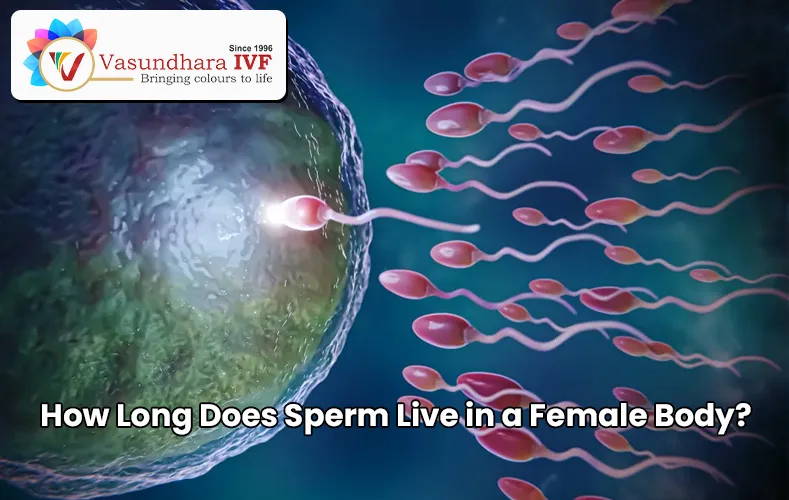
Let’s talk about the tiny, wriggly VIP that sparks so many questions: sperm. You might think their journey is a simple sprint to the finish line, but it’s actually a survival epic worthy of a nature documentary. The million-dollar question is, how long can these little swimmers actually hang around inside a woman's body? The answer, like most good things in life, depends entirely on the timing and the environment.
The Three- to Five-Day Window: Your Fertility Sweet Spot
In the optimal conditions of fertile cervical mucus—that egg-white-like discharge you might notice mid-cycle—sperm can survive for a surprisingly long time. We’re talking three to five days, sometimes even up to six or seven in rare cases. This is why the "fertile window" is longer than just the 24 hours an egg is viable.
Think of it as a secret, penthouse-level lodging. The mucus protects the sperm from the vagina’s acidic environment, feeding them and guiding them toward the fallopian tubes. It’s a biological concierge service, and it’s the reason you can have sex days before ovulation and still conceive a surprise bundle of joy.
Must Read
Fun fact: A single ejaculation can contain up to 250 million sperm, but only a few hundred will ever make it to the fallopian tubes. It’s like the Hunger Games, but with microscopic swimmers.
The Hostile Takeover: When Sperm Meets a Not-So-Friendly Environment
But not all days are fertile days. When you are not in your fertile window, the cervical mucus thickens into a plug-like barrier. In this situation, sperm have a much shorter lifespan—typically just a few hours to maybe a day inside the vagina.
The vagina’s natural acidity is a brutal gauntlet. Most sperm are destroyed within minutes inside the vaginal canal itself. Only the strongest and most strategically timed swimmers survive the crossing into the safer, mucus-lined cervix.
Key takeaway: If there is no fertile mucus, sperm usually die within a few hours. Your body is basically running a selective nightclub, and the bouncer (your mucus) is strictly on duty.
Beyond the Uterus: The Quest for the Egg
Once sperm reach the fallopian tubes, the real magic happens. Here, they can survive for up to five days, waiting patiently for an egg to show up. This is the biological equivalent of a dating app where you swipe right and then wait for a reply.
They are not just surviving; they are capacitating. This is a fancy science term for the final maturation process that allows them to fertilize the egg. It takes about seven hours inside the female reproductive tract for this transformation to complete.
So, if you have sex on Monday and don’t ovulate until Thursday, those little travelers are just chilling, getting ready, and waiting for the green light. It’s a five-day waiting game with high stakes.
What About Sperm Outside the Body?
You might wonder about sperm on towels, sheets, or in a hot tub. The short answer? They die very quickly. Sperm are fragile once they dry out or hit drastically different temperatures.
Hot tubs are a death trap for sperm: The heat and chemicals (like chlorine) kill them within seconds. Likewise, on a dry surface, sperm are usually non-viable within minutes. So, no, you can’t get pregnant from a toilet seat or a shared towel. That’s a myth we can happily retire.
 Sperm Lifespan in Female Body and Factors That Affect It
Practical tip: If you’re trying to conceive, focus on timing intercourse for the two to three days before ovulation. That’s when the sperm’s survival window is widest.
Cultural Myths and the "Sperm Survival" Chat Room
Pop culture has a field day with this topic. Remember the Friends episode where Monica and Chandler try to conceive, and she calculates every single minute? It’s relatable because we all want to believe in a magic number. But biology is more like a lazy Sunday—relaxed and unpredictable.
Another classic myth: that gravity affects sperm survival. Lying with your legs in the air after sex won’t give them a speed boost. The sperm are already moving; they don’t need a gravitational assist. Sorry, Instagram wellness influencers.
The real cultural takeaway is this: Your body is not a passive container. It is an active, intelligent environment that decides how long sperm can survive based on your cycle. It’s a collaboration, not a race.
Practical Tips for the Now-You-Know Crowd
If you are trying to avoid pregnancy, remember that sperm can live for five days. Calendar methods alone are risky unless you are extremely regular and track your cervical mucus. Consider using a secondary method like condoms or fertility awareness apps that monitor your fertile window.
If you are trying to conceive, don’t stress about "saving up" for days. Regular ejaculation (every one to two days) produces healthier sperm than waiting for a week. Fresh batches swim better.
Bonus fact: Sperm motility decreases after vasectomy, but it can take up to three months and 20+ ejaculations to clear the pipes. Always get the all-clear from your doctor before assuming you are sterile.
The Gentle Connection to Your Daily Life
In the end, sperm’s lifespan inside you is a quiet lesson in patience and timing. Your body is a cycle, not a switch. It ebbs and flows, changes its hospitality like a mood ring, and decides when to roll out the red carpet for those little swimmers.
So, whether you’re planning a baby or just marveling at the science, remember this: Life is about windows, not clocks. A five-day potential is a generous invitation from nature to be mindful, curious, and a little bit kind to yourself when things don’t happen on schedule. You are part of an ancient, elegant story—one that’s written in fluids, timing, and a whole lot of trust.
