Deionized Water And Distilled Water Difference

Let’s be honest: most of us don’t lose sleep over what’s in our tap water. We fill a glass, drink it, and move on with our day. But when you start hearing about deionized wate...
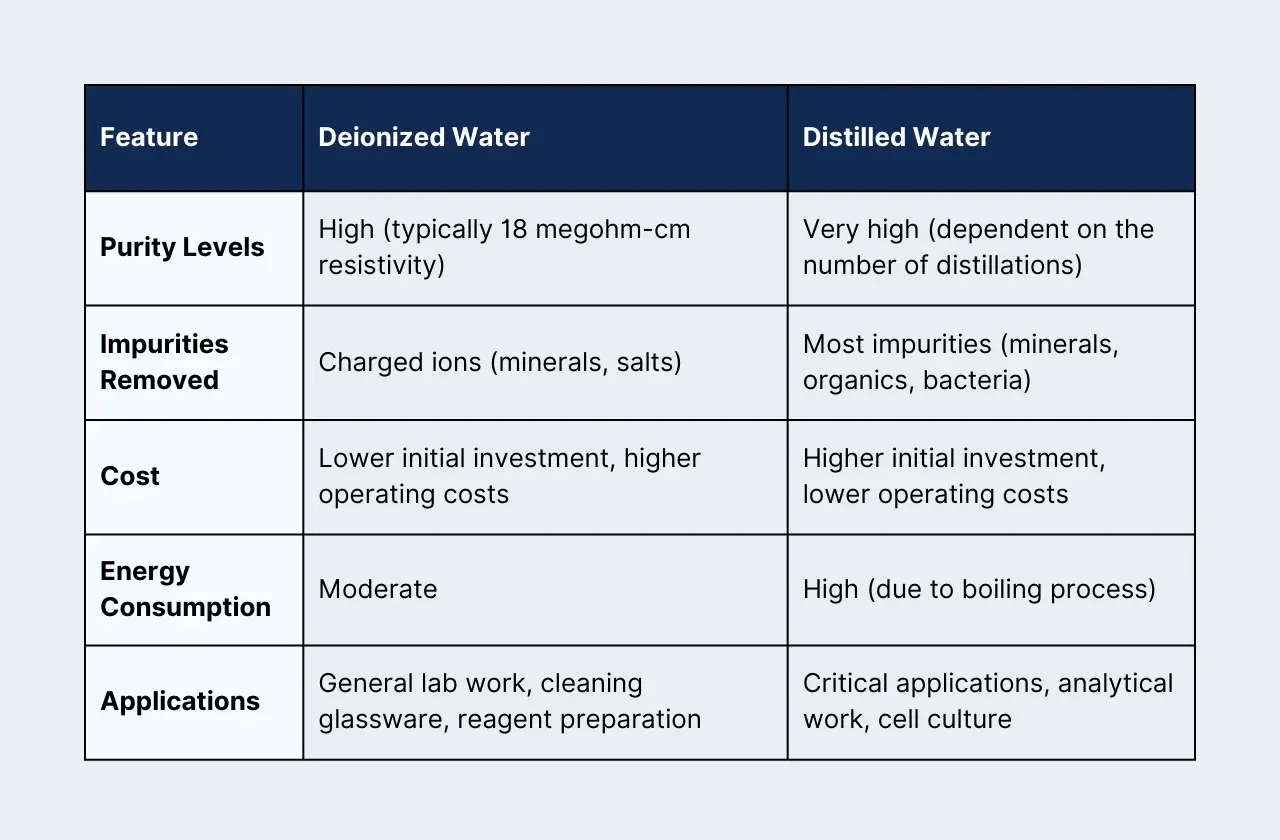
Let’s be honest: most of us don’t lose sleep over what’s in our tap water. We fill a glass, drink it, and move on with our day. But when you start hearing about deionized water (DI water) and distilled water, the differences suddenly feel like a riddle wrapped in a lab coat. The good news? You don’t need a chemistry degree to sort this out.
Think of distilled water as the old-school, slow-cooked version of purity. You boil water until it turns into steam, then cool that steam back into liquid. The process leaves behind minerals, bacteria, and pretty much anything that isn’t H2O. It’s like making stock, but you keep the clear broth and throw away everything else.
Deionized water, on the other hand, is the high-tech cousin who uses a filtration spa treatment. Instead of boiling, it runs water through special resins that pull out charged mineral ions like calcium, magnesium, and sodium. The result is water that’s technically super pure, but it might still have tiny bits of organic matter or bacteria that distillation would catch.
Must Read
So which one wins the purity crown? It depends on what you’re measuring. Distilled water is better at removing microbes and larger contaminants. Deionized water excels at stripping out dissolved minerals. For most everyday uses, either will do the job—but your kettle, your car battery, and your houseplants might have strong opinions.
The Science (Without the Yawn)
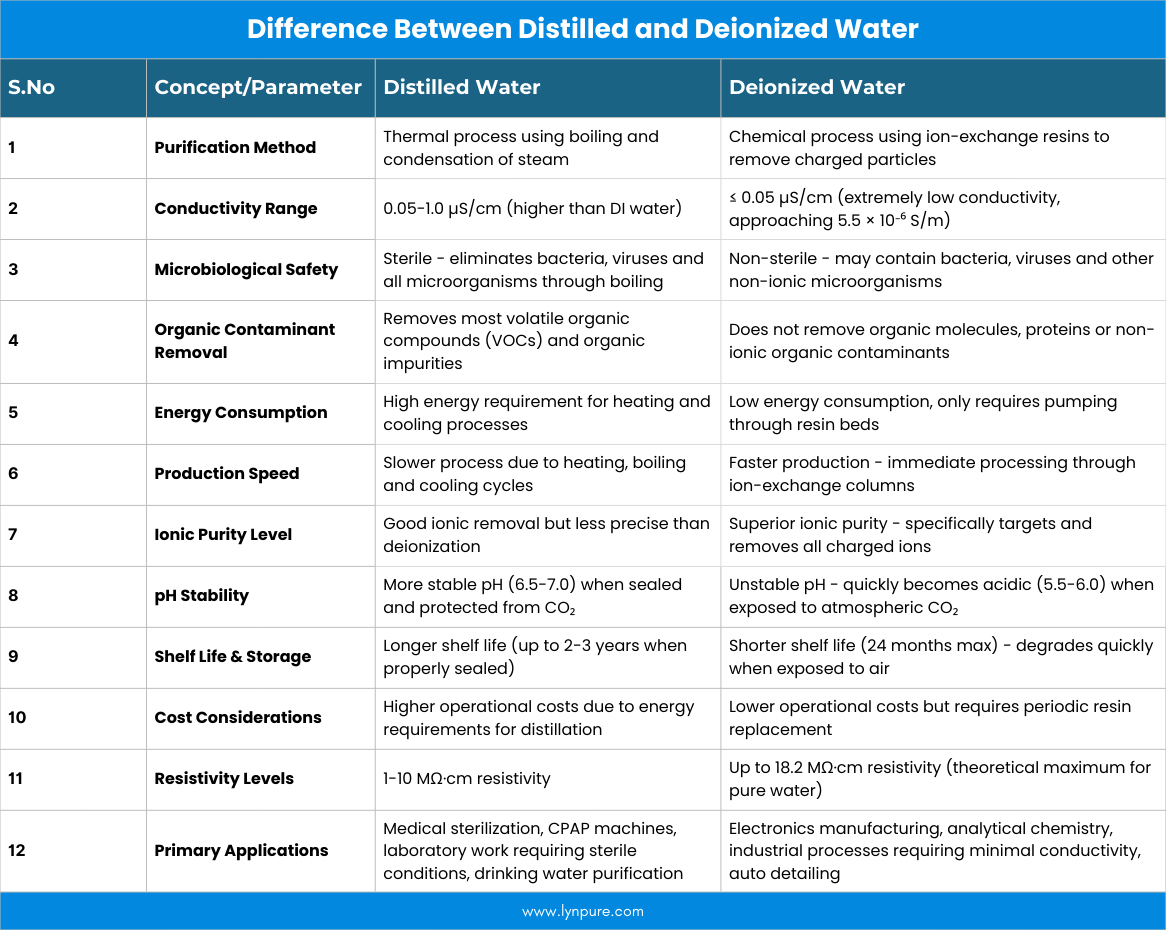
Here’s the fun fact that makes you sound smart at dinner parties: distillation actually changes the water’s structure slightly—boiling kills everything, so it’s sterile. Deionized water is not sterile unless it’s also filtered or treated afterward. Think of DI water as a clean sweater that still has a few loose threads, while distilled water is that same sweater washed in hot water, dried, and lint-rolled twice.
In practice, this means distilled water is the go-to for medical equipment, baby formula, and steam irons (no mineral buildup). Deionized water is the MVP for laboratories, aquariums, and car cooling systems because it doesn’t leave scale or mess with chemical reactions. Your espresso machine? It prefers distilled to avoid tiny calcium flakes in your morning latte.
But here’s a curveball: neither is great for drinking long-term. They’re too pure, meaning they lack the natural minerals your body actually likes. In fact, drinking only deionized water can pull minerals out of your body (bad for bones, bad for mood). Stick to tap water with a filter, or mineral water—save the ultra-pure stuff for your car battery.
Everyday Life Hacks
Let’s get practical. If you own a humidifier, use distilled water to avoid white dust settling on your bookshelves. If you’re mixing infant formula, distilled is the gold standard because of its sterility. For cleaning windows, deionized water leaves zero spots—it’s the secret weapon of fancy car detailers.
One more hot tip: don’t use distilled water in your fish tank unless you’re adding special mineral drops. Fish need calcium and magnesium for healthy gills. Same goes for your houseplants—they’ll get sad and droopy if you water them exclusively with DI water. Tap water (let it sit out to remove chlorine) is still the best for most plants.
 Distilled Water vs Deionized Water | Key Differences
Pop culture nod: remember that scene in Breaking Bad where Jesse uses distilled water for something? Yeah, that’s actually accurate—pure water is vital for chemical precision. But if you’re not cooking meth, you can relax. Your morning coffee will taste fine with filtered tap water.
The Price (and the Planet)
Here’s the kicker: distilled water is expensive to produce because it takes energy to boil and cool all that water. Deionization is cheaper, but the resins need to be replaced. For home use, a simple countertop distiller costs about the same as a nice blender, while DI systems are more common in labs. Neither is great for the planet if you buy plastic jugs—consider a home distiller instead.
Fun fact: astronauts on the International Space Station use deionized water, but they also have a special system to re-mineralize it before drinking. So even in space, pure water isn’t the final answer—you need a little bit of the stuff Earth gave you. It’s almost poetic.
Bottom line: you don’t need to stress about the difference unless you’re a chemist, a mechanic, or a plant parent. Distilled is the trusty safety blanket; deionized is the sleek gadget. They’re not enemies—they’re just different tools for different jobs.
So next time you grab a jug from the store, check the label. If it says “spring water,” you’re getting nature’s version. If it says “distilled,” you’re getting science’s version. And if it says “deionized,” you’re probably a car enthusiast or a lab geek. Either way, you’re hydrating—and that’s the real win.
Reflection for your daily life: In a world that’s always trying to strip things down to their purest form, maybe the lesson is that imperfect water—with its trace minerals and slight taste—is actually what we need to thrive. Distilled is great for your iron; but for your soul, a little grit goes a long way. Cheers to the messy, mineral-rich, wonderfully un-distilled life.
