Is Distilled Water Heterogeneous Or Homogeneous

Okay, picture this: you’re at a fancy café, staring at a glass of water so pure it looks like liquid nothingness. And then a buddy leans over and asks, “Hey, is that distilled...
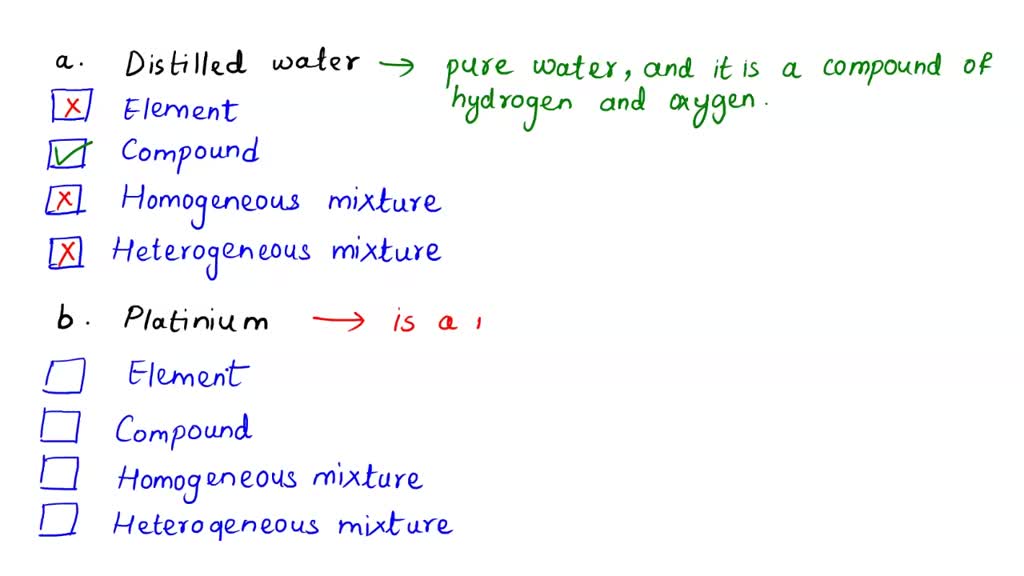
Okay, picture this: you’re at a fancy café, staring at a glass of water so pure it looks like liquid nothingness. And then a buddy leans over and asks, “Hey, is that distilled water heterogeneous or homogeneous?” You suddenly feel like you’re back in high school chemistry, sweating over a Bunsen burner. Don’t worry—I’m about to make this as painless as possible, with way more laughs than your old textbook ever delivered.
The Short Answer? It’s Boringly Perfect.
Let’s get this over with quickly, like ripping off a bandage. Distilled water is homogeneous. That means it’s the same all the way through—no sneaky little chunks, no floating bits of mystery goo. Just a calm, zen-like uniformity that would make a Buddhist monk jealous.
If it were heterogeneous, you’d be sipping on a science experiment gone wrong—like a cloudy soup with ice cubes and dirt swirling around. But distilled water is the opposite of drama; it’s the “I’m fine” of the liquid world.
Must Read
Why Is It So Darn Uniform?
Think of distilled water as the ultimate filter-frenemy. It’s made by boiling regular water into steam and then cooling it back down, leaving behind all the minerals, salts, and gross stuff you don’t want. The result? A liquid that’s 100% H₂O molecules, all holding hands and behaving themselves.
This means every single drop is chemically identical, like a clone army in your glass. You can’t find one part that’s “more watery” than another—it’s all just water, being water, doing water things. If water had a LinkedIn profile, its skills would be “uniformity” and “zero surprises.”
But Wait, What About Ice Cubes?
Ah, here’s where people get tripped up. If you drop an ice cube into distilled water, is it suddenly heterogeneous? No! That’s a cheap trick. The ice cube is just solid water—still H₂O, just in a different mood. The mixture of liquid and solid is technically a two-phase system, but the water itself? Still beautifully homogeneous.
It’s like saying a bag of M&Ms becomes heterogeneous if you put it next to a bag of Skittles. The candy is still uniform inside its own wrapper. Distilled water doesn’t care about your ice cubes; it remains the pure, simple soul it always was.
Surprising Fact: Distilled Water Is Basically a Chemistry Snob
Here’s a fun kicker: because distilled water is so pure, it’s actually a terrible conductor of electricity. Pure water has no ions floating around to carry a charge. You could throw a toaster in a bathtub full of distilled water and—DO NOT TRY THIS—you’d just have a very clean toaster and wet feet.
Meanwhile, tap water is practically a rock concert of charged particles. It’s heterogeneous in its behavior, with calcium, magnesium, and random fluoride ions all moshing together. Distilled water looks at tap water and whispers, “Get your act together.”
But Is It Actually “All the Same” at the Atomic Level?
Here’s a mind-bender: even homogeneous stuff is technically made of tiny, bouncing molecules. Every H₂O molecule has two hydrogen atoms wagging their tails and one oxygen atom scowling in the middle. But they’re all identical in type, so the glass as a whole counts as homogeneous.
 Homogeneous and Heterogeneous Mixture where even and uneven
Think of it like a stadium full of fans wearing the same jersey. From a distance, it’s a sea of uniform color. But zoom in, and each fan is a chaotic little person spilling popcorn. Distilled water is the same—pure chaos at quantum scale, boring uniformity to your eyeballs.
Let’s Compare It to Something Gross (For Fun)
If distilled water is homogeneous, what’s a classic heterogeneous disaster? Pizza. One bite has cheese, the next has a stray mushroom, and the crust is a whole different texture. Water would never do that to you. It’s the most trustworthy beverage in the universe.
Or consider muddy puddle water—swirling with dirt, bugs, and existential dread. That’s a textbook heterogeneous mixture. Distilled water is the opposite: it’s the judgmental friend who uses hand sanitizer after a handshake.
Why Should You Even Care?
Because next time someone at a party tries to sound smart by asking “Is distilled water heterogeneous or homogeneous?” you can lean in and say, “It’s homogeneous, you absolute legend. Now pass the chips.” You’ll look like a genius, and they’ll think you’re secretly a chemist.
Plus, knowing this stuff saves you from bad science on social media. Some internet troll might claim distilled water is “alive” or has “memory” (it doesn’t). But now you can confidently counter: “Nope, it’s just uniform H₂O—same as the last million drops.”
The Final Verdict (No Drama, Please)
Distilled water is homogeneous. It’s the vanilla ice cream of liquids—simple, consistent, and a little bit boring, but reliable. Never heterogeneous, never tricky, never giving you a surprise lump of mineral sediment.
So go ahead, order that distilled water at the café. Stare at its mirror-like surface. And remember: you are looking at one of the purest, most uniform substances on Earth. Just don’t ask it to tell a joke—it’s got no impurities to spice things up.
