How Often Do You Change Reverse Osmosis Filters

So, you’ve got a reverse osmosis system under your sink, quietly turning tap water into something that tastes like it came from a mountain spring. Pretty cool, right? But then...
So, you’ve got a reverse osmosis system under your sink, quietly turning tap water into something that tastes like it came from a mountain spring. Pretty cool, right? But then that little voice pops up: “Hey, when was the last time you changed the filters?” If you’re like most people, the answer is either “I don’t remember” or “Wait, I have to change those?”
The Filter Family Tree
Let’s break this down without the jargon. Your RO system isn’t one filter—it’s a team of filters working together. You’ve got a sediment pre-filter, a carbon block, the fancy reverse osmosis membrane, and often a post-filter. Each one has a different job and a different lifespan, like your own personal water crew.
Think of it like a band: the pre-filter is the drummer, catching the big junk. The carbon filter is the guitarist, removing chlorine and bad tastes. The membrane is the lead singer, doing the heavy lifting. If the drummer quits, the whole song falls apart—and your water gets weird.
Must Read
So, How Often, Really?
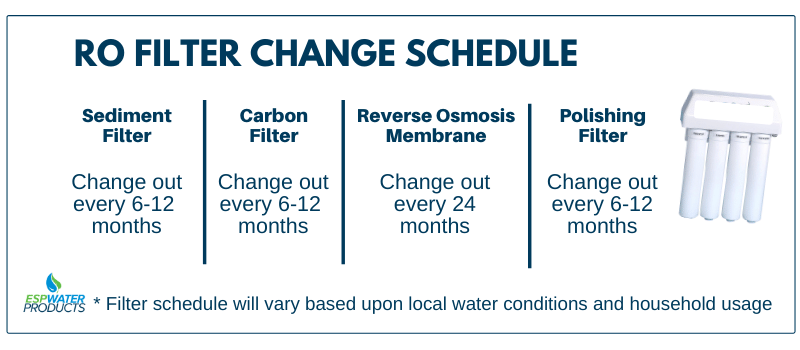
Here’s the chill truth: for most homes, you’ll swap the pre-filters (sediment and carbon) every 6 to 12 months. That’s about as often as you change your toothbrush or rotate your tires. The RO membrane is the marathon runner—it can last 2 to 3 years if you treat it right.
The post-filter (the one that polishes the water just before it hits your glass) usually gets replaced every 12 months. Why so specific? Because sediment and chlorine wear out the membrane over time, and a clogged pre-filter is like trying to run a marathon with a stuffy nose. Not fun.
The Sneaky Signs It’s Time
Your system won’t shout at you (unless it has a fancy alarm, which some do). Instead, it sends subtle hints. Does your water taste a little flat or like tap water again? Time to check. Is the flow slower than a sleepy turtle? That’s a classic sign of a choked filter.
Notice a weird smell? That’s your cue. And here’s the kicker: if you ignore it too long, the membrane can get fouled by bacteria or minerals. That’s like letting dirty socks pile up in the laundry—eventually, it gets gross and expensive to fix.
The Cool Part: Why It’s Worth the 10 Minutes
Changing these filters is actually a satisfying little ritual. It’s like giving your water system a spa day. You twist off an old, grimy filter (looks like a tiny water bottle filled with brown sludge) and click in a fresh, white one. That moment? Pure kitchen zen.
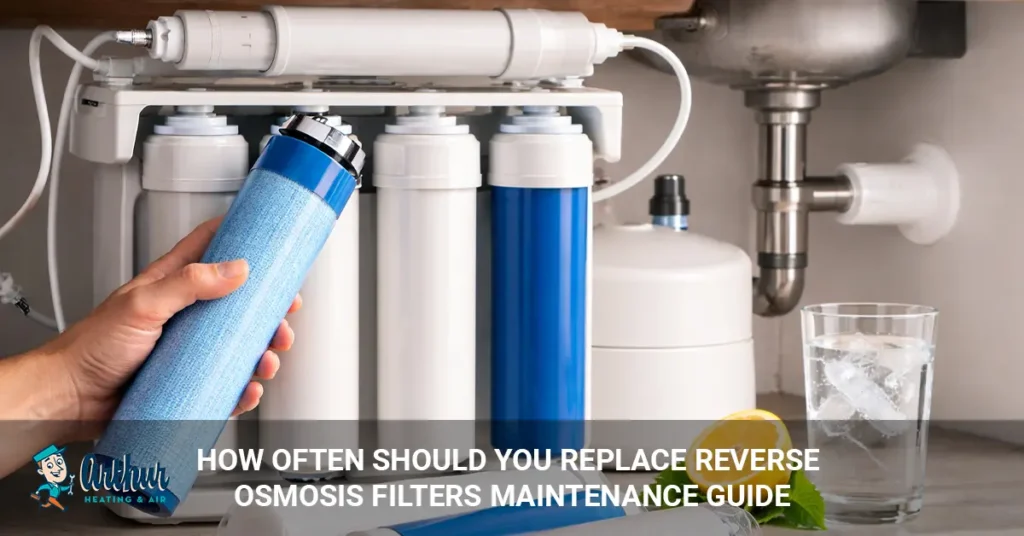 How Often Should You Replace Reverse Osmosis Filters? Maintenance Guide
Plus, you’re protecting your investment. A $50 filter change today can save you from a $200 membrane replacement tomorrow. That’s pocket math, not just fancy science.
But What If I’m a Lazy Genius?
Okay, I get it—you want a “set it and forget it” plan. Some people buy a filter subscription (yes, that’s a thing) that ships new ones every 6 or 12 months. You literally get a box with instructions and a reminder sticker. Stick that sticker on your fridge, and you’re done.
Or, use your phone—set a recurring calendar reminder for “Water Filter Swap Party.” It doesn’t have to be a party, but you can play some music while you do it. Live a little.
The Big Takeaway (No Pressure)
You don’t need a chemistry degree to keep your RO system happy. A good rule of thumb: pre-filters every 6–12 months, membrane every 2–3 years, post-filter yearly. If you have hard water, shift those numbers a little closer together—like changing your oil more often if you drive in dust.
And if you’re still reading and thinking, “Huh, I should just Google my model number”—do it! Most brands list exact schedules online. It’s weirdly satisfying to know your water is actually doing its job, filter by filter.
So, when’s the last time you changed yours? No judgment here—just a friendly nudge that your future glass of water will thank you. Cheers to that crisp, clean sip.
