Pfas Water Filtration Installation Massachusetts

So, you're in Massachusetts, you've been hearing about PFAS (that weird chemical that's in everything from non-stick pans to rain jackets), and now you're wondering: do I need...
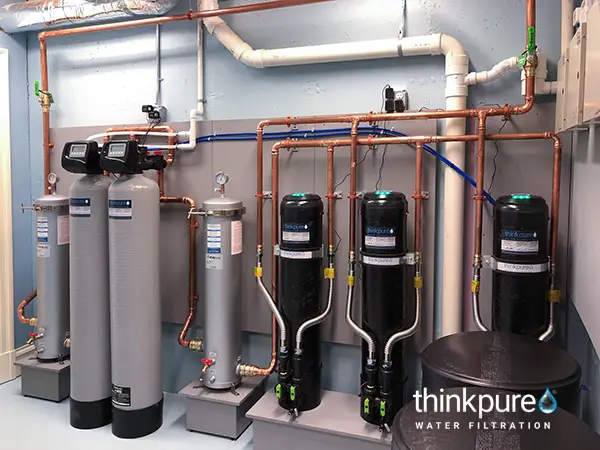
So, you're in Massachusetts, you've been hearing about PFAS (that weird chemical that's in everything from non-stick pans to rain jackets), and now you're wondering: do I need to filter it out of my water? And if so, how on earth do you actually get that done? Let’s just say you’ve already taken the first cool step—being curious.
What’s the Big Deal with PFAS Anyway?
Imagine your tap water is a busy highway. PFAS are those super-sticky, invisible cars that never seem to leave. They’re called “forever chemicals” because they don’t break down easily in the environment or your body.
It’s not that you need to panic—it’s more like, why not give your body a clean slate when the technology to do so is right here? Massachusetts is actually ahead of the curve with new state regulations, which makes this a perfect time to pay attention.
Must Read
So, How Does a Filter Actually Work?
Think of a PFAS water filter as a super-specific bouncer at a club. It doesn’t let the “forever chemicals” past the rope. The two main bouncers you’ll meet here in Massachusetts are activated carbon and reverse osmosis.
Activated carbon is like a spongy paper towel that grabs PFAS as water flows through. Reverse osmosis is more like a high-tech strainer that pushes water through a membrane so fine, it practically kicks everything out but the H2O itself.
Which one is better? Honestly, it depends on your water, your budget, and whether you want a pitcher or a whole-house system. It’s like choosing between a scooter and an SUV—both get you there, but the ride feels different.
Why Massachusetts Feels Like the Wild West of Water
Here’s the fun part: Massachusetts is actively testing for PFAS in public water supplies. If you’re on town water, your utility is probably already dealing with it. But if you’re on a private well—hello, freedom and extra responsibility—you’re the captain of your own water ship.
That’s where installation becomes your superhero origin story. You get to choose exactly what goes in your glass. No middleman. No waiting for the government. Just you, a filter, and water that tastes like probably nothing—which is actually a great thing.
Installation: Easier Than You Think (And Way Cooler)
Let’s bust a myth: you don’t need a plumber with a PhD to install a PFAS filter. Many systems, like countertop pitchers or faucet-mounted units, can be set up in fifteen minutes—no tools required. It’s almost as easy as swapping out a lightbulb.
For the heavy hitters—like under-sink reverse osmosis units or whole-house carbon tanks—you might want a pro. But even that is like calling a pizza delivery: you pick the system, they show up, and within a few hours you’ve got filtered water flowing from every tap. It’s honestly kind of satisfying.
Local water pros in Mass are used to working with old pipes, weird basements, and the occasional startled squirrel. They’ve seen it all. Trust me, your installation will be the boring, easy part of their day.
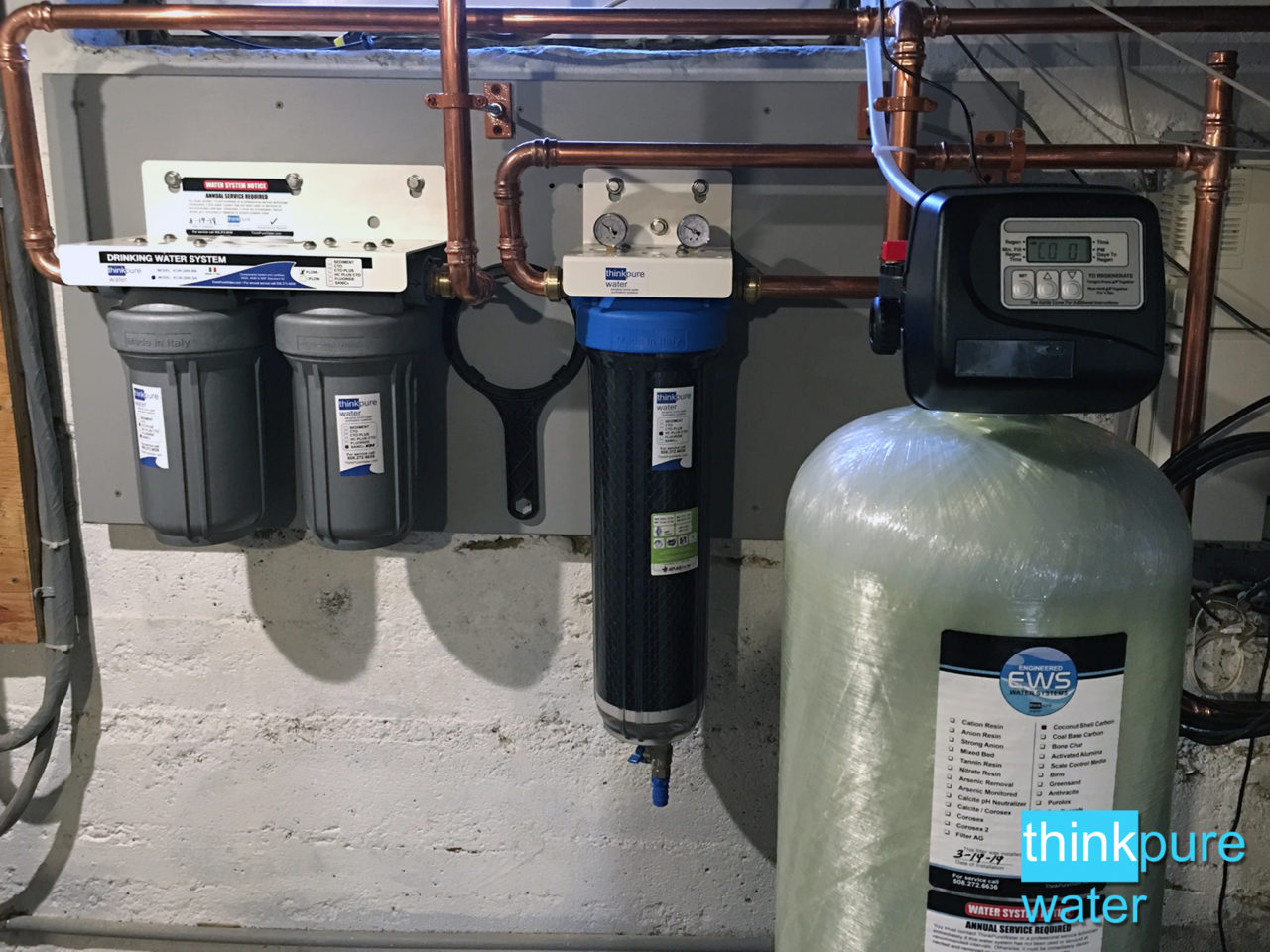 Whole House Water Filtration | Water Filtration-Softening-PFAS Rmoval
What’s the Investment? (Spoiler: It’s Worth It)
Prices range from a $30 pitcher filter to a $3,000 whole-house system. Yes, that’s a spread. But compare it to buying bottled water for the next ten years—and all those plastic bottles—and the math gets friendly fast.
Think of it like buying a decent mattress. You spend a third of your life sleeping, and you spend 100% of your life drinking water. Why not make that water the best it can be? Plus, many Massachusetts towns offer rebates or low-interest loans for PFAS filtration installation. You might get paid to be healthy.
But Is It Really “Cool” to Install a Filter?
Absolutely. In the same way that carrying a reusable water bottle makes you feel like a minimalism ninja, installing a PFAS filter gives you major adulting points. You’re literally engineering your own clean future from the kitchen sink.
It’s also a tiny middle finger to all those micro-plastics and “forever” nonsense that nobody asked for. You’re saying, “Not today, chemicals. Not in my house.” And that feels weirdly powerful, right?
Plus, you’ll notice something: your morning coffee tastes smoother. Your ice cubes look clear. And you’ll eventually forget the filter is even there—until you take a sip at a friend’s house and think, “Huh, their water tastes like… something.” That’s the moment you know you’ve leveled up.
So, What’s the Next Step?
First, check your water report. If you’re on a public system, your town likely publishes PFAS levels online. If you’re on well water, grab a simple test kit (the state recommends one for PFAS).
Then, pick your flavor: a pitcher for a rent-controlled vibe, an under-sink system for the kitchen warrior, or a whole-house filter for the full “I am the master of my domain” experience. Installation in Massachusetts is straightforward, and the companies here are used to it.
Honestly, the hardest part is deciding not to do it. Your water is basically a blank canvas—why not make it a masterpiece? Go ahead, be the person who casually says, “Yeah, I got a PFAS filter installed last week,” and watch people be low-key impressed. You’ve earned it.
