Can You Use Water While Softener Is Regenerating

Let’s be honest: nobody wants to think about their water softener. It’s like that quiet friend who cleans up after a party—you only notice them when they’re not doing their jo...
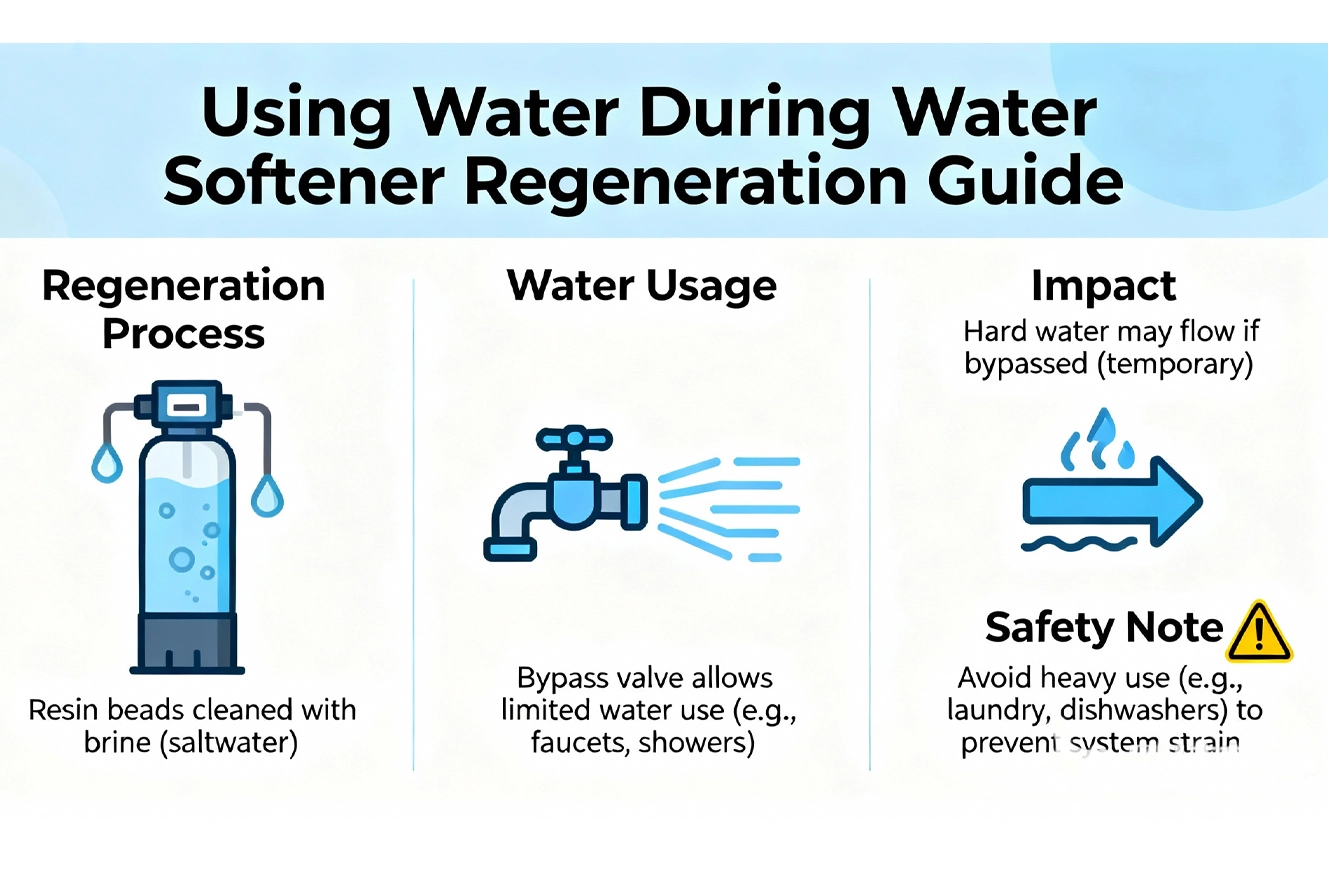
Let’s be honest: nobody wants to think about their water softener. It’s like that quiet friend who cleans up after a party—you only notice them when they’re not doing their job. So when that gentle hum or hissing sound kicks in during regeneration, you might wonder, “Can I still wash my hands? Fill the kettle? Take a shower?”
The Short Answer (No Pressure)
Yes, you can use water while the softener is regenerating. But here’s the catch—it won’t be softened water. Think of it like a dishwasher mid-cycle: you could open the door and grab a plate, but it’s going to be dirty.
During regeneration, the system flushes out the hard minerals it’s collected and recharges its resin beads with salt. If you turn on a tap while that’s happening, you’re basically pulling untreated water straight from your pipes, bypassing the softener entirely.
Must Read
What That Means for Your Morning Coffee
Imagine this: you’re running late, you grab a glass of water for coffee, and your softener is in the middle of its 2 a.m. cycle (which it really should be doing, but sometimes life happens). That water? Hard as nails. Your kettle might get a little cloudy, and your coffee could taste slightly off, like it’s holding a grudge.
But don’t panic. It’s not dangerous—just not ideal. You won’t grow a third arm or wreck your plumbing in one sip. It’s more like eating a slightly stale chip: annoying, but survivable.
When It Actually Matters
Here’s where you should care: if you’re doing laundry or running the dishwasher during regeneration, you’re basically wasting your detergent. Hard water makes soap less effective, so your clothes might come out feeling stiff, and your glasses could look spotty.
I once ran a load of towels during a regeneration cycle, and they came out feeling like sandpaper. My wife looked at me and said, “Did you wash these with rocks?” So yeah, it’s a thing.
Your skin and hair also hate hard water. A regeneration rinse cycle can leave you with that squeaky, dry feeling—like you’re rubbing a chalkboard. Not a great way to start your day.
The Golden Rule
Most modern softeners have a bypass valve that kicks in automatically during regeneration. But older ones? They’re like your grandma’s ancient coffee pot—you have to know its quirks. Check your manual or look for a little lever.
If you have a timer-based softener, regeneration often happens at 2 a.m. for a reason. That’s when nobody’s using water. But if your schedule is weird (hello, 3 a.m. midnight snackers), you might run into trouble.
What You Can Do (Without Becoming a Plumber)
First, know your softener’s schedule. Most models let you set the regeneration time. If you’re a night owl, shift it to early afternoon when you’re at work. It’s like setting an alarm for a nap—simple but effective.
Second, if you absolutely must use water during regeneration, keep it minimal. A quick toilet flush or a hand wash is fine. But don’t start a full shower or fill a bathtub—that’s just asking for trouble.
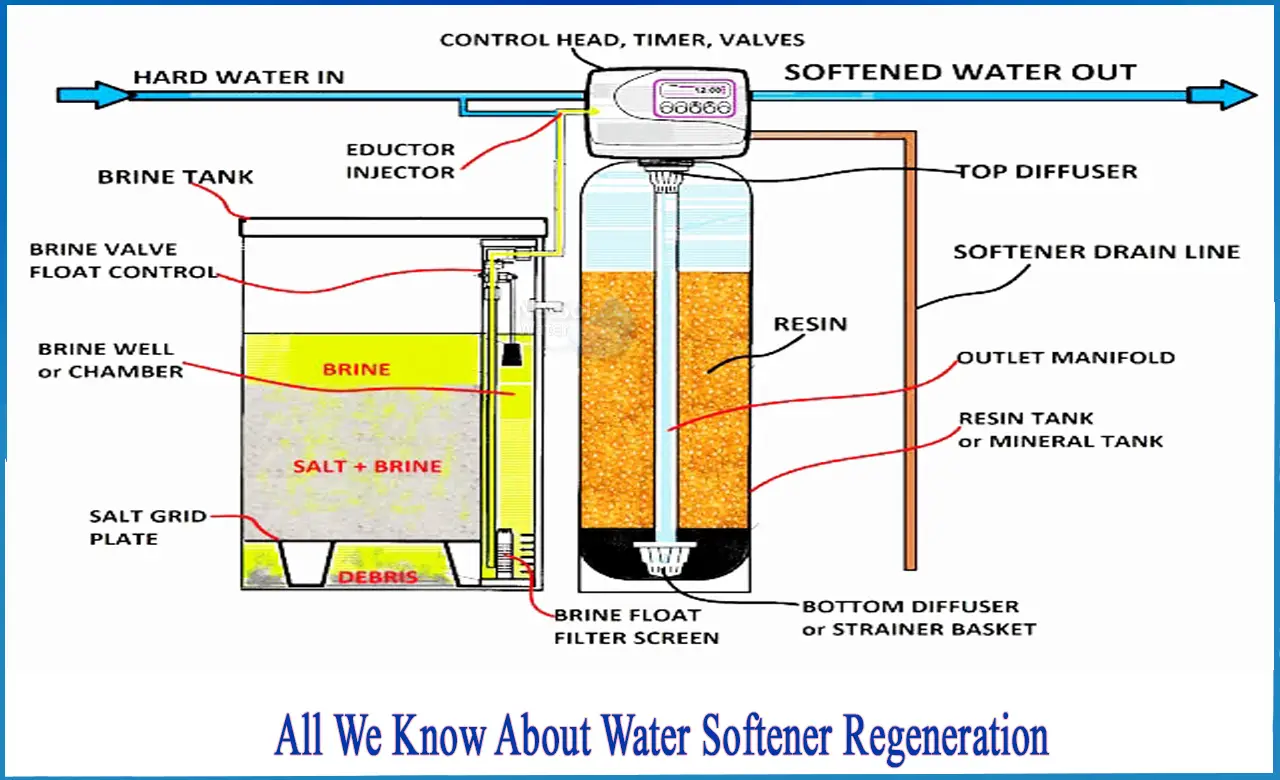 How Long Does It Take To Regenerate A Water Softener | Detroit Chinatown
Third, invest in a demand-initiated regeneration (DIR) softener. These clever little machines only regenerate when they’re actually dirty, not on a fixed timer. It’s like having a pet that tells you when it’s hungry instead of begging at the same time every day.
A Little Story to Make You Smile
My neighbor, Dave, once decided to water his garden during a regeneration cycle. He was proud of his “eco-friendly” morning routine. But his plants? They got a dose of hard water so aggressive, the tomatoes looked like they’d been in a boxing match.
He blamed the weather, but I knew the truth. Poor Dave. He’s since set his softener to regenerate at 3 p.m., and his tomatoes are now the envy of the street. Moral of the story: timing is everything.
Why You Should Care (Beyond the Tomatoes)
Hard water buildup can shorten the life of your appliances. Your water heater, washing machine, and dishwasher all suffer from mineral deposits. Using untreated water once in a while won’t kill them, but doing it regularly is like eating fast food for every meal—eventually, you’ll pay the price.
Your pipes also hate hard water. Over time, scale builds up inside, reducing water pressure and leading to costly repairs. Think of it like clogged arteries—nobody wants that.
And let’s not forget your skin. Hard water strips away natural oils, leaving you dry and itchy. A single regeneration cycle won’t ruin your complexion, but consistent exposure? You might start hoarding moisturizer like it’s a precious metal.
The Bottom Line (Made Easy)
Can you use water while your softener regenerates? Yes. Should you? Only if you don’t mind hard water for a bit. It’s like driving with a low tire—you’ll get there, but it won’t be a smooth ride.
If you want to avoid the hassle, plan ahead. Know your cycle, set a reasonable time, and treat regeneration like a bathroom break for your water system. Let it do its thing, and you’ll enjoy soft water without any drama.
And if all else fails, just remember Dave’s tomatoes. Nobody wants crunchy towels or angry plants.
